Kiosks are appearing in store after store, and smartphone apps have become more familiar than face-to-face service. As digital technology weaves its way into every corner of daily life, living has grown more convenient — yet it is also an undeniable reality that seniors unaccustomed to these changes are being left out of the benefits. Can AI open a door to new possibilities for them? SK hynix has set out to find the answers together with the local community.
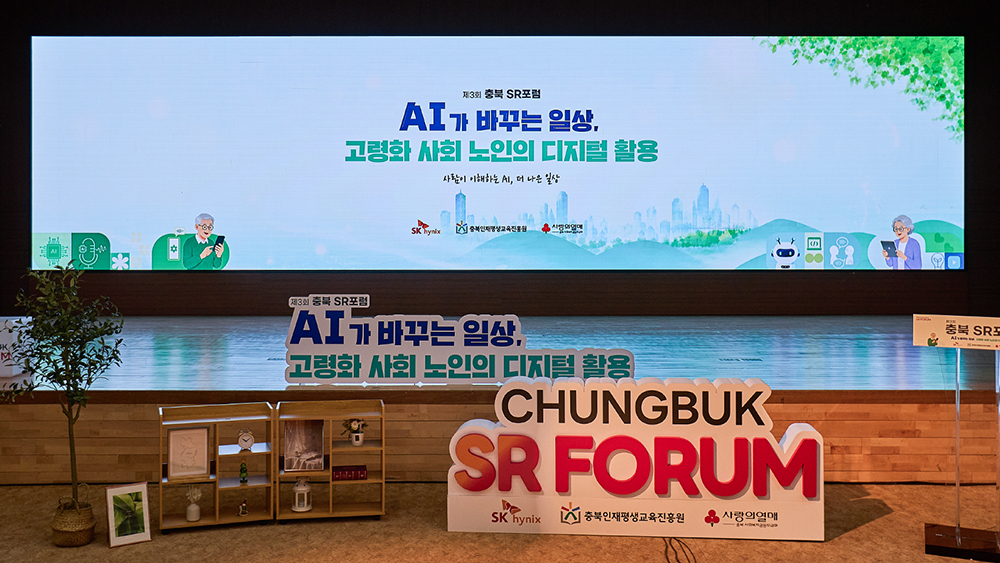
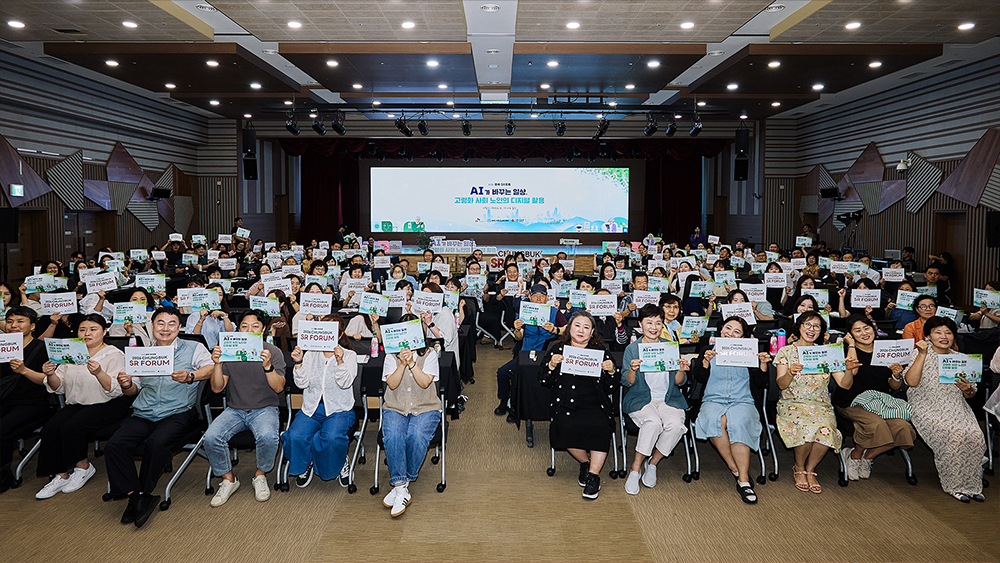
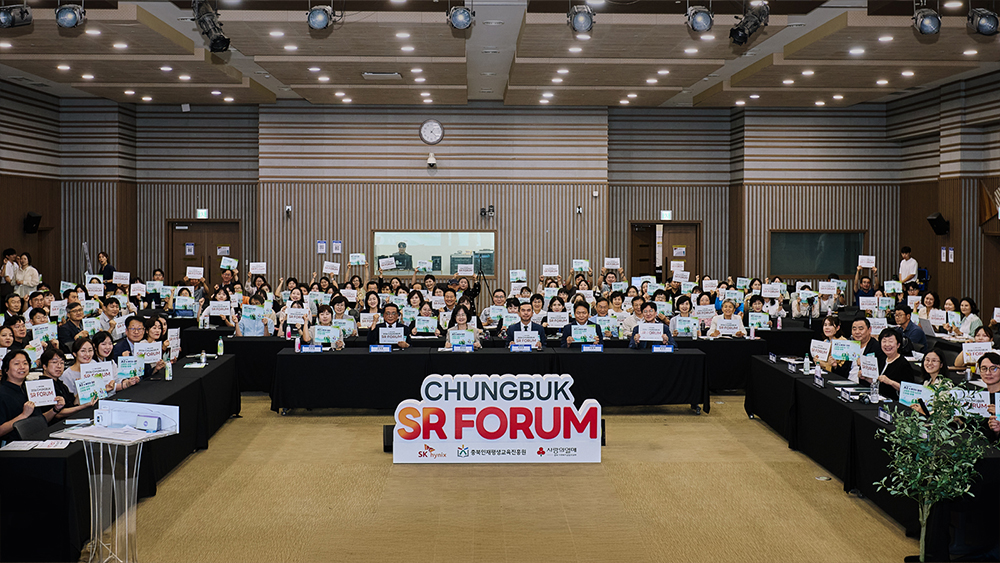
On the 8th, SK hynix, together with the Chungbuk Institute for Lifelong Education and Human Resources Development, hosted the 2026 Chungbuk SR Forum — now in its third year — at the Chungcheongbuk-do C&V Center. Held under the theme “Everyday Life Transformed by Artificial Intelligence (AI): Digital Adoption Among Older Adults in an Aging Society,” the forum drew around 180 participants, including experts, officials, and local residents, to jointly explore ways to support the digital transition of the senior generation through AI.
As part of its efforts to fulfill its Social Responsibility (SR), SK hynix has held the forum every year since 2024, working with the local community to address the various challenges facing society. This year’s forum was designed to produce more practical solutions by strengthening its lineup of speakers, while also deepening collaboration with the diverse stakeholders connected to these social issues.
The Digital Transition for Seniors: A Shared Challenge for Us All
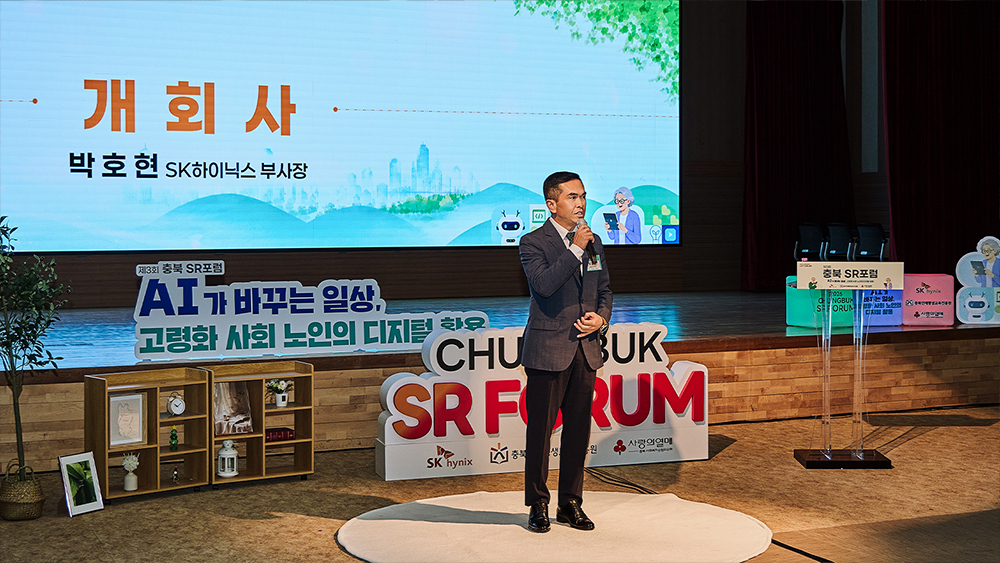
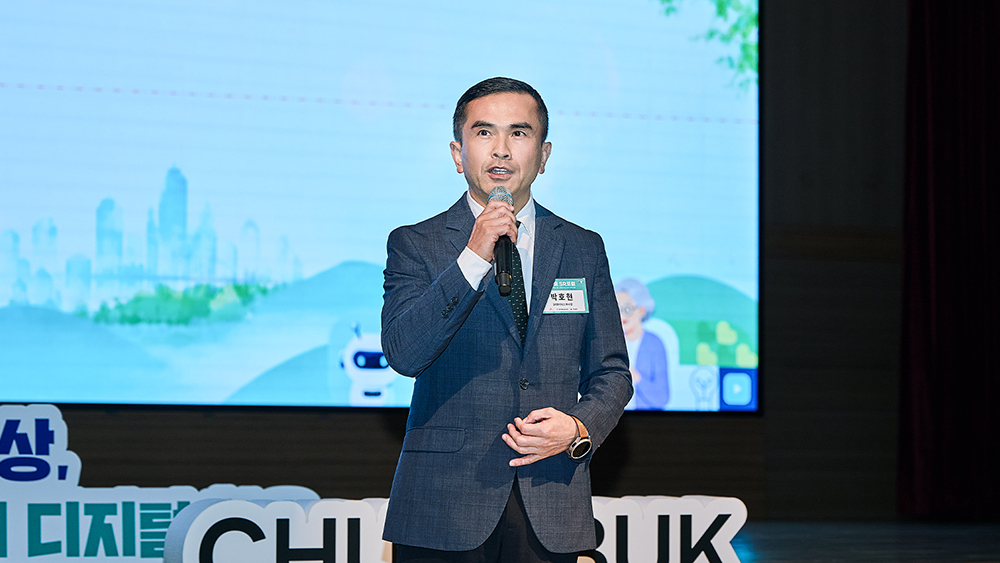
The forum opened with the opening remarks of SK hynix Vice President Hohyun Park, Head of Region CPR. “Social problems are difficult to solve through the efforts of any single organization alone, and connection and collaboration matter above all,” Park said. “At a time when AI is permeating every part of daily life, seniors’ use of digital technology goes beyond simply acquiring new skills — it is an important foundation for improving quality of life and expanding social participation.” Park went on, “SK hynix is working to spread the benefits of technology to local communities through a range of social contribution activities, even as it builds the technology that makes the AI era possible,” adding, “I hope this forum, prepared in that spirit, becomes a meaningful occasion for AI experts and the local community to seek solutions together.”
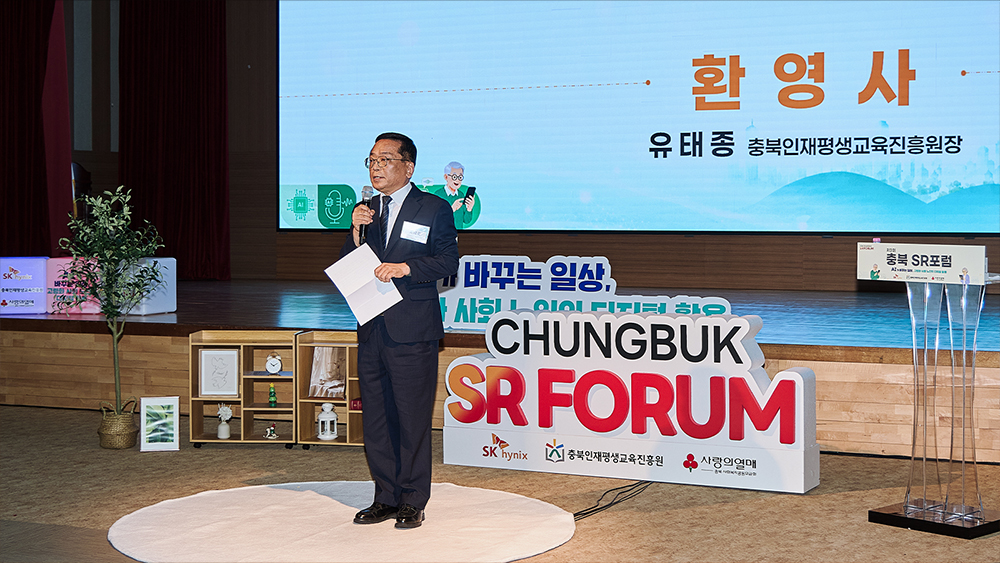
▲ Taejong Yu, President of the Chungbuk Institute for Lifelong Education and Human Resources Development
In his welcoming address, Taejong Yu, President of the Chungbuk Institute for Lifelong Education and Human Resources Development, said, “Over the past two years, the Chungbuk SR Forum has been a venue for in-depth discussion of local issues, capturing voices from the field,” adding, “This year, under the theme of digital adoption among seniors in an aging society, I hope it becomes an occasion for companies, universities, and public institutions to work together to find practical solutions that help underserved groups adapt to the digital age.”
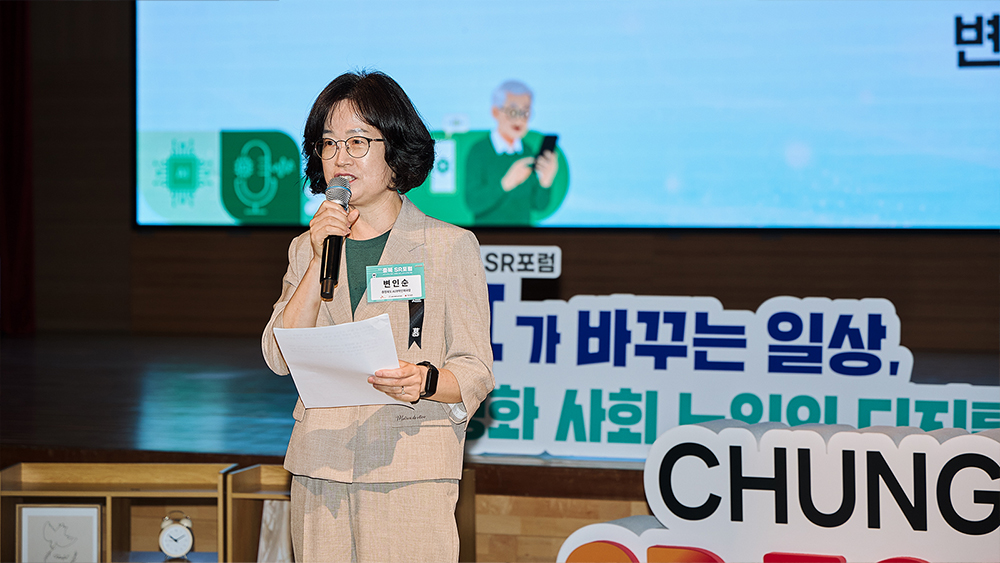
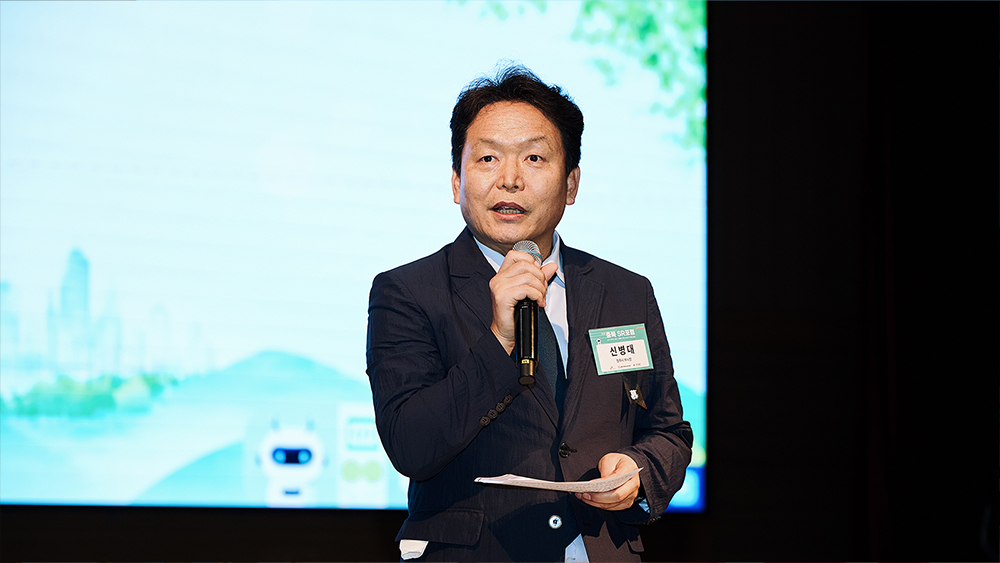
Delivering a congratulatory address, Insun Byun, Director-General of the AI Science and Talent Bureau at Chungcheongbuk-do, said, “The Chungbuk SR Forum is taking root as a platform for cooperation where the region and companies reflect on and put social responsibility into practice together,” adding, “We will incorporate the diverse views raised in today’s discussions into our future policymaking.” Byeongdae Shin, Vice Mayor of Cheongju, said, “As aging and the digital transition intersect, digital care and support for vulnerable groups are becoming ever more important,” noting, “Cheongju is expanding digital education for its residents and tailored support for vulnerable groups.” He added, “I hope this forum becomes an occasion to explore how we can grow together in the digital age.”
The Role of AI in a Super-Aged Society: Possibilities and Challenges Identified by Experts
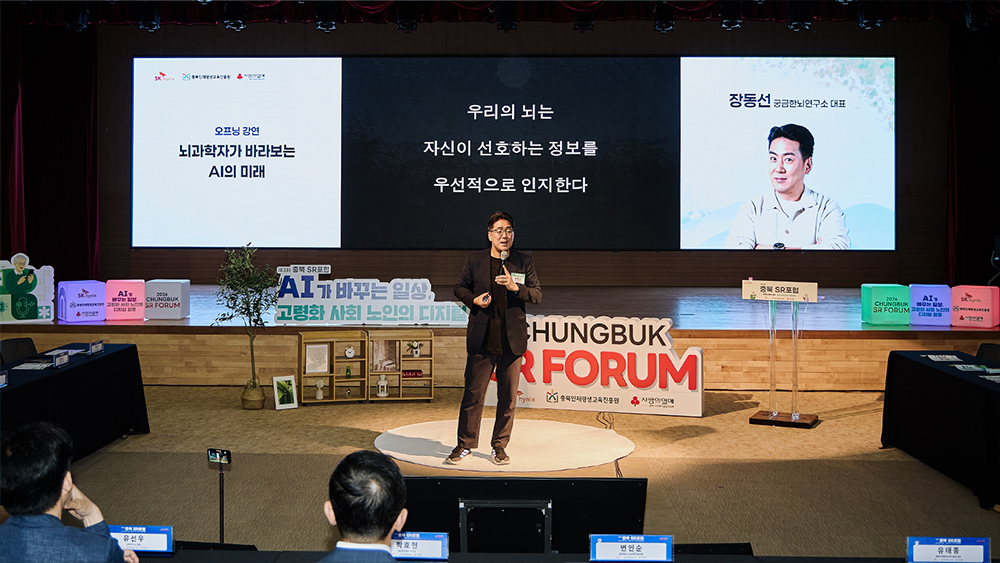
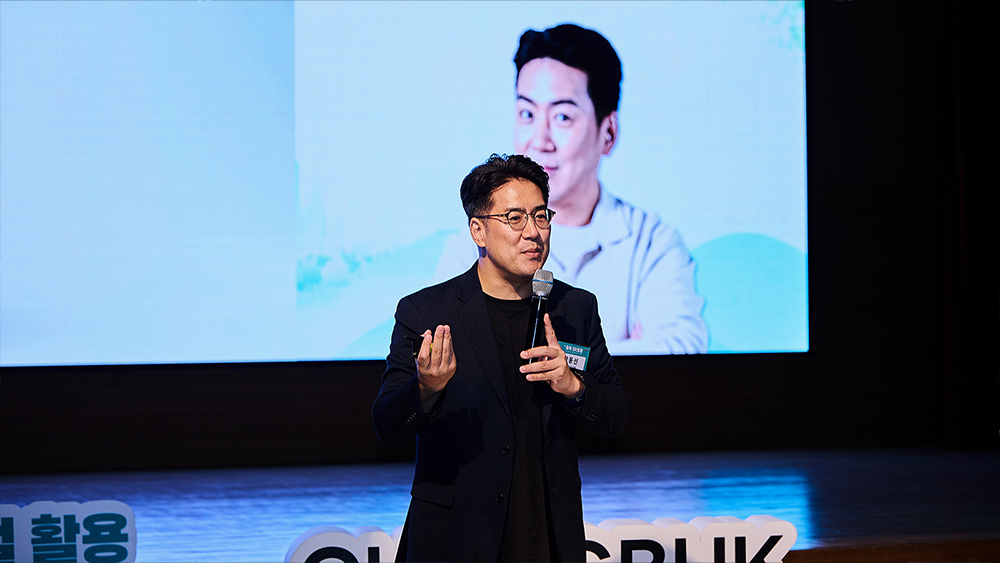
Dongseon Jang, CEO of Curious Brain Lab, then took the stage to deliver the opening lecture. Speaking on “The Future of AI Through a Neuroscientist’s Eyes,” Jang focused on how the human brain updates information and reshapes itself, explaining that human intelligence has expanded beyond individual ability through connection and collaboration with others, and that digital technology and AI are likewise tools for broadening those connections. “If AI is used merely as a tool of convenience, our ability to think and learn can weaken,” Jang said. “We should use it in a way that helps us find and solve problems.” Jang also stressed, “Society’s overall capacity rises only when every group, including older adults, can make use of technology.”
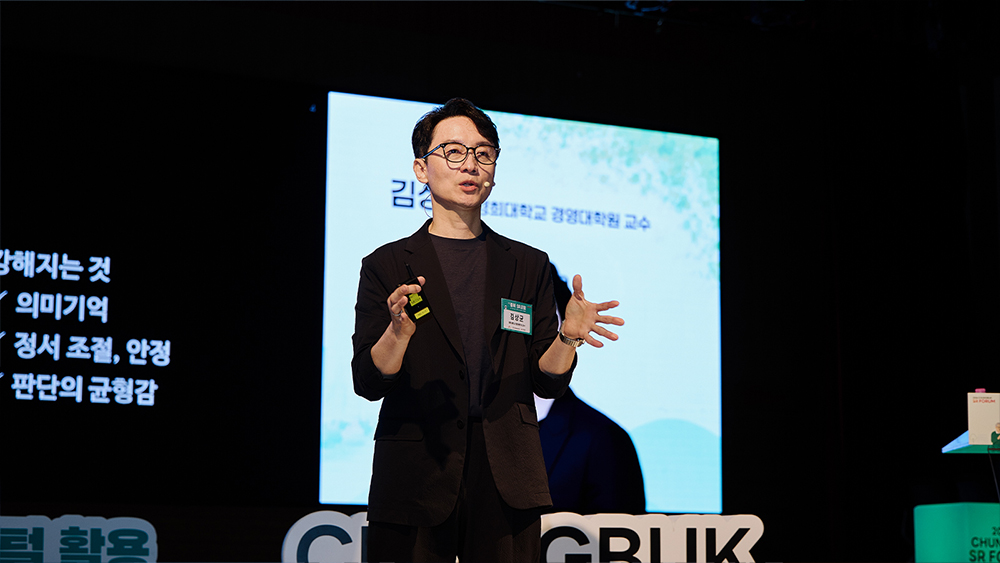
▲ Professor Sangkyun Kim, chair of the Department of Convergence Management at Kyung Hee University’s Graduate School of Business, delivering the lecture
The “Keynote” session opened with Professor Sangkyun Kim of Kyung Hee University’s Graduate School of Business, chair of the Department of Convergence Management. Having long studied how technologies such as AI, humanoids, and the metaverse are reshaping our lives and society, Kim spoke on the theme “When a Life Well-Lived Meets AI, a Second Intelligence,” turning the spotlight on seniors’ “experience” as an asset — one that can be reshaped into new value upon meeting AI.
“As we age, our processing speed slows and our ability to learn new procedures may weaken somewhat, yet the judgment and situational awareness grounded in decades of experience actually grow stronger,” Kim stressed. “AI should serve as a ‘second intelligence’ that fills in where we have weakened and draws out our strengths, helping seniors share the life experience they have accumulated with more people.”
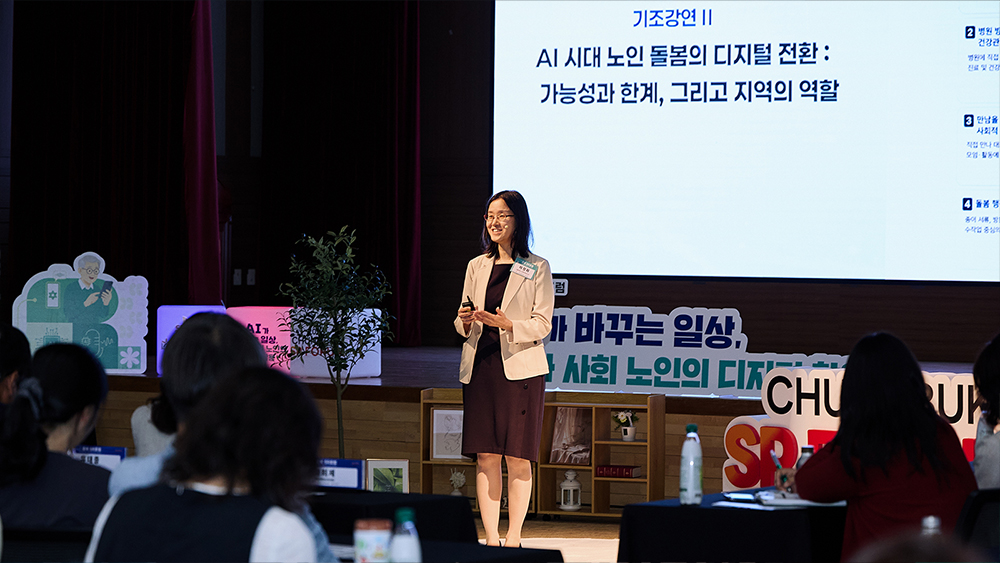
▲ Professor Jeonghwa Ha of the Department of Social Welfare at Seoul National University, delivering the lecture
The second keynote was delivered by Professor Jeonghwa Ha of the Department of Social Welfare at Seoul National University. An expert in senior welfare in an aging society, social relationships in later life, and dementia, Ha spoke on “The Digital Transition of Elderly Care in the AI Era: Possibilities, Limits, and the Role of Local Communities,” introducing the changes AI will bring to elderly care and highlighting the role local communities must play in the process.
“AI holds clear potential to fill the gaps in elderly care that our society too easily overlooks, but it cannot fully replace the emotional connection between people,” Ha said firmly. “Setting the right direction so that technology works as it should, and filling the gaps it will inevitably miss, is a responsibility that local communities must shoulder together.”
AI Transforming Seniors’ Daily Lives: Field-Proven Cases
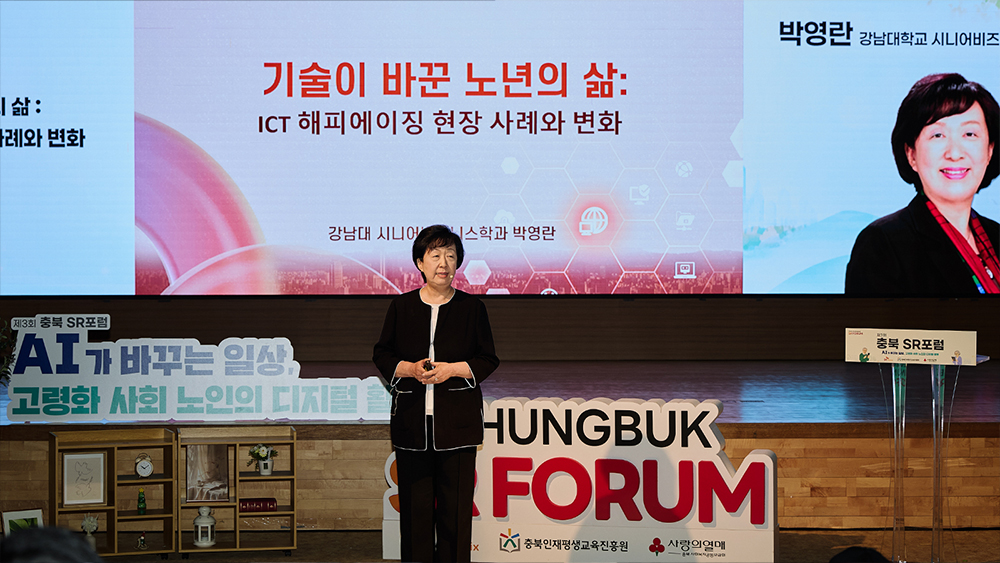
▲ Professor Youngran Park of the Department of Senior Business at Kangnam University, giving the presentation
In the “Case Sharing” session, Professor Youngran Park of the Department of Senior Business at Kangnam University was the first presenter. Long active in the fields of senior welfare and smart aging, Park spoke on “Later Life Transformed by Technology: Field Cases and Changes from ICT Happy Aging*.” Drawing on research that analyzed five years of SK hynix’s ICT Happy Aging program, Park offered wide-ranging insights into the digital transition in an aging society and the direction of community-based senior policy.
Park drew particular interest from the audience by presenting the research findings in concrete figures. Seniors who used ICT Sarangbang scored an average of 79.3 points in digital competency, well above the national average of 63 for older adults, while those serving as supporters reached an average of 95.8. In addition, 82.1% reported a reduced family caregiving burden after using ICT Sarangbang, and 96% said conversations with their families had increased — showing a significant impact on the quality of life not only of seniors but also of their families. Over the program period, it generated some 1.3 billion won in social value, about 2.5 times the amount invested.
“The greatest strength of the ICT Happy Aging program is that it gives seniors an environment where they can encounter digital devices in daily life and grow comfortable with them over time,” Park emphasized. “The true value of this program lies in the virtuous cycle in which seniors begin as learners, become teachers, and go on to grow into digital leaders in their local communities.”
The research Park presented was also delivered at the International Society for Gerontechnology conference held in Canada this past March, where global experts recognized it as a successful model for adopting the digital transition in an aging era.
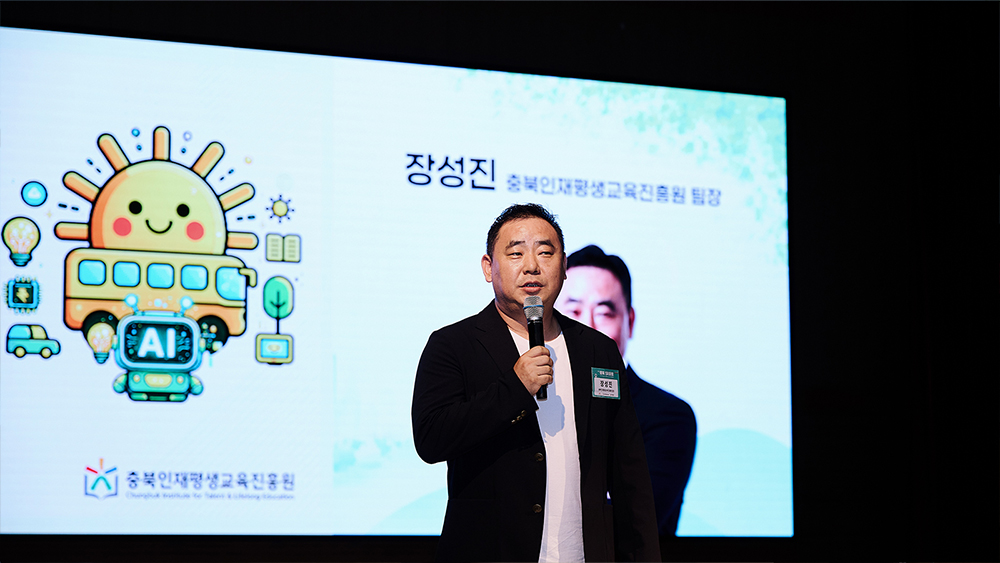
▲ Seonjin Jang, Team Leader at the Chungbuk Institute for Lifelong Education and Human Resources Development, giving the presentation
Next, Seonjin Jang, Team Leader at the Chungbuk Institute for Lifelong Education and Human Resources Development, took the podium. Combining academic expertise with hands-on field experience in lifelong education and human resource development (HRD), Jang led the overall planning of the “Hangeul Sunshine Bus” mobile digital literacy program, which was recently selected for the Ministry of Education’s adult literacy support grant. The program has provided practical, everyday digital education and hands-on kiosk practice to some 3,700 people from digitally underserved groups, including seniors, people with disabilities, and farmers.
“Digital education only works when it is carried out continuously, right alongside seniors, until they grow comfortable with it in their everyday lives,” Jang said. “Just as the Sunshine Bus has reached thousands of seniors so far, I want to bring the warmth of digital technology to many more in the years ahead.”
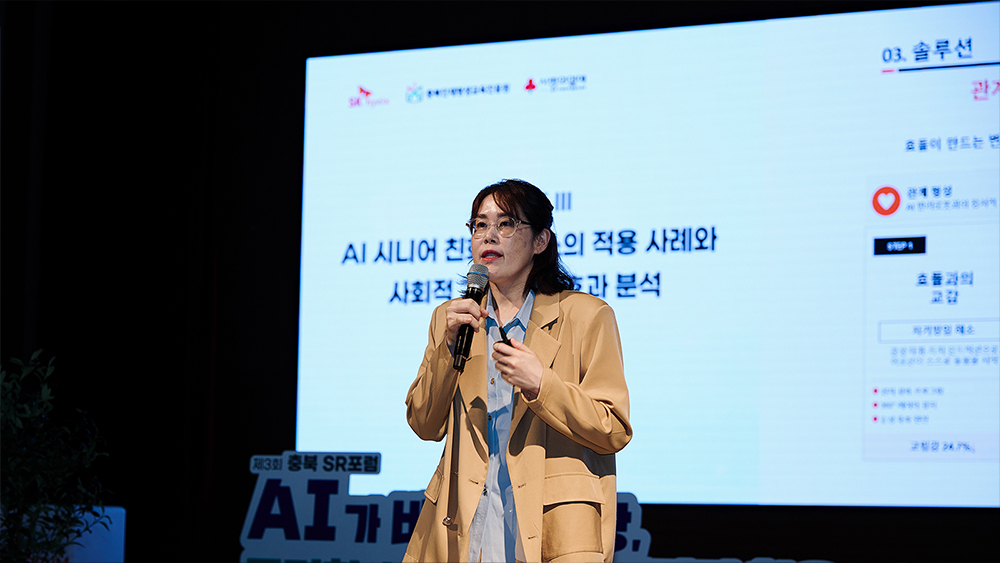
▲ Jihee Kim, CEO of Hyodol Co., Ltd., giving the presentation
Finally, Jihee Kim, CEO of Hyodol Co., Ltd., delivered a presentation titled “Applications of AI Senior-Friendly Services and an Analysis of Their Effect on Easing Social Isolation.” Hyodol — a senior care platform company with cumulative revenue of 14.3 billion won and a domestic market share of over 87% — has partnered with more than 187 local governments nationwide and distributed over 15,000 AI companion robots.
Kim pointed to the loneliness and care gaps faced by seniors living alone, explaining that AI companion robots are playing a role in both emotional connection and daily-life management. Related research, Kim added, has confirmed benefits such as reduced feelings of depression and loneliness and improved medication adherence. “Technology should go beyond simply assisting with care to support seniors’ everyday lives,” Kim stressed. “We need service designs and policy support tailored to the characteristics of each region and the people it serves.”
Listening to Experts and Voices from the Field: A Spirited “Inside Talk”
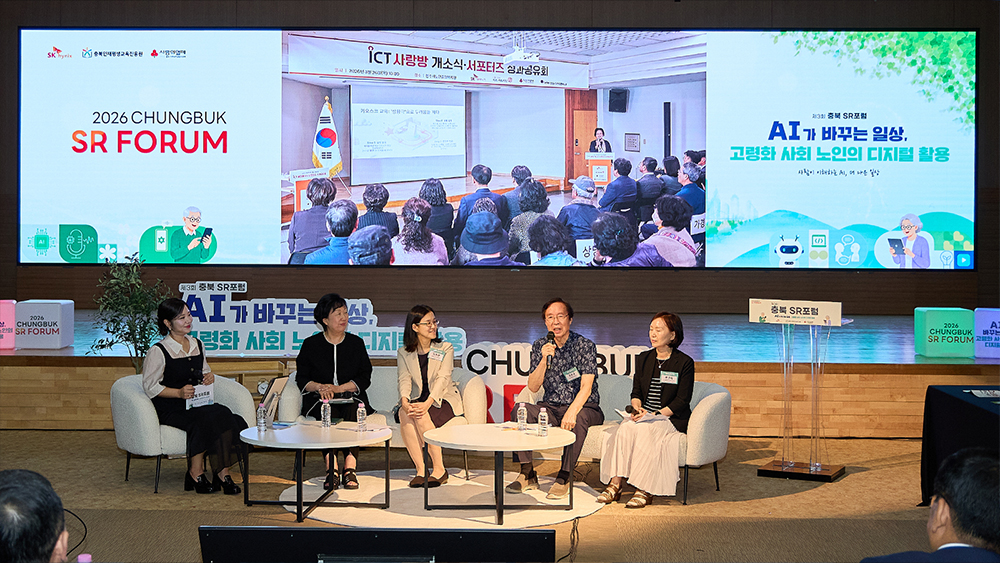
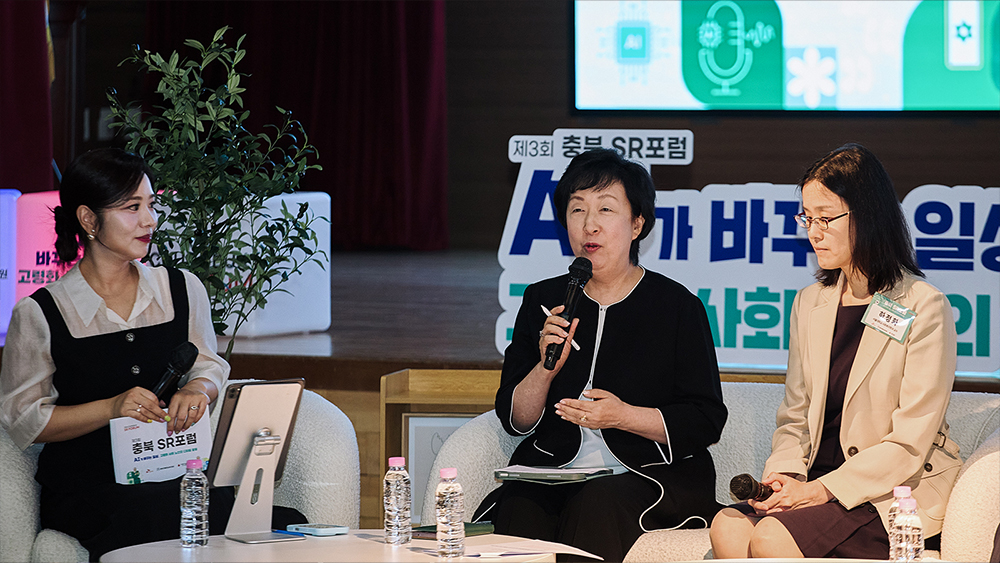
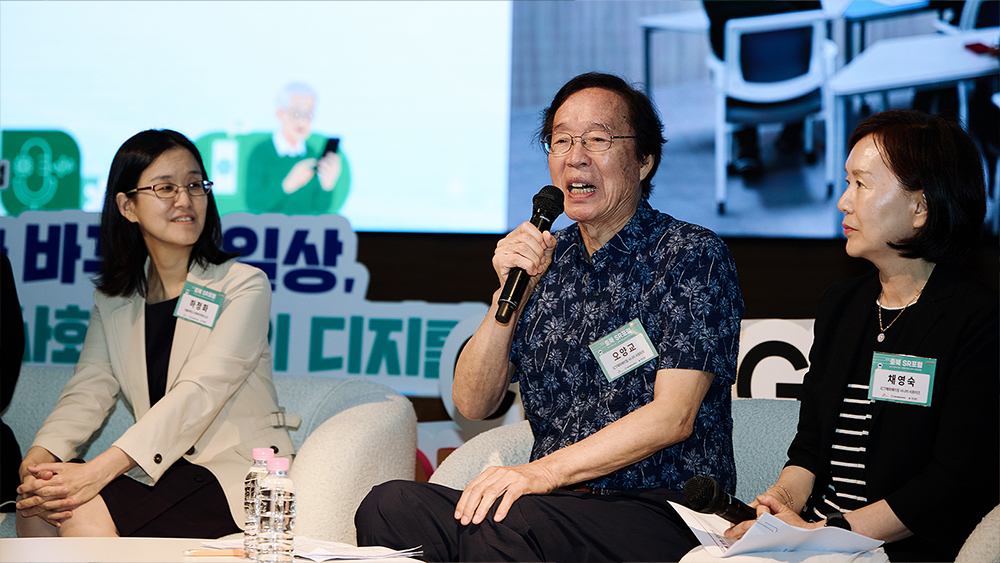
The forum concluded with an “Inside Talk” that brought together an expert panel and ICT Happy Aging Senior Supporters. In the first part, the expert panel — Professor Jeonghwa Ha and Professor Youngran Park — joined two Supporters on stage to exchange views and share vivid voices from the field.
Yanggyo Oh, a Senior Supporter, said, “You can only pass something on to others once you’ve learned and mastered it yourself,” adding, “I keep learning and moving forward too — earning certifications, for example.” Oh went on to say, “Drawing on this experience, I want to help more seniors take part in learning.”
Ha said, “Participation and hands-on experience in the field play an important role in raising a person’s life satisfaction,” noting, “these activities also connect with the local community and bring about positive change.” Ha added, “I hope the voices from the field heard today will be meaningfully reflected in policy and research.”
In the second part that followed, the expert panel took time to hear and answer questions from the audience. Attendees, who had kept their seats and listened closely to the lectures and discussion throughout the event, raised a range of questions to share what they were curious about, and the panelists responded in earnest, reflecting together on the path forward for local communities in an aging era.
Yeonhee Kim, a literacy instructor at the Jangseong County Lifelong Learning Center who attended the event, said, “Listening to today’s lectures made me reflect on what seniors need in order to keep participating in society in the AI era,” and asked, “I’d like to hear your thoughts on the role of seniors and how we can coexist amid technological change.”
In response, Professor Youngran Park said, “Since AI and humans are bound to coexist, it is important to create an environment where technology can be used well,” noting, “we need relationship-based local infrastructure and a range of learning opportunities so that older adults are not excluded from society and can keep taking part in it.” Park added, “Programs that improve accessibility must go hand in hand with each individual’s own willingness to participate.”
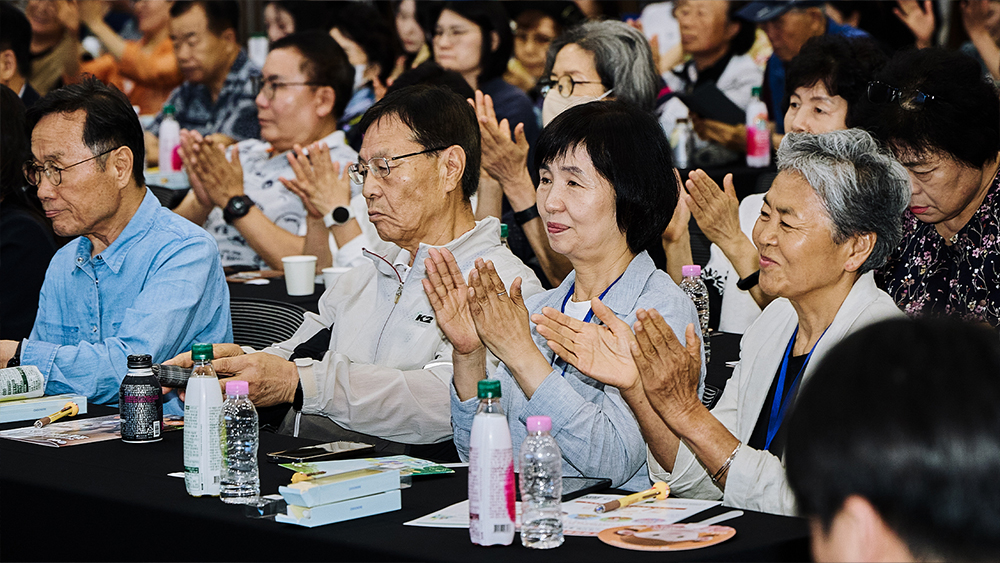
▲ Attendees focused on the lecture
Bringing together a range of perspectives — from academia and local community stakeholders to voices from actual program sites — this forum reaffirmed for SK hynix that the digital transition for seniors goes beyond the simple distribution of technology and is a challenge society as a whole must solve together. Going forward, through the Chungbuk SR Forum, SK hynix will continue to work with local communities to find practical solutions to a range of social issues, drawing on its technological capabilities, including AI.