Exhibition booths packed with companies showcasing their latest products fill every corner of the expansive venue, while visitors move busily from one display to the next. COMPUTEX — one of the world’s largest ICT and computer component exhibitions — opened its doors once again this year, running from June 2–5 (local time) at the Taipei Nangang Exhibition Center in Taiwan. Reflecting the growing emphasis on AI related technologies in recent years, this year’s COMPUTEX placed significant focus on the broader AI industry, drawing approximately 100,000 visitors over the four day exhibition and reaffirming the intense global interest in the AI sector.
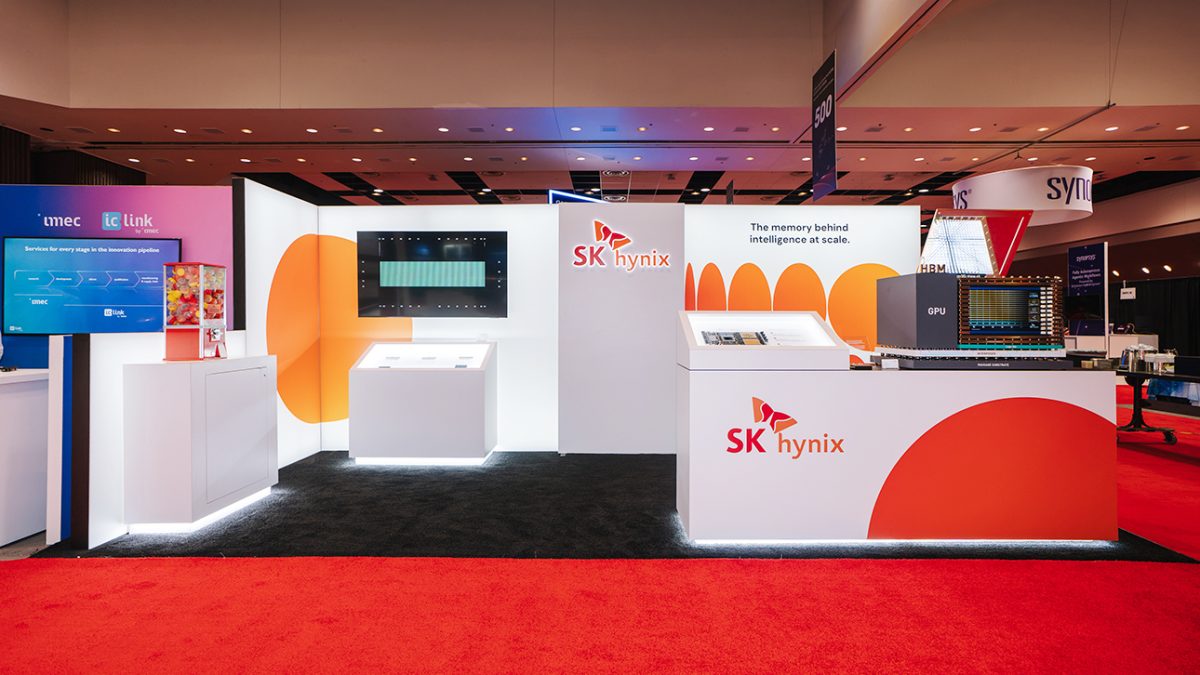
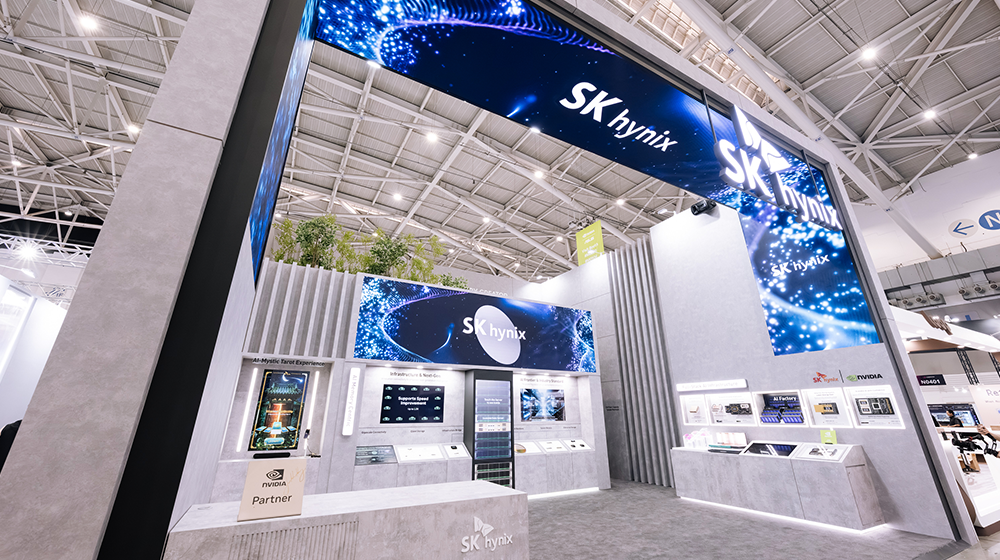
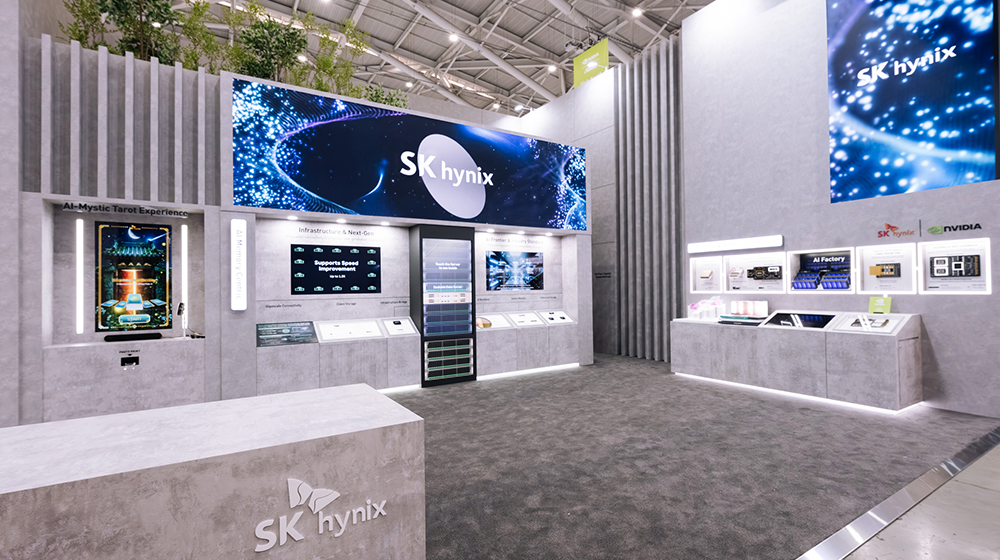
Under its booth theme, “At the core of the AI wave – Memory!,” SK hynix delivered the message that memory lies at the heart of the massive wave sweeping the AI industry. A large LED panel at the front of the booth visually brought to life wave imagery symbolizing the expansion of the AI industry alongside the interconnected structure of memory circuits, leaving a striking impression even amid the vibrant, high saturation exhibition environment typical of IT trade shows. With collaborative products developed with NVIDIA placed front and center and a portfolio spanning flagship AI memory products including HBM* as well as next generation memory solutions, the booth attracted a steady stream of industry professionals throughout the exhibition.
Memory Technology in Action within Real AI Solutions
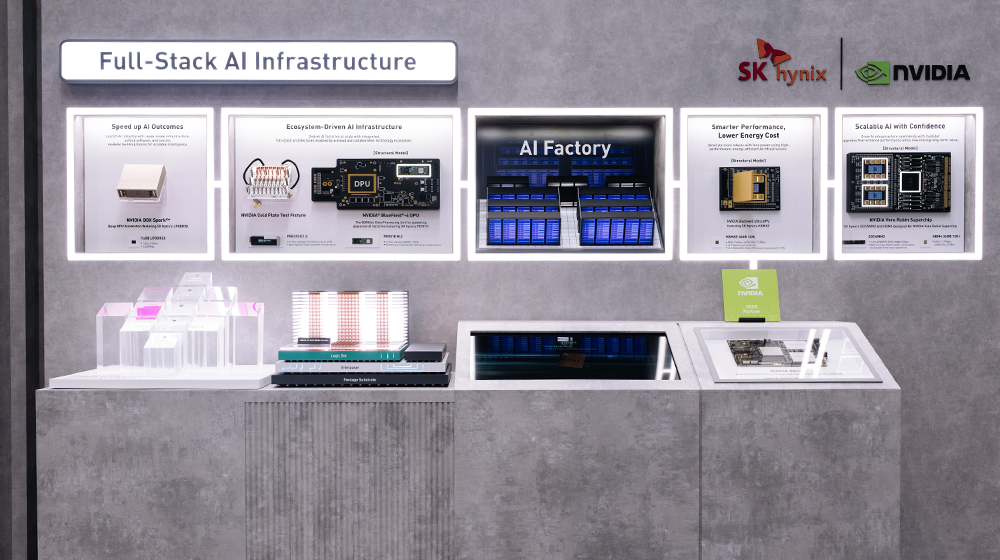
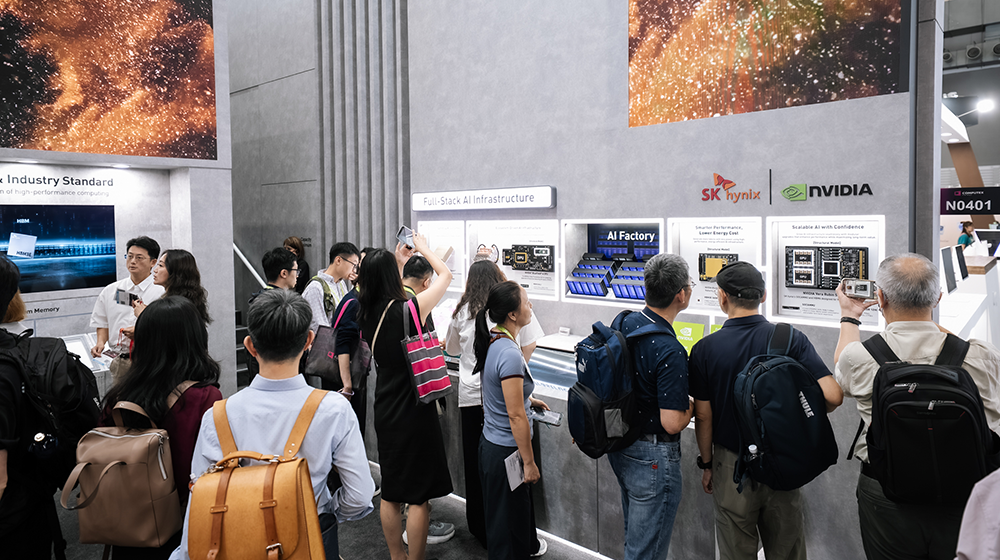
▲ The AI Factory Zone, highlighting SK hynix’s partnership with NVIDIA
Upon entering the booth, visitors were first greeted by the “AI Factory Zone,” which extended along the right wall. Designed to showcase the strong partnership between SK hynix and NVIDIA, the zone displayed NVIDIA’s major products alongside the SK hynix AI memory solutions actually integrated into them, allowing visitors to see at a glance how the two companies’ technologies are interconnected.
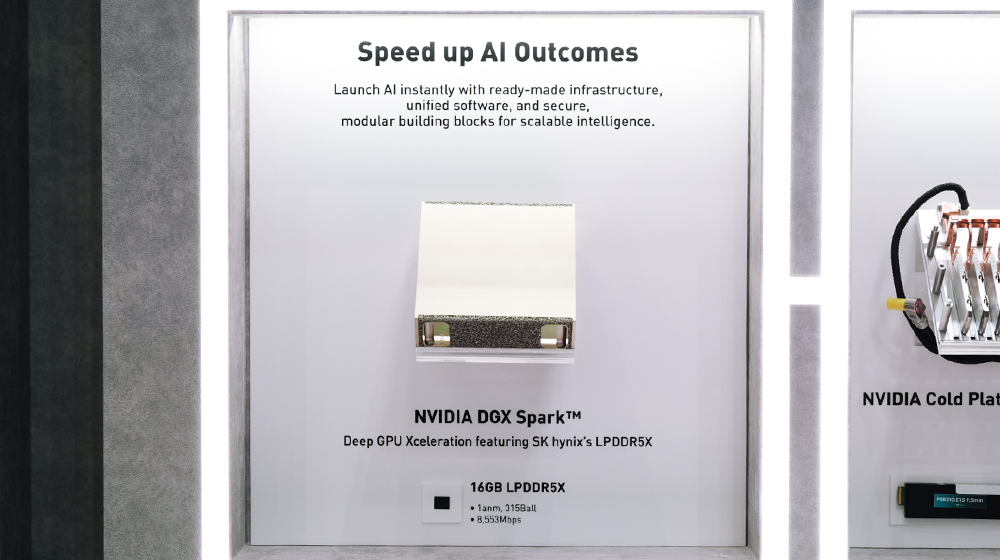
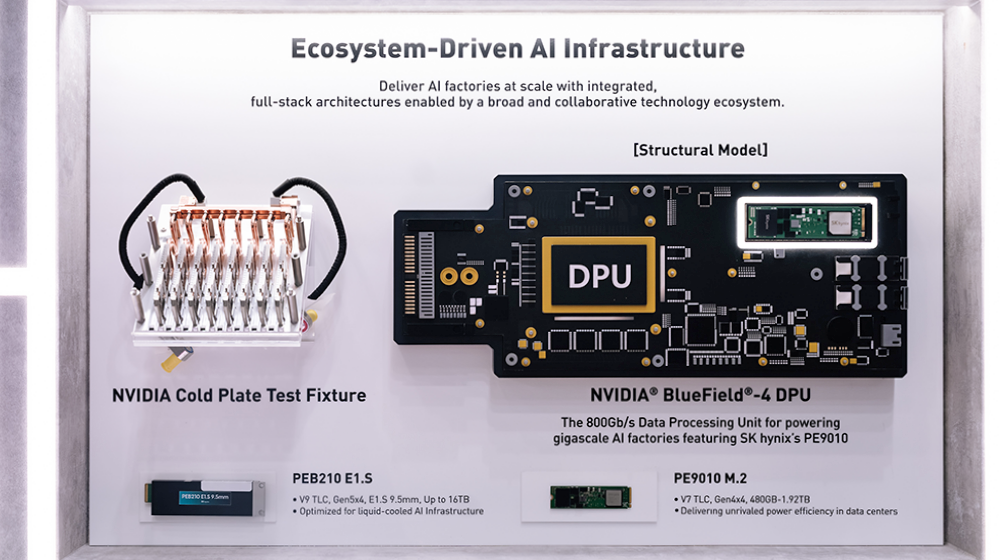
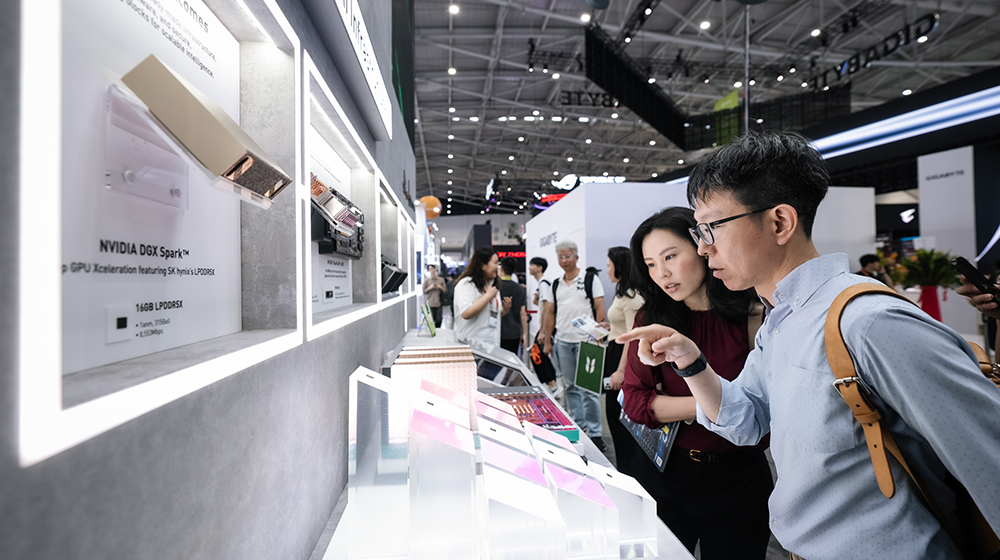
On the left side of the display, NVIDIA’s latest supercomputer, DGX Spark, was exhibited alongside SK hynix’s LPDDR5X* integrated into the system, highlighting the performance value that LPDDR5X delivers in AI environments demanding ultra-fast computation. Next to it, a model of NVIDIA’s Bluefield4-DPU and the actual Cold Plate Test Fixture — developed to address heat dissipation in high performance AI workloads — were placed side by side, along with SK hynix’s eSSD products, PEB210 E1.S, designed for such environments.
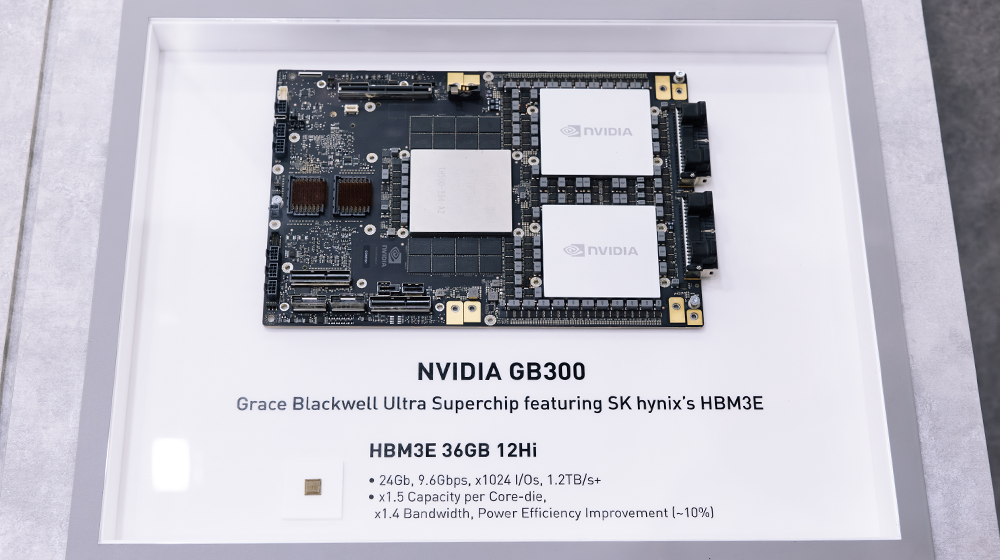
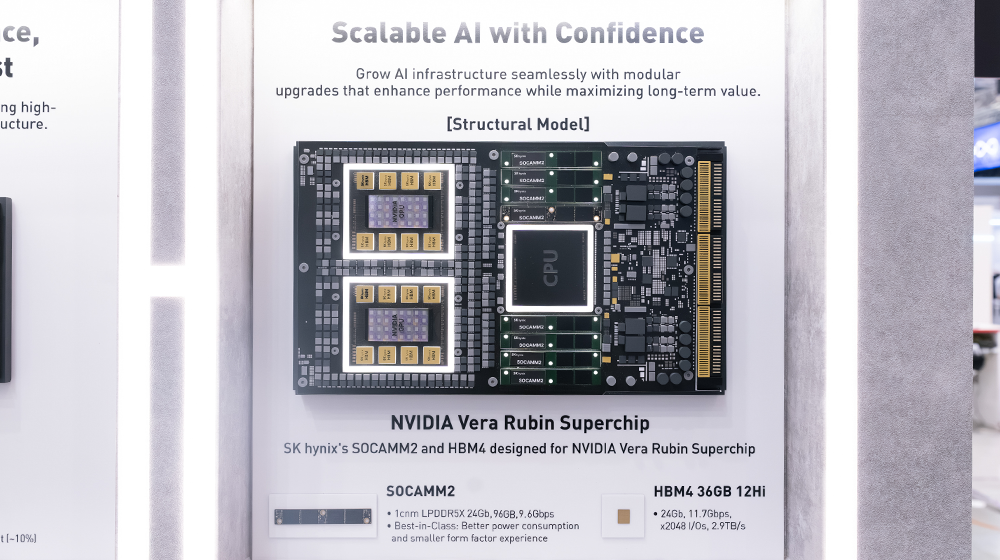
On the right side of the display, the actual NVIDIA GB300 — the company’s latest AI accelerator — was showcased together with the HBM3E integrated into it. Alongside the products, an “NVIDIA Partner Sign” bearing the signature of NVIDIA CEO Jensen Huang was placed as a symbolic representation of the strong technology partnership between the two companies. Below the display, a 1.5x enlarged model of the GB300 was also presented, enabling visitors to examine the product’s internal architecture in greater detail. Adjacent to this, a model of NVIDIA’s upcoming superchip, Vera Rubin 200, was exhibited alongside SK hynix’s SOCAMM2* and HBM4. The exhibit’s tagline — “Scalable AI with Confidence” — signaled that the two companies’ collaboration toward the next generation of AI infrastructure is already taking concrete shape.
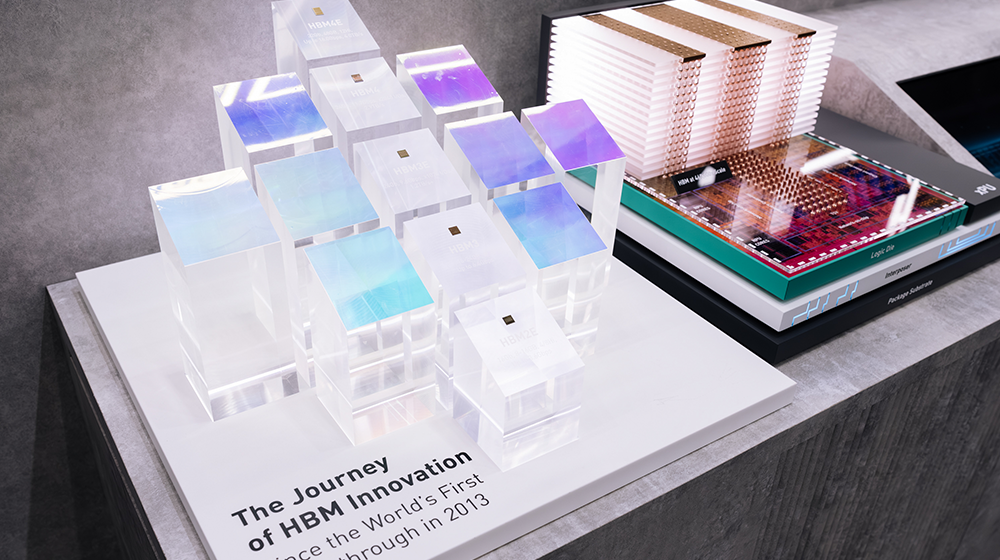
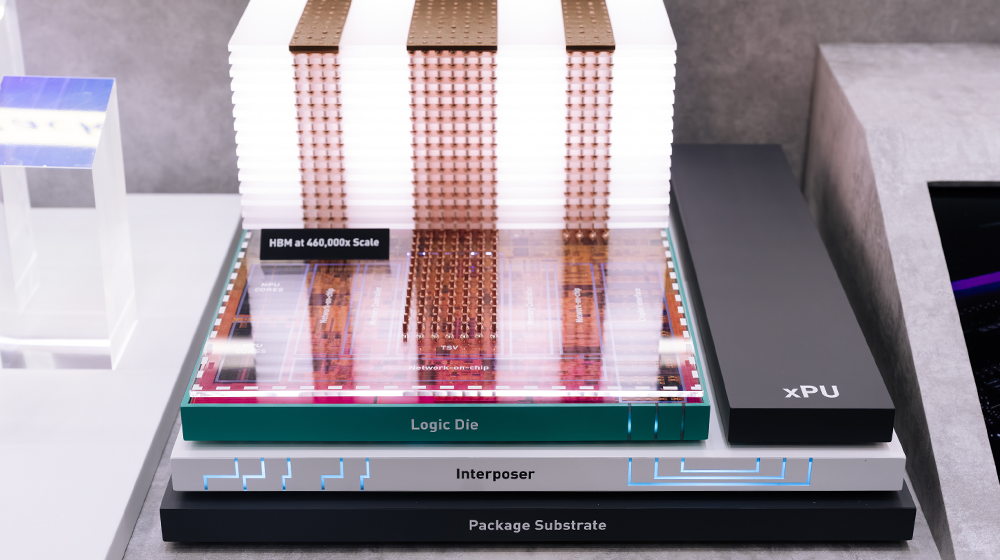
At the bottom of the display, a design art piece titled “Chronicle of SK hynix’s HBM” presented the company’s HBM development history in chronological order, allowing visitors to trace the journey and technological milestones that have led SK hynix to its unrivaled position in the HBM market today. Beside it, a structural model of HBM4E was displayed, offering visitors a detailed look at the key technologies applied in SK hynix’s HBM products.
Next Generation Memory Portfolio Shaping the Blueprint for the AI Era
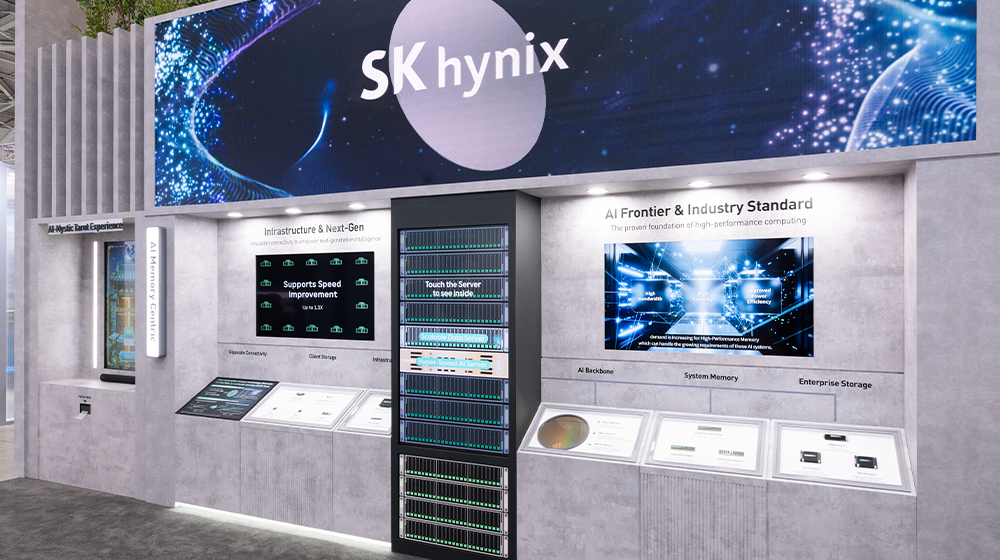
▲ The Product Portfolio Zone, featuring SK hynix’s full lineup of AI memory products
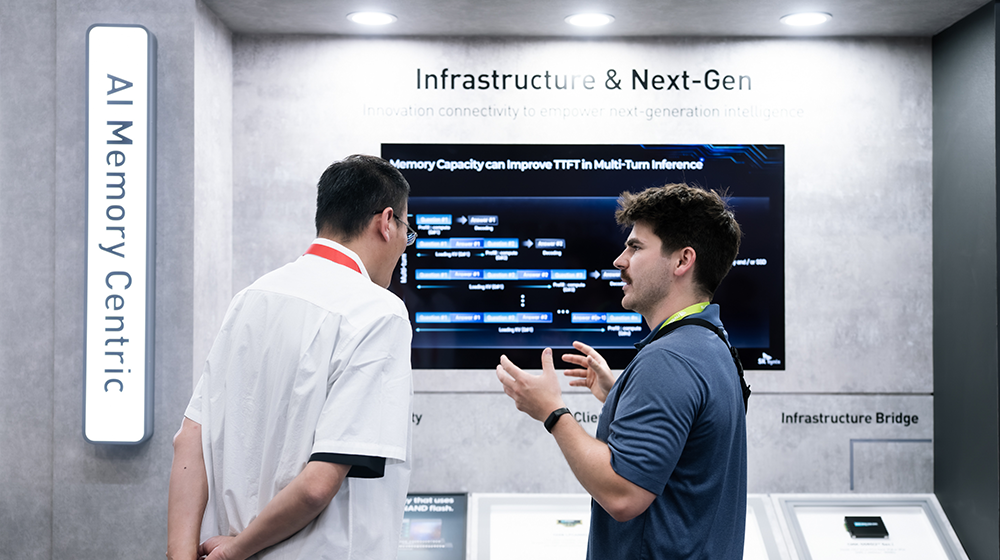
Beneath the large central LED panel, the “Product Portfolio Zone” was located at the heart of the booth. The space was divided into two sections — “AI Frontier & Industry Standards” and “Infrastructure & Next-Gen” — presenting a product portfolio that spans from flagship products currently driving the AI ecosystem to next generation memory solutions set to power the future AI infrastructure.
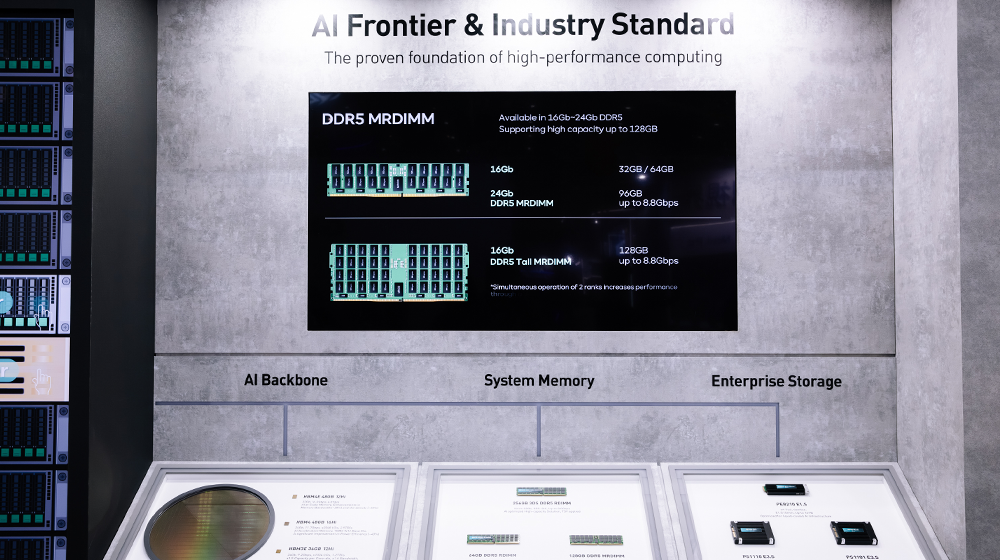
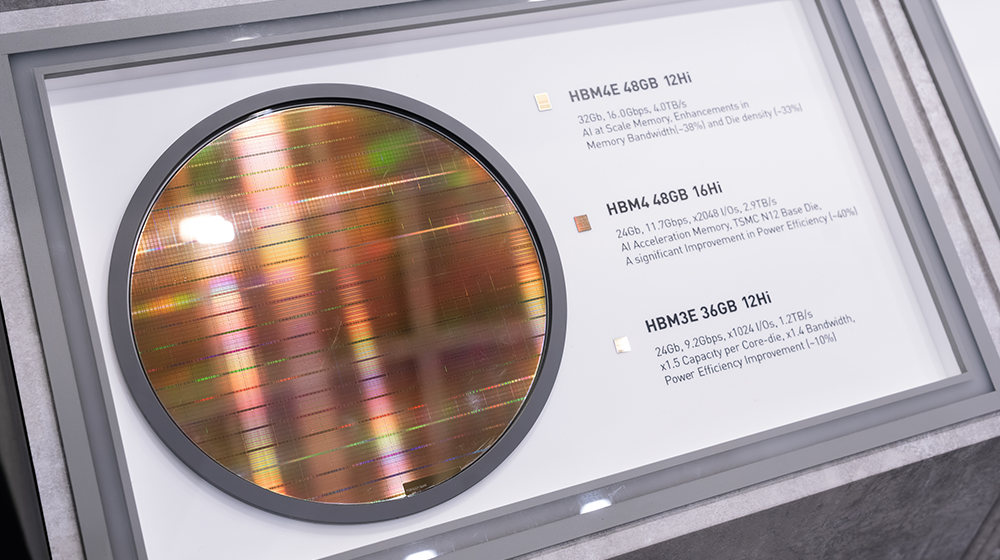
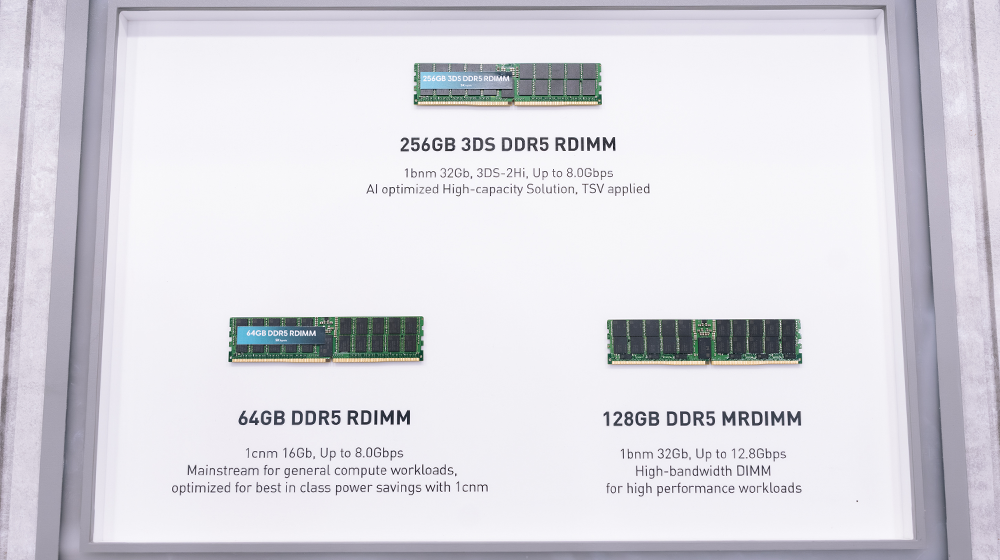
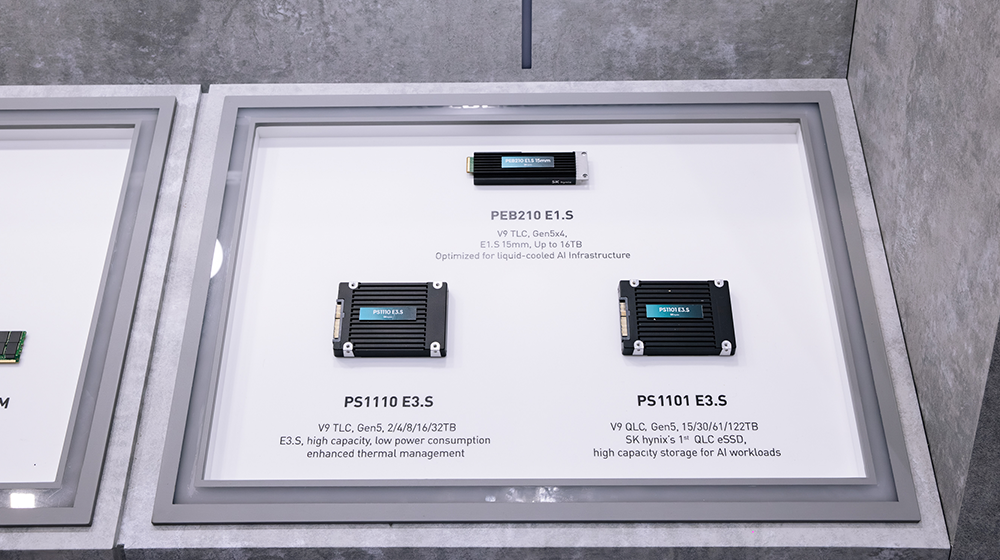
The AI Frontier & Industry Standards section featured SK hynix’s current flagship AI memory lineup. The display of 12-layer 36GB HBM3E, 16-layer 48GB HBM4, and 12-layer 48GB HBM4E placed side by side drew the most attention. Visitors also showed strong interest in the server DRAM products, including the 3DS* RDIMM* (256GB), which delivers high capacity for AI workloads; the RDIMM (64GB), the world’s first to apply the sixth generation (1c)* 10 nm process technology for faster speeds and greater power efficiency; and the DDR5 MRDIMM* (128GB), which offers high bandwidth well suited for AI workloads. The eSSD lineup included the PEB210 E1.S with direct liquid cooling (DLC) support; the PS1110 E3.S, designed for high capacity and low power in the NVMe* E3.S form factor; and the PS1101 E3.S, SK hynix’s first eSSD built on QLC* technology.
* RDIMM (Registered Dual In-line Memory Module): A server memory module product in which multiple DRAM chips are mounted on a substrate.
* MRDIMM (Multiplexed Rank Dual In-line Memory Module): A server memory module product in which multiple DRAM chips are mounted on a substrate. Speed is enhanced by operating two ranks — the basic operating units of the module — simultaneously.
* QLC (Quad-Level Cell): A type of memory cell used in NAND flash that stores four bits of data in a single cell. NAND flash is categorized as single-level cell (SLC), multi-level cell (MLC), triple-level cell (TLC), QLC, and penta-level cell (PLC) depending on how many data bits can be stored in one cell. As the amount of information storage increases, more data can be stored in the same volume.
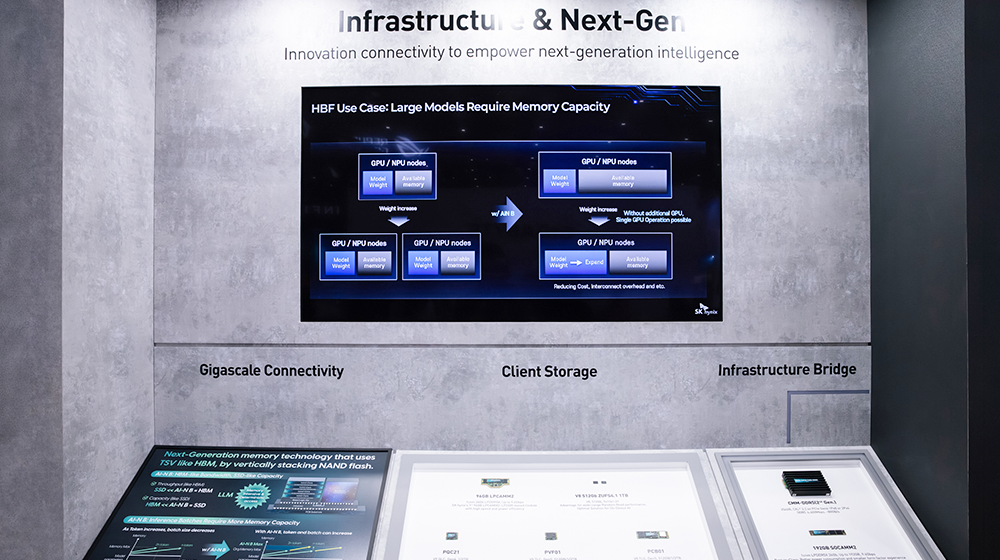
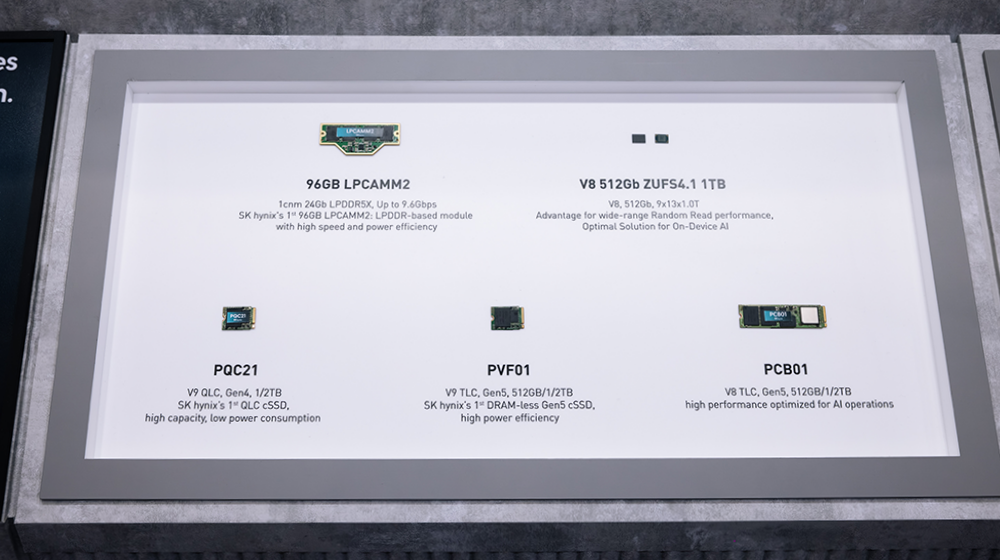
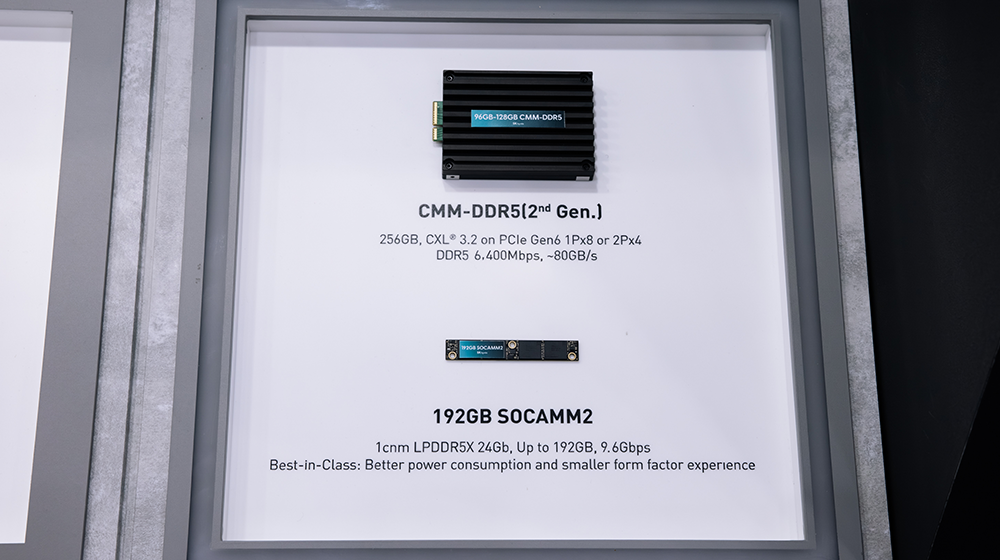
The Infrastructure & Next-Gen section opened with HBF (High Bandwidth Flash). HBF is a new concept in memory that vertically stacks NAND using TSV technology, similar to HBM, and attracted significant attention as a next generation memory technology poised to drive a paradigm shift in AI infrastructure. Also on display were ZUFS* 4.1, which enhances random read performance and reduces loading times for LLMs* and LPCAMM2*, which combines multiple LPDDR5X chips into a single module to deliver high speed and power efficiency in low-power environments. In addition, the section featured consumer SSD products targeting AI PC environments — including PQC21, PVF01, and PCB01 — as well as CMM-DDR5, which incorporates CXL* 2.0+ technology, showcasing a broad range of products across various applications and form factors.
* LLM (Large Language Model): An artificial intelligence model trained on large datasets to generate and understand natural language in a human-like manner. By significantly increasing the number of parameters, LLMs achieve advanced language-processing capabilities such as complex context understanding, reasoning, and translation.
* CXL (Compute Express Link): A next-generation interface that efficiently connects CPUs, GPUs, memory, and other components in high-performance computing systems to support massive, ultra-fast computation.
AI-Powered Tarot Reader, A Big Hit Among Visitors
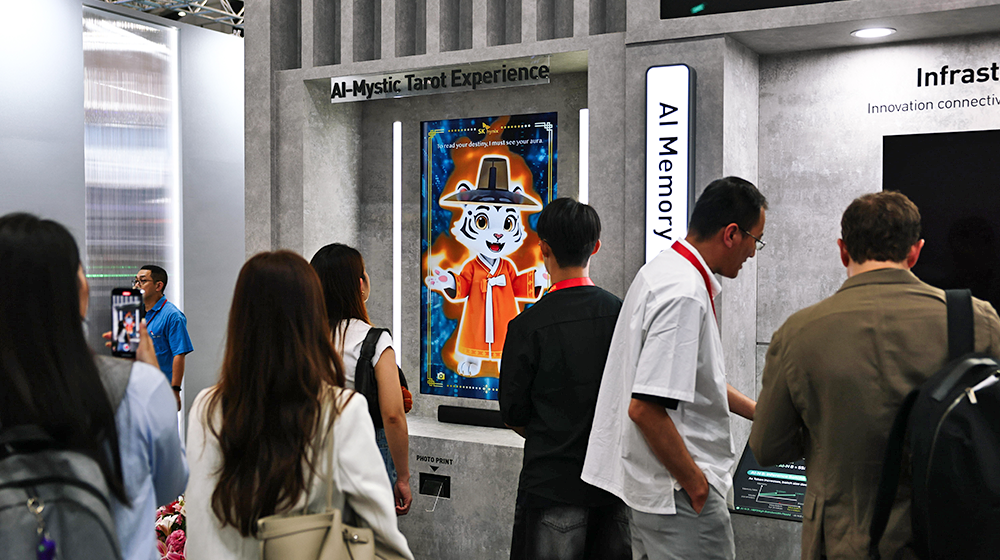
▲ The Tarot Event Zone, a crowd favorite among visitors
The Tarot Event Zone, located to the left of the Product Portfolio Zone, was equally bustling with visitors. At the zone, visitors could take a selfie, after which AI would generate an image blending traditional Korean attire and design elements with a fortune telling message printed on a tarot card. The experience proved especially popular among visitors from across Asia with a keen interest in Korean Wave (Hallyu) culture.
Behind the central LED panel, a lounge and VIP meeting rooms hosted active business meetings with key partners, serving as a platform for exchanging diverse industry perspectives on future AI trends and introducing SK hynix’s vision for the future.
SK hynix said, “At COMPUTEX Taipei 2026, we focused on demonstrating our technology leadership to visitors from around the world, showcasing the future of AI technology together with our key partners, while broadly promoting our flagship AI memory products and next generation technology vision.” The company added, “We will continue to stay attuned to evolving AI trends and maintain our leadership of the global memory market in the AI era ahead.”