SK hynix reaffirmed its leadership in AI memory by reporting record quarterly revenue and operating profit in the second quarter, while surpassing KRW 100 trillion in cumulative first-half revenue for the first time in its history.
Amid these strong results, market attention is increasingly focused on the sustainability of memory demand driven by expanding AI infrastructure investment, and how these dynamics may reshape the memory industry and affect corporate value.
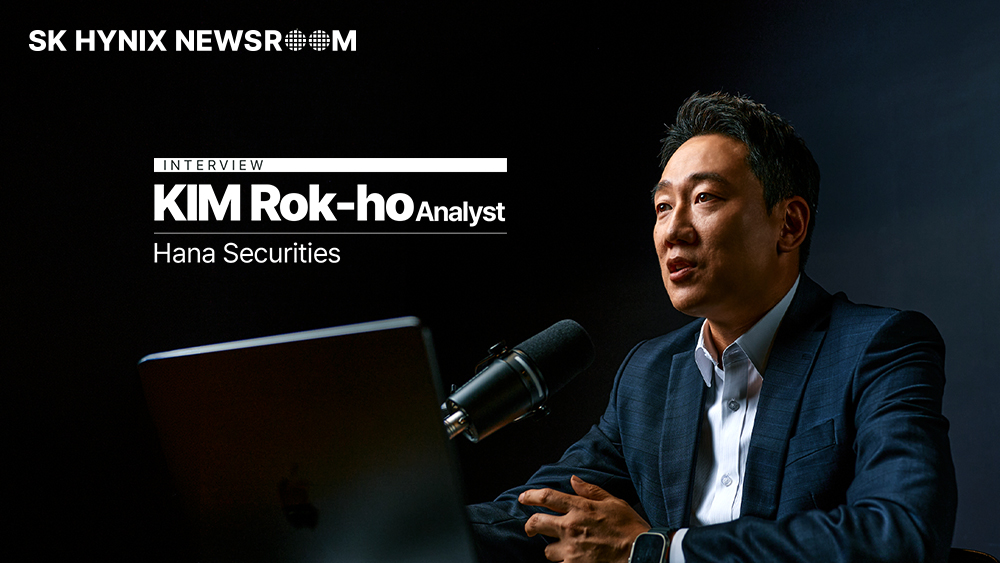
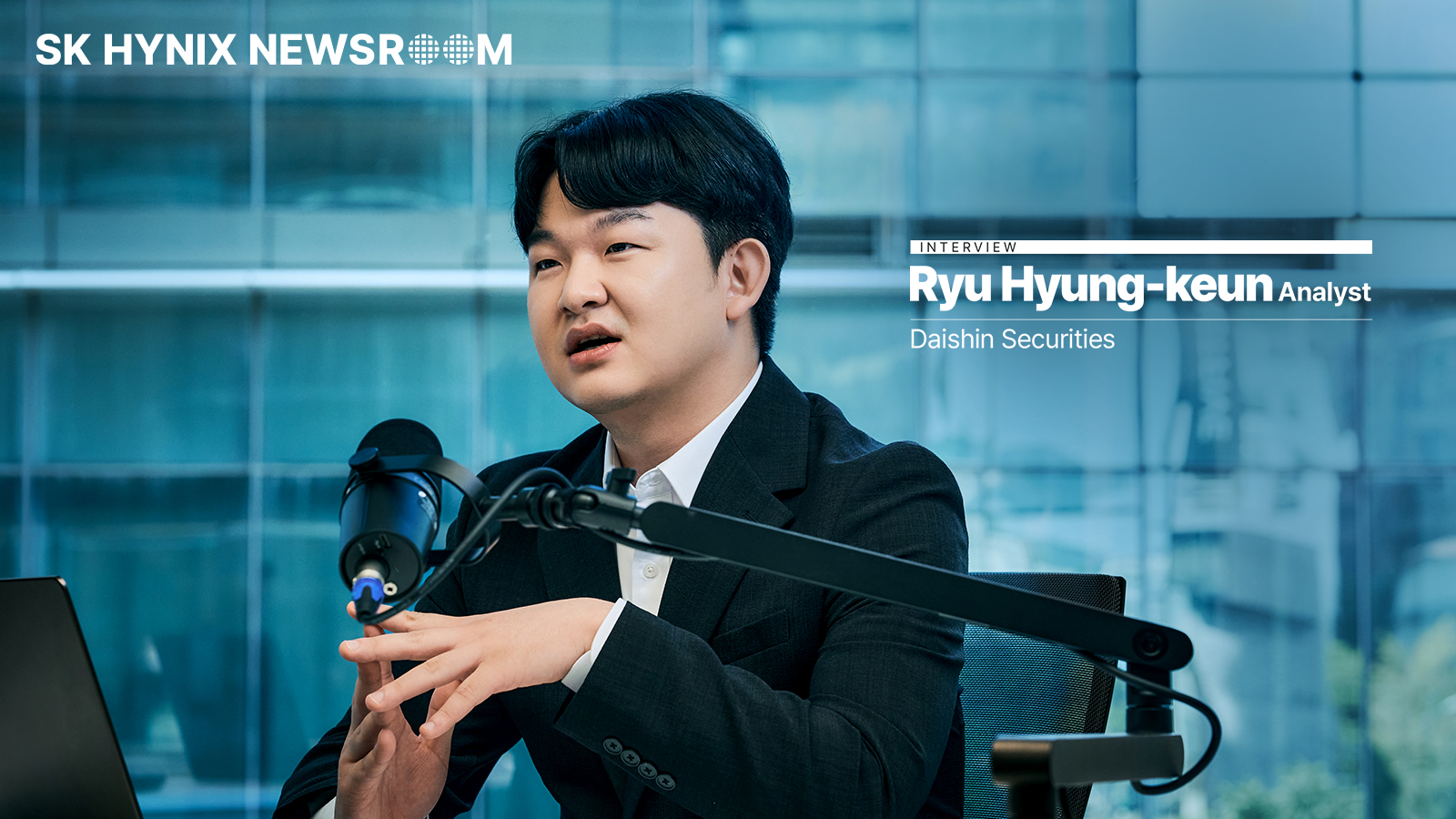
SK hynix spoke with Ryu Hyung-keun, Research Analyst at Daishin Securities, about the significance of the company’s record second-quarter results, the mid-to-long-term outlook for the memory market, and the company’s competitiveness and approach to enhancing shareholder value.
Record Quarterly Results Reaffirm AI Memory Leadership
Ryu viewed SK hynix’s second-quarter performance as a result of the market’s shift toward AI memory. “Memory market conditions have improved on the back of expanding AI infrastructure, supporting stronger financial results and creating a foundation for strategic capital investment going forward,” he said. “Robust cash flow will be an important driver for seizing future growth opportunities, strengthening the company’s competitive position, and enhancing corporate value.”
He added that earnings momentum could strengthen further in the second half as HBM4’s contribution to revenue increases, pricing for conventional server memory rises, and average selling prices for mobile products improve.
Expanding AI Investment and Constrained Supply: A Mid-to-Long-Term Outlook for Memory
The sustainability of AI infrastructure investment remains a key question for the market. While global Big Tech companies continue to pursue large-scale investments, concerns remain regarding investment returns and the potential deterioration of cash flows.
Ryu expects AI-related capital expenditures to remain elevated over the foreseeable future. AI-related revenues have continued to exceed market expectations, while establishing early leadership has become central to competitiveness in the AI era. “Competitive investments aimed at establishing early leadership ahead of the emergence of AGI, or artificial general intelligence, are likely to continue,” he said. “It is also important to pay attention to additional growth opportunities arising as AI competition expands beyond the private sector to the national level.” As AI becomes a critical determinant of industrial competitiveness and national security, demand for AI infrastructure—and the high-performance memory that supports it—is expected to grow further.
At the same time, supply growth is likely to remain more constrained compared to previous cycles. The increasing complexity of migration to advanced technologies, coupled with the growing share of high-value-added products such as HBM, present challenges to rapid supply expansion. “Market expansion is likely to continue at least through to the end of 2027,” Ryu said. “In the computing architecture of the AI era, adopting high-performance memory is directly linked to system efficiency. Competition among customers to secure memory supply is therefore likely to persist.”
Technology Leadership and Customer-Tailored Solutions: SK hynix’s Path Forward
In the AI era, competitiveness in memory will be determined not only by product performance, but also by the ability to work closely with customers and provide optimized solutions. As collaboration increasingly spans AI model development, system design, and platform deployment, the combination of technological capabilities and partnerships is becoming a core source of competitiveness.
“AI is ultimately an industry that resembles team play,” Ryu said. “Close partnerships with customers across the entire value chain—from product development to solution delivery—will determine success in the AI era.”
He emphasized that SK hynix should continue differentiating its products through technology leadership. “The fundamental value of a tech company comes from technology leadership,” he said. “What matters is how quickly a company can deliver new technologies that reduce inference costs and develop new products tailored to customer needs.”
He added that securing leadership in next-generation products such as HBM4E and LPDDR6, while strengthening customer-specific solution capabilities, could further solidify SK hynix’s market leadership.
ADR Listing and Shareholder Value Enhancement: A Starting Point for Revaluation
Recent share-price adjustments in the semiconductor sector have been attributed to a combination of fund flow (supply-and-demand) pressures caused by concentration in technology stocks and market uncertainty over the sustainability of rising memory prices.
Historically, memory stocks have often faced corrections when the pace of price increases appeared to peak or when supply expansion from new fabs was anticipated.
However, Ryu stressed that the AI-era memory market should not be interpreted through the same lens as previous cycles. The strategic importance of high-performance memory has grown with the expansion of AI infrastructure, while the nature of supply and demand is also evolving through the broader adoption of long-term agreements (LTAs) between customers and suppliers.
“LTAs that include prepayments and minimum volume commitments could serve as a starting point for reducing volatility in the memory industry,” he said. “If companies enhance demand visibility through long-term customer partnerships and strengthen CapEx discipline to enable flexible capacity management, expectations for a longer cycle could become a reality.”
Meanwhile, Ryu viewed a potential ADR listing as a development that could broaden access to global investors and support a re-rating of the company’s valuation. Improved accessibility in the U.S. market could expand the global investor base, enhance trading liquidity, and increase coverage by overseas analysts.
“ADR would be positive in that it provides global investors with a more convenient way to invest in SK hynix,” Ryu said. “If the company reduces earnings volatility, faithfully delivers on its shareholder return policy based on stable cash flow, and builds on long-term growth, the market will increasingly focus on SK hynix’s intrinsic value.”
※ This article does not represent the official position of SK hynix. It is based on an independent personal interview and is separate from the company’s decision-making.