The following article is a translated and edited version of an original Korean contribution from Professor Sujong Jeong of Seoul National University. One of Korea’s leading climate change experts, Jeong has conducted significant research into solutions to the climate crisis. In this article, Jeong shares his thoughts on AI’s impact on climate change.

The Climate Crisis Changing Our Lives
In 2025, the world is facing an unprecedented level of climate change. Climate-related natural disasters are occurring at such a scale that they are now smashing historical records every year. Summers get hotter, the amount of rainfall increases, and storms grow more intense. The amount of damage caused by these extreme weather events is also escalating yearly.
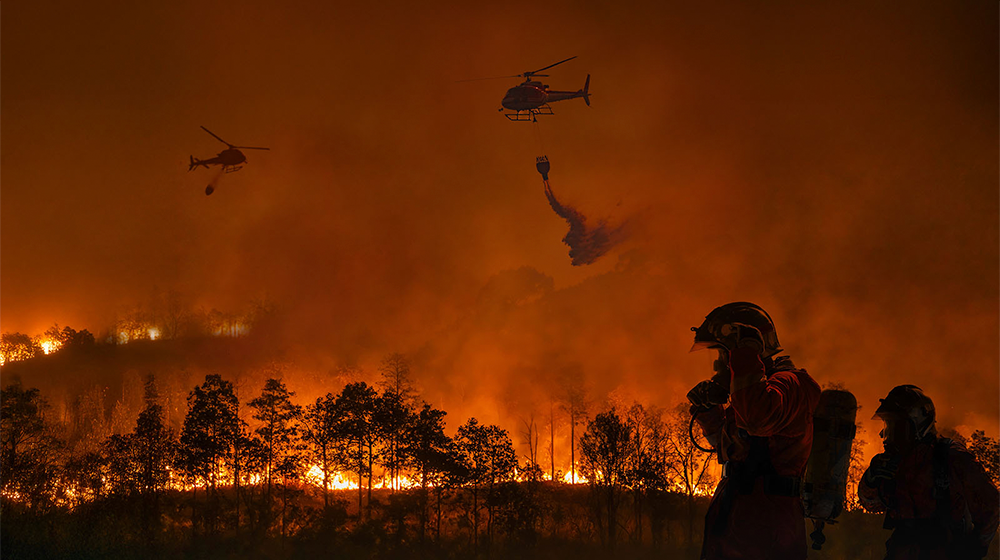
The 2025 wildfires in Southern California1 in January and in South Korea2 in March were direct consequences of climate change. While the initial causes of these fires differed, their rapid spread and severity were driven by factors related to atmospheric drying. Rising temperatures and reduced winter precipitation caused droughts, allowing small sparks to develop into large-scale fires.
12025 Southern California wildfires: Beginning January 7, these wildfires lasted for three weeks, burning approximately 230 square kilometers across the Greater Los Angeles area. The estimated damage amounted to approximately USD 250 billion.
22025 South Korea wildfires: The country’s worst-ever wildfires broke out in North Gyeongsang Province on March 22, resulting in 75 casualties, including 30 deaths, and scorching an estimated 48,000 hectares of land.

If climate change only resulted in a slight increase in temperature or a minor rise in precipitation, it might not be cause for great concern. However, what we are witnessing today goes far beyond such minor changes. The increasing use around the world of terms such as “climate crisis” and even “climate emergency” instead of the more neutral “climate change” indicates that the challenges we face are much more severe than mere fluctuations.
Humanity and AI: Responding to Climate Change
So, how should we respond to climate change? The world is focusing on two approaches: climate change mitigation, which involves reducing the greenhouse gas emissions that drive it, and climate change adaptation, which aims to lessen the impact of the damage already taking place.
Ultimately, humanity must both mitigate and adapt to climate change. What’s also important to note here is that there is a new technology driving change in the world, much like the rapidly shifting climate: AI.

AI is developing astonishingly fast. What once seemed possible only in science fiction is increasingly becoming reality. From the moment we wake up, check the weather, and eat breakfast to when we fall asleep, we are with AI. Everyone encounters it at least once a day. It is already quietly transforming our lives, much like climate change.
Of course, AI itself also impacts climate change. Some argue that AI is one of its biggest contributors, while others view it as a partner in overcoming the crisis. Then what exactly is AI’s role in relation to the climate crisis? Let us examine AI through the lenses of climate change mitigation and adaptation.
AI’s Massive Energy Consumption: Accelerating the Climate Crisis?
First, reducing carbon emissions is the essence of climate change mitigation. However, the advancement of AI is causing a rapid increase in emissions because, fundamentally, the technology requires an enormous amount of electricity. Unless AI is entirely powered by renewable energy, the increase in emissions is inevitable.
Furthermore, the AI industry has recently been prioritizing accuracy over lightweight model design amid a growing shift toward cloud-based services. Implementing more accurate AI demands significantly larger volumes of high-quality data, and processing more data means greater electricity consumption.
Another issue is the overuse of AI, essentially digital overconsumption, which also drives up electricity usage. For instance, ChatGPT saw a surge in popularity in April 2025 after launching a new image generation feature the previous month which allowed users to transform photos into famous animation styles. Millions of people worldwide used the service to generate images, including in South Korea where ChatGPT recorded a daily peak of 1.25 million users.

Brad Lightcap, chief operating officer (COO) of OpenAI, highlighted this surge in image generation on his X account. He stated that within just one week of the introduction of ChatGPT’s image generation feature, over 130 million users generated more than 700 million images.
Let us focus on the fact that over 700 million images were generated. How much carbon dioxide was emitted to create them? According to a 2023 study3, approximately 2.907 kilowatt-hours of electricity is required to generate 1,000 images using AI. That means producing 700 million images consumed about 2,035 megawatt-hours of electricity, which corresponds to roughly 845 tons of carbon dioxide emissions. This staggering amount of carbon emissions is comparable to 4,100 round-trip flights between Seoul and Busan, a port city located around 340 km away from the capital.
3The study was conducted by researchers at Carnegie Mellon University in the U.S. and AI development company Hugging Face.
AI for Overcoming the Climate Crisis
So, is AI only exacerbating the climate crisis? At first glance, it may seem so. However, as awareness grows about AI’s carbon emissions, efforts are underway to use AI to minimize factors driving climate change.
AI has already been used in several cases in Europe and the U.S. to more accurately predict electricity demand and analyze renewable energy variability to maximize power grid efficiency. There are also projects which use AI to reduce power consumption in data centers, often called “energy-intensive facilities,” by dynamically optimizing cooling systems and server placement.
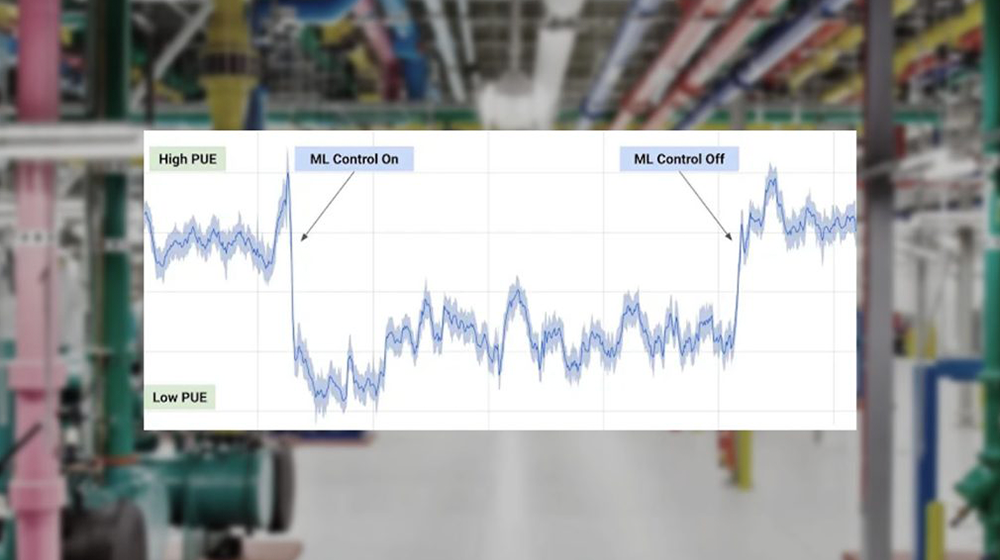
One notable example of such efforts is Google DeepMind. By leveraging AI for electricity demand forecasting and data center management, Google has reduced power consumption by up to 40%.
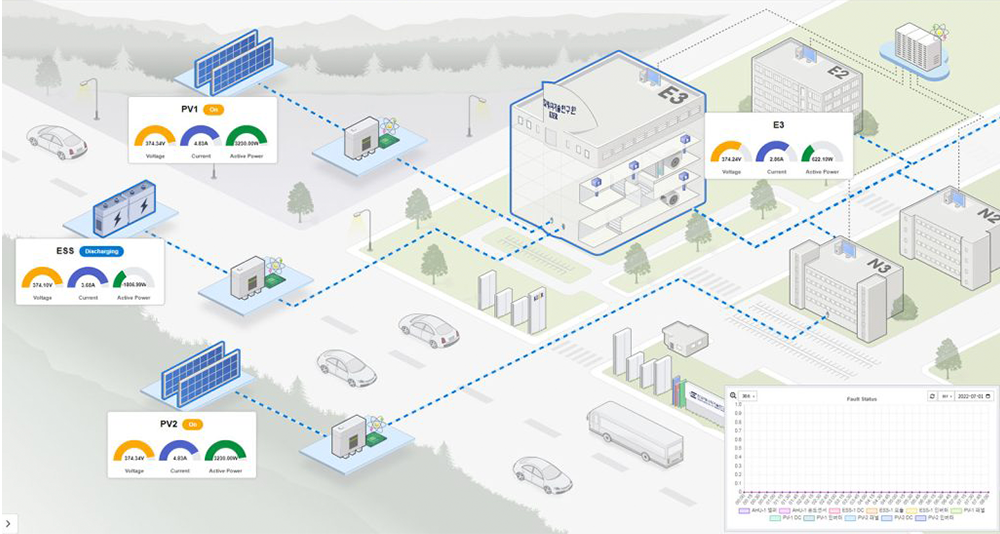
In addition, steps are being taken to reduce emissions through AI in the building sector, one of the largest current sources of carbon emissions. The Korea Institute of Energy Research (KIET) has developed AI-based control technology that can manage every aspect of a building in real time. This technology can calculate power generation and consumption and even perform demand management and fault diagnosis.

As well as supporting building management, AI can optimize traffic signal control and autonomous vehicle route calculations, ultimately reducing fuel consumption. For example, the U.S. city of Pittsburgh implemented an AI-based traffic signal system that alleviated congestion and achieved an approximately 20% reduction in fuel usage.
These examples show that AI is already being used in multiple fields to reduce carbon emissions. While there is still a long way to go, it’s already clear that AI is being applied broadly rather than being limited to specific sectors.
Next, let’s look at the approach of climate change adaptation, which at its core involves minimizing the damage caused by extreme weather. Fundamentally, the increasing impact of extreme weather stems from its unpredictability. However, recent advances in AI-powered forecasting technologies signal a change. The extreme weather that was once thought to be impossible to prepare for is now increasingly being predicted with greater accuracy.
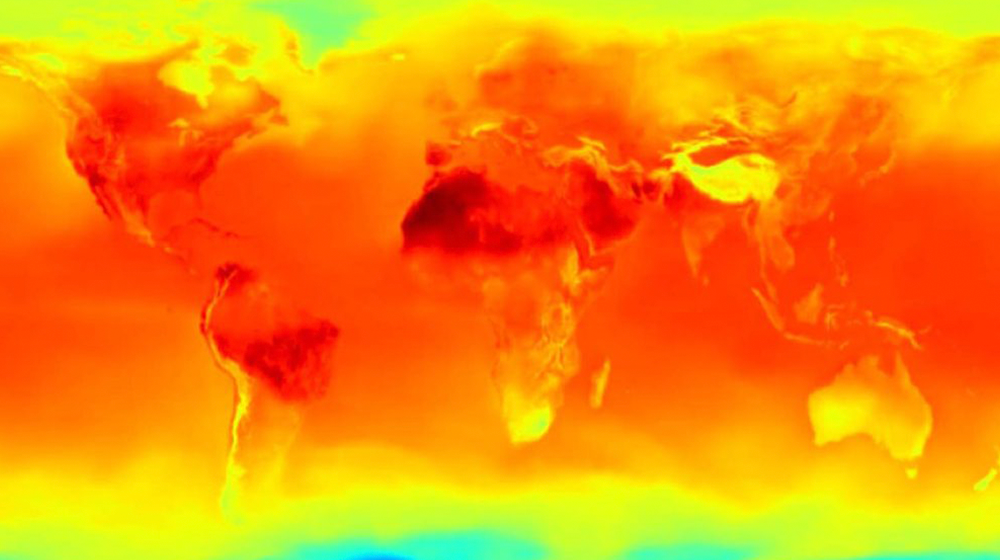
In fact, IBM has implemented an AI and big data-based system for forecasting extreme weather. Also, Google’s DeepMind has collaborated with the European Centre for Medium-Range Weather Forecasts to develop a more accurate extreme weather prediction model. Furthermore, DeepMind’s 10-day global weather forecasting system, GraphCast, has helped reduce damage caused by extreme weather events such as hurricanes and heavy rainfall.
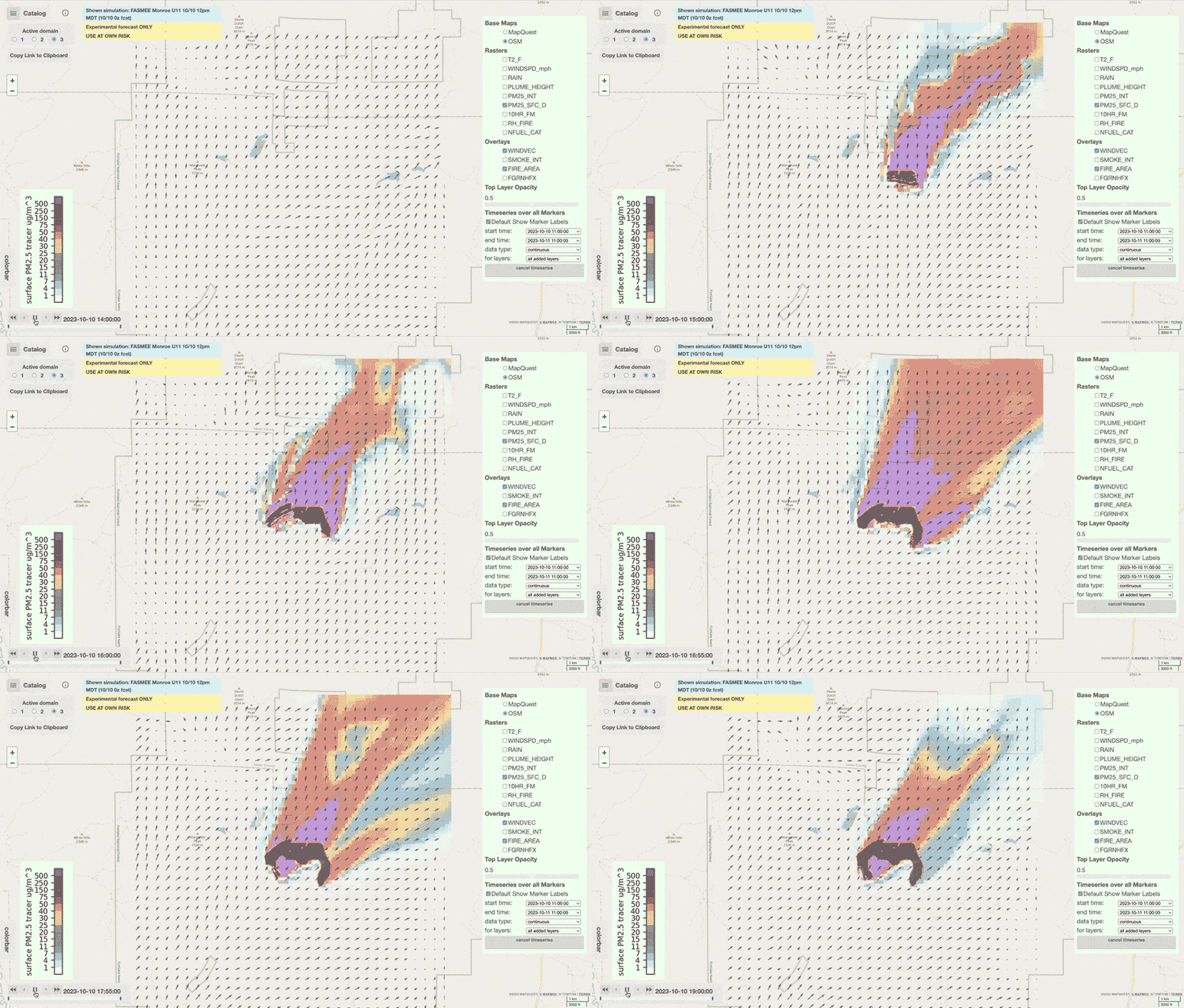
Moreover, AI is being used to help minimize the damage caused by increasingly frequent large-scale wildfires. NASA has launched a Wildfire Digital Twin project, which uses real-time data from wildfire-affected areas combined with AI to accurately predict the spread of fires and smoke. This initiative has helped minimize the damage caused by wildfires.
AI: A Double-Edged Sword in the Fight Against Climate Change
These cases clearly show that AI performs well in improving energy efficiency and predicting natural disasters caused by extreme weather. However, we should be cautious about using AI indiscriminately, as it inevitably produces significant carbon emissions.
Ultimately, AI is both our greatest ally in addressing the monumental challenge of the climate crisis and a contributor to that very problem. AI’s negative impact on accelerating the climate crisis must be mitigated for it to evolve into a truly sustainable technology that supports humanity’s future.
One such example is the previously mentioned use of AI for accurate and granular power demand forecasting. Since this method is already in active use, it should be more widely adopted by data centers. In addition, it is essential to reduce total power consumption within data centers themselves. In line with this idea, semiconductor companies such as SK hynix are relentlessly working to enhance the low-power consumption capabilities of their products.
On a personal note, I sometimes wonder if the climate crisis has reached a point where it can no longer be solved by human effort alone. It also raises the question: “Has AI emerged to solve the countless problems that are beyond human capability?” While it remains challenging for now, I hope that AI will soon become a guardian of humanity, protecting it from the climate crisis.
Disclaimer: The opinions expressed in this article are solely those of the author and do not necessarily reflect the official position of SK hynix.