Reading the AI industry at COMPUTEX Taipei 2026
Not long ago, COMPUTEX was a gathering place for gaming PC enthusiasts. This year, for the first time, the head of a memory semiconductor company took the stage there. As someone with a background in semiconductors who creates content in the deep tech space, I attended after receiving an invitation from NVIDIA — though I’ll admit I had doubts beforehand about whether the event would offer much for a channel focused on deep tech. Those doubts didn’t last long. COMPUTEX is no longer a trade show for gaming components. It has become a full-scale industry showcase encompassing AI infrastructure, robotics, data centers, and AI PCs — all under one roof.
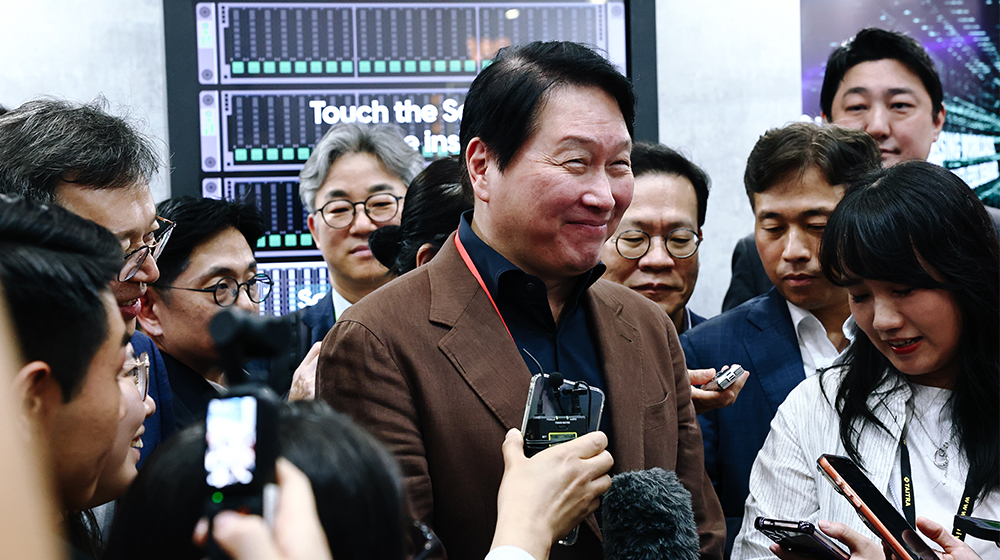
From a traditional standpoint, braving temperatures above 33°C to attend a tech expo in Taiwan might have seemed hard to justify. But when that expo becomes a central stage for AI infrastructure and global supply chains, the calculus changes entirely. Speaking with foreign media at the event, SK Group Chairman Chey Tae-won put it plainly: “We currently produce memory chips for AI, but our ambition is to go further — to play a role in building the AI factory itself.”
SK hynix is evolving from a memory manufacturer into a company that holds a strategic position across the broader AI infrastructure landscape. The analogy that comes to mind is the electric vehicle transition. When the market began sorting companies into “traditional automakers” and “EV and autonomous driving platform companies,” their price-to-earnings ratios diverged dramatically — not because the products changed, but because the category did. The same dynamic is now at work for SK hynix.
If I had to name just one thing to take away from this year’s COMPUTEX, it would be the AI factory1.
1AI factory: A data center infrastructure that generates value from data, much like a conventional factory produces goods from raw materials.
The factory that manufactures intelligence
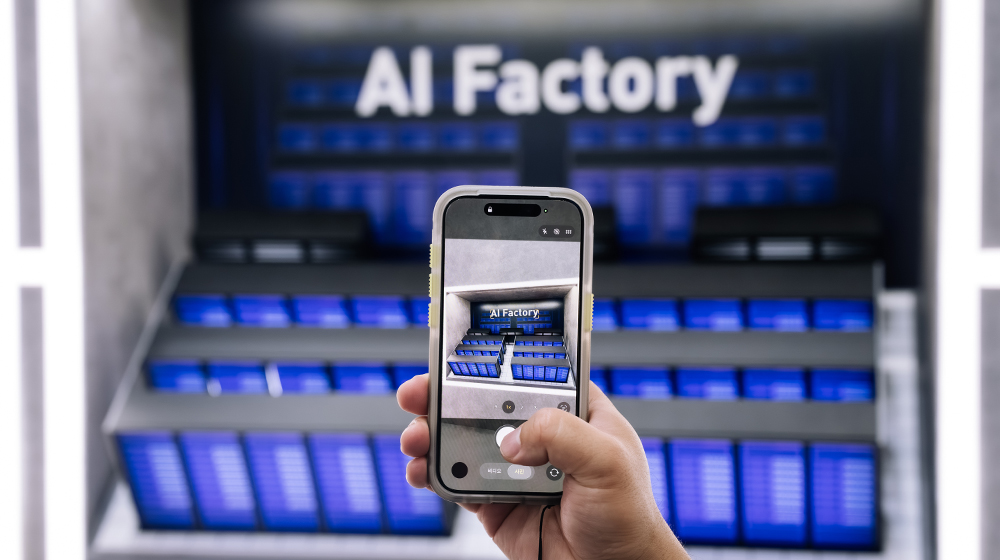
An AI factory is a factory-type data center that takes in electricity and data as inputs and produces tokens2 — units of intelligence — as output. Chairman Chey has made this point before, notably in a documentary where he said: “Factories have always produced consumer goods. Now, they are becoming places that produce intelligence.”
The key shift is in how we frame computing — not as a cost center, but as a production process. The data center of the past was essentially a warehouse: a place to store files and run predefined software. In the world Jensen Huang envisions, the data center is a factory where raw materials (data and power) go in and intelligence (tokens) comes out. Huang has described it this way: if the raw material of the First Industrial Revolution was water and its product was electricity, today’s factory runs on data and power — and its product is intelligence. I had the opportunity to speak with Jesse Clayton, a Senior Product Marketing Manager who has been with NVIDIA for 21 years, during the event. He made exactly the same distinction between traditional data centers and today’s AI factories: the output is intelligence.
What this factory produces is not chatbot responses. It is the capability to write code, design systems, make diagnoses, review contracts, generate content, and drive robots. The output of an AI factory is not text — it is the capacity to perform intellectual work that augments or replaces human labor. In his keynote, Huang underscored this point: “The day will come when tokens determine a nation’s GDP.”
2Token: The smallest unit of data that an AI system creates by breaking down information for processing — learning, generation, and inference.
A booth that goes beyond memory
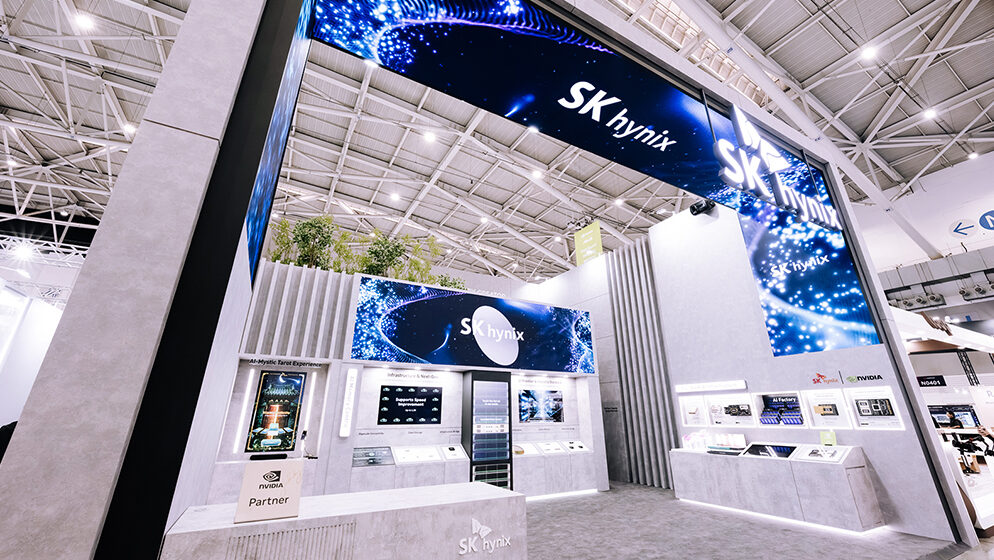
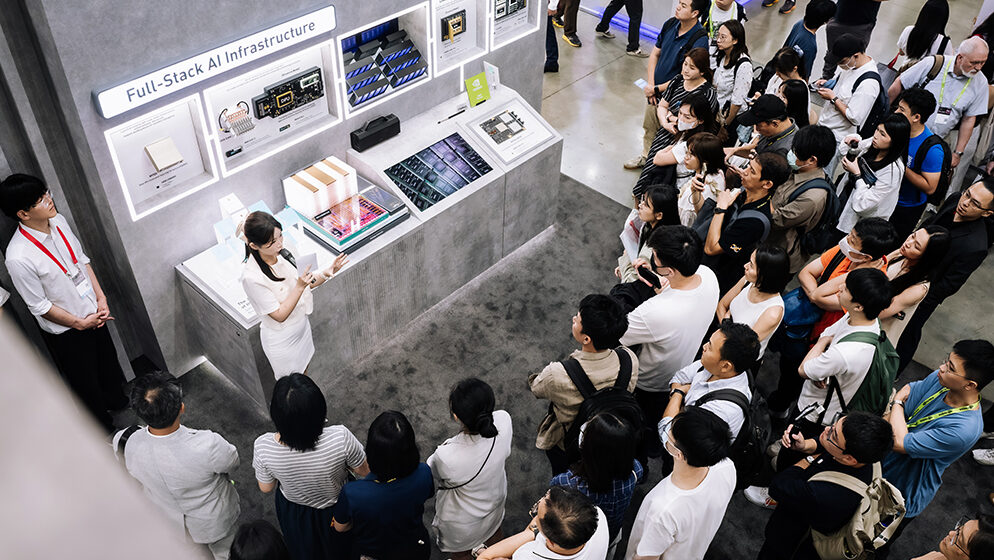
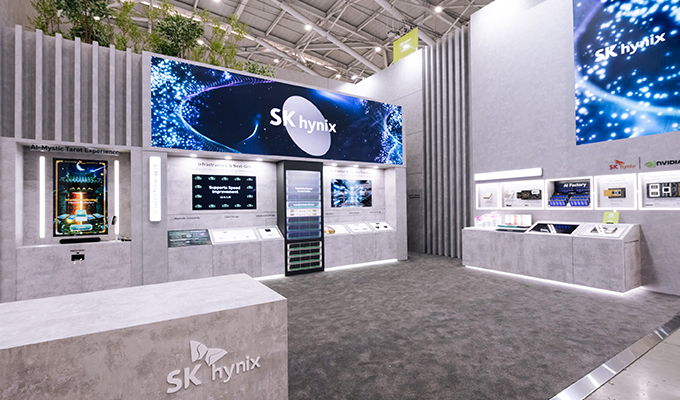
What struck me most about the SK hynix booth was how rarely the word “memory” appeared. The keywords the booth led with were “Full-Stack AI Infrastructure,” “AI Frontier Industry Standard,” and “Next Generation Infrastructure” — all three placing AI infrastructure front and center, rather than AI memory.
A company’s exhibition is, I think, the most honest statement of how it wants to be seen. Viewed through that lens, the SK hynix booth conveyed a clear ambition: not to be a component supplier, but to claim a defining position across the entire AI infrastructure stack.
A tighter partnership amid the memory shortage
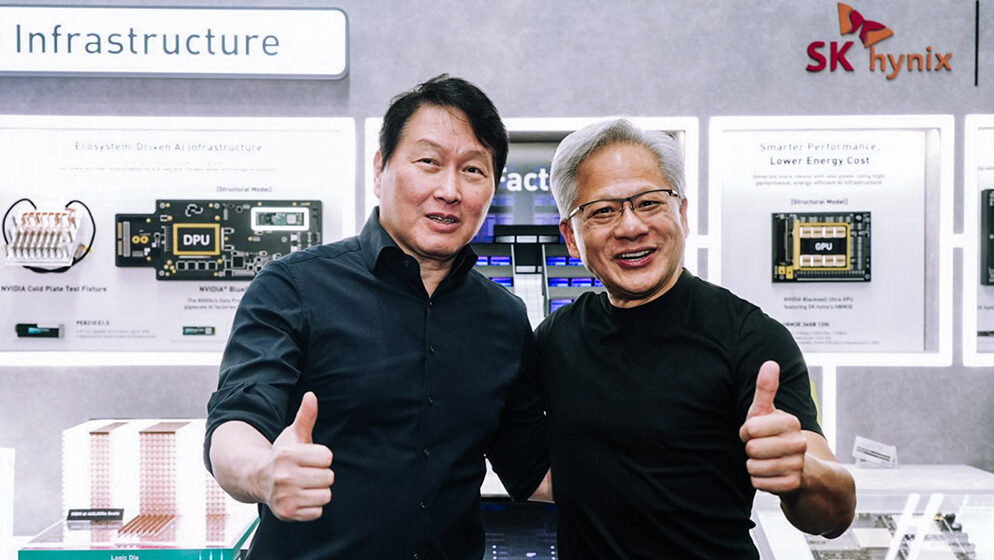
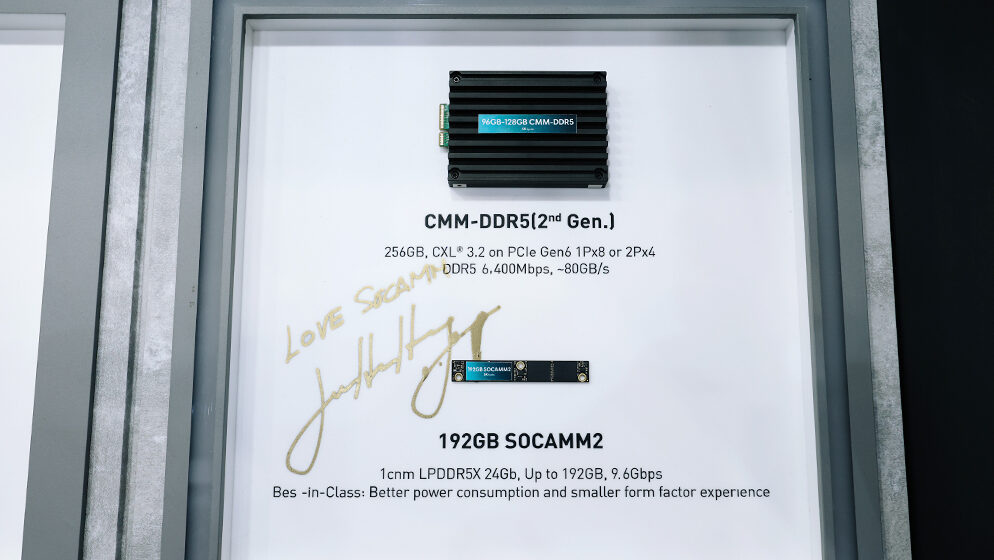
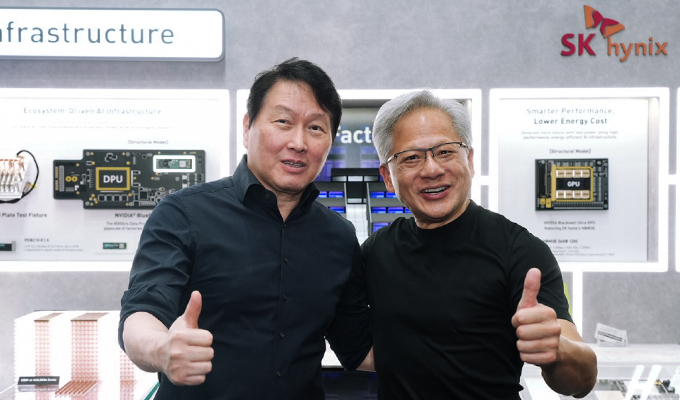
If I had to pick the single most memorable moment from COMPUTEX, it would be Jensen Huang’s surprise visit to the SK hynix booth.
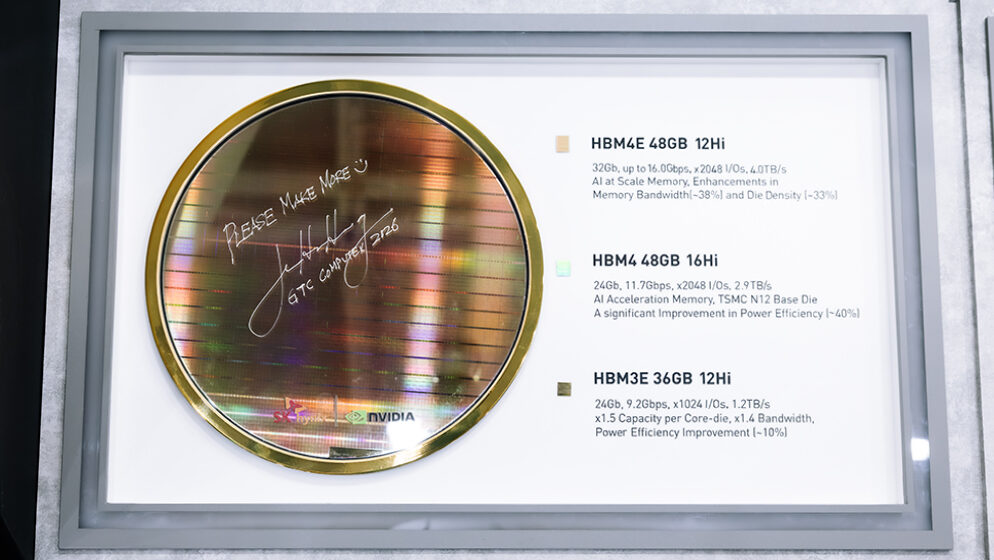
Huang left handwritten signatures on several of the exhibition products. Two in particular stood out — and both seemed to capture the state of the memory market in a handful of words. On an HBM4E wafer, he wrote “Please Make More,” a direct reflection of today’s memory shortage3. On a 192GB SOCAMM24, he wrote “LOVE SOCAMM.” These short messages say more about the current market than any analyst report could. When the CEO of the world’s leading AI accelerator company has to write “please make more” on a supplier’s exhibition product, the bottleneck is real.
The night before COMPUTEX opened, Huang gathered with top Korean business leaders outside a modest restaurant in Taiwan for an informal press gathering over drinks. Speaking with reporters, he said: “We need to work very closely with SK hynix,” and added, “We’ve had a very long relationship with SK hynix, and I’m happy and proud to see their success.”
3Memory shortage: A global shortfall in the supply of memory semiconductors.
4SOCAMM (Small Outline Compression Attached Memory Module): An AI server-optimized memory module based on low-power DRAM.
The real moat of HBM lies in thermal management
So why SK hynix specifically? My answer comes down to one word: heat.
HBM is built by stacking DRAM chips vertically. The pathways that carry signals through these stacked layers are called TSVs (Through-Silicon Vias) — essentially elevators inside the chip, transmitting electrical signals between floors. The problem is that as these copper columns grow denser and the stack grows taller, heat rises sharply. Managing that heat reliably is both the core responsibility and the key competitive advantage of a memory company. Though not featured in this exhibition, SK hynix recently announced iHBM5 technology, signaling its confidence in thermal control. The eSSD and other NVIDIA co-developed products on display also demonstrated the company’s strength in cooling performance.
If NVIDIA is the architect of the AI factory, SK hynix is the company that ensures the factory’s heart — the accelerator — stays cool and is continuously supplied with data at full speed. SK hynix’s position as the world’s number-one HBM supplier isn’t simply about raw speed. It comes from delivering the most balanced HBM in the industry — one that excels across every dimension that matters, from thermal management to power efficiency to performance.
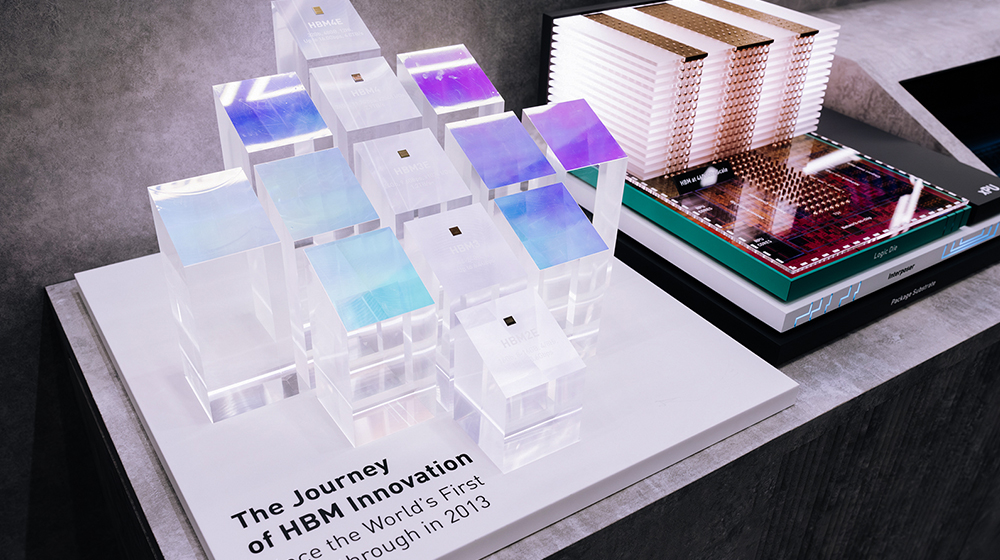
SK hynix’s pace of HBM advancement has been relentless. Today’s widely deployed HBM3E delivers approximately 1.2 TB/s (terabytes per second) of bandwidth per stack. HBM4, which SK hynix became the first in the world to bring to mass production, doubles the number of I/O lanes from 1,024 to 2,048 — dramatically expanding bandwidth while improving power efficiency by more than 40%. The newly unveiled HBM4E pushes data transfer speeds up to 16.0 Gbps (gigabits per second) and bandwidth to approximately 4.0 TB/s. For anyone outside the industry, it can be difficult to feel the difference between HBM generations. SK hynix made two deliberate attempts to bridge that gap for visitors.
The first was a sequential display from HBM2E through HBM4E in a single view, accompanied by enlarged models illustrating TSV structures — giving visitors an intuitive sense of how the technology has evolved at a scale the naked eye can actually appreciate.
The second was a display of actual wafers alongside prototypes of HBM4 and HBM4E — the products heading toward mass production and the next generation beyond — set beside the HBM3E products already widely in use today. Together, these exhibits gave visitors a clear picture of SK hynix’s direction, allowing them to see firsthand how the performance gains they had only ever encountered as numbers translate into real generational change.
5iHBM: A next-generation memory technology that integrates ICE (Integrated Cooling Elements) directly into the HBM package, dramatically reducing heat generation.
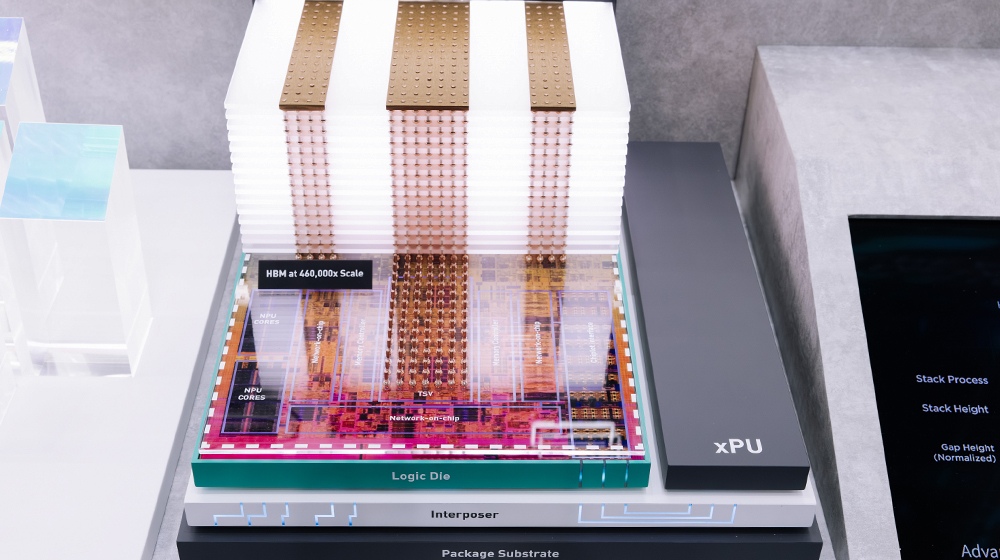
On a factory floor, even the fastest robotic arm cannot increase output if the conveyor belt is slow. The same logic applies to AI semiconductors. No matter how powerful the GPU, it cannot perform at full capacity if the HBM cannot supply data fast enough. That is why SK hynix is not positioning itself as a memory vendor — it is positioning itself as the infrastructure company that determines AI output. If NVIDIA is the factory’s architect, SK hynix is the infrastructure architect that keeps materials and products flowing without interruption. It is no exaggeration to say that hyperscalers6 building AI factories cannot meet their performance, power, and thermal targets without SK hynix.
6Hyperscaler: A company that operates large-scale data centers at massive volume.
A key pillar of the AI factory alliance
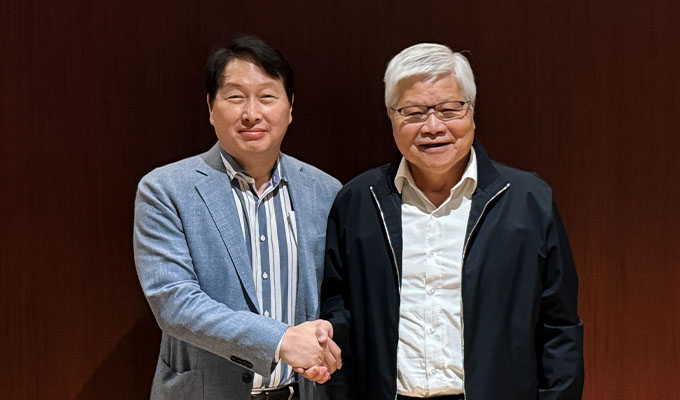
In Taipei, Chairman Chey met with the leadership of NVIDIA, TSMC, and Foxconn to discuss strategies for strengthening next-generation AI infrastructure. It was a visible signal that SK hynix’s role is expanding — from component supplier to partner in building the AI factory as a whole.
Challenges remain, of course. Chey acknowledged that AI factories face simultaneous bottlenecks across multiple fronts: not just GPUs and memory, but capital, energy, equipment, and water. Building a new fab takes at least three years; a greenfield development starting from land preparation takes five or more. Even so, Chey made clear he has no intention of pulling back on investment. In a telling exchange during a booth tour at another company’s COMPUTEX exhibit, when an employee asked how SK hynix is dealing with the memory shortage, Chey replied: “The key is to make sure nothing goes to waste — every small thing has to be put to use.”
Taiwanese journalists pressed him frequently on the “Taiwan ecosystem.” Chey was direct: “We’re collaborating on HBM4, and we have an excellent partnership with TSMC.” He went further, saying that as SK hynix expands its AI business, “collaboration with outstanding Taiwanese partners is indispensable,” and personally visited key Taiwanese companies including Foxconn to review cooperation plans. The path Chey traced through his first COMPUTEX made one thing clear: the bottlenecks of the AI factory cannot be solved by any single company. They demand partnership.
Efficiency doesn’t kill demand
Some observers predict that advances in memory compression and inference efficiency — technologies like TurboQuant7 — will ultimately reduce memory demand. I disagree.
Throughout semiconductor history, what has killed demand is not efficiency — it is technology with nowhere to go. Efficiency, by contrast, tends to drive costs down; lower costs bring in more users; and more users, as Jensen Huang himself has emphasized, generate greater infrastructure demand in return. When the cost of telecommunications fell, video streaming exploded. When semiconductor performance improved, heavier and more complex software came to dominate the world. This is Jevons’ Paradox.8 As the token economy matures, I expect memory demand not to shrink, but to accelerate.
Chairman Chey has observed that the era of the specialist — someone who masters a single field — may be giving way to an era of the generalist. When AI can compress the time it takes to acquire knowledge by a factor of ten, the person who can do many things well simultaneously becomes far more valuable. A world where one person can be a doctor, an engineer, and an entrepreneur at once — the physical foundation supporting that intelligence is memory.
7TurboQuant: An inference optimization technique that quantizes internal computation values in AI models to low-bit representations, reducing memory usage and computational load.
8Jevons’ Paradox: The theory that as technological efficiency improves, total resource consumption tends to increase rather than decrease, as the lower cost of use expands overall demand.
The outcome will be decided by physical capability
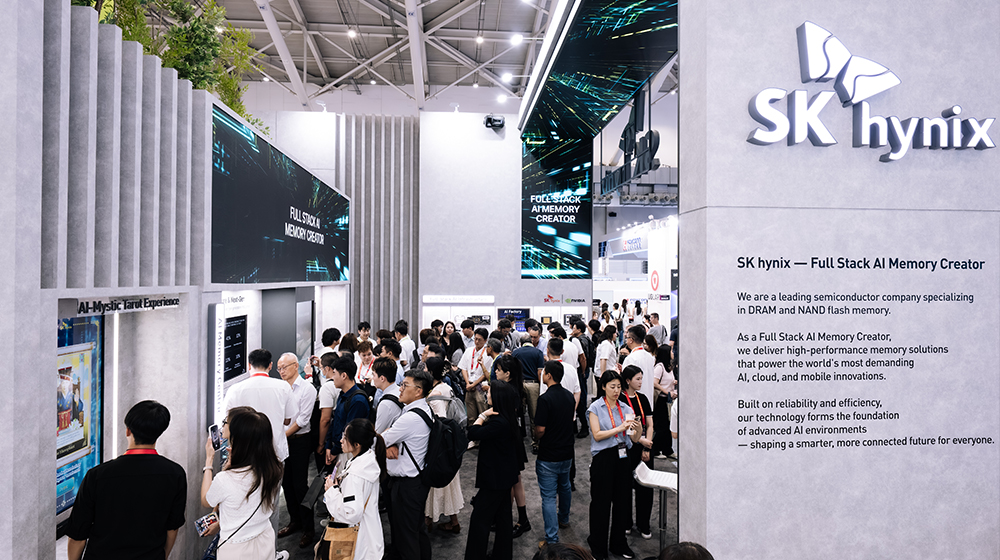
Having followed CES in January, GTC in March, and GTC Taipei and COMPUTEX in June, I came away from each event with the same conviction: SK hynix has already secured its place at the heart of this competitive landscape. Its exhibition presence and technology roadmap make that unmistakably clear.
In the AI era, the winners will likely be determined not by who builds the smartest algorithm, but by who possesses the physical capability to bring those algorithms into the real world. In the 19th-century Gold Rush, it was not the miners who lasted — it was the companies selling jeans and pickaxes.
There is a saying in Korea that if Korean memory stops, global AI stops. That is no longer hyperbole. What we are witnessing may not simply be a company at its peak — it may be a historic inflection point that determines whether Korea can hold a central position in the AI infrastructure war. In the age of the AI factory — where intelligence itself is manufactured — SK hynix is no longer just a component supplier. It is rising as a foundational architect of the next industrial order.