In today’s digital world powered by binary code, the SK hynix Newsroom delves into the present and future industries powered by semiconductors through a new series. The Age of Semiconductors series offers in-depth analysis of the most pressing industry challenges paired with expert insights into potential solutions and the path forward. Each article will explore how small yet revolutionary semiconductor technologies create a ripple effect — driving change far beyond their size. This second episode explores the global landscape of humanoid robotics and highlights the semiconductor innovations that could accelerate their arrival.
Humanoids are rapidly becoming more life-like, mimicking the way we move, speak, and even express emotions. As the boundary blurs between humans and machines, we find ourselves facing a question: Can we accept them as one of us?
As humanoids move from imagination to reality, the SK hynix Newsroom explores the present and future of robotics and the role AI memory may play in their evolution.
Explosive Growth in Robotics and the Rise of Humanoids
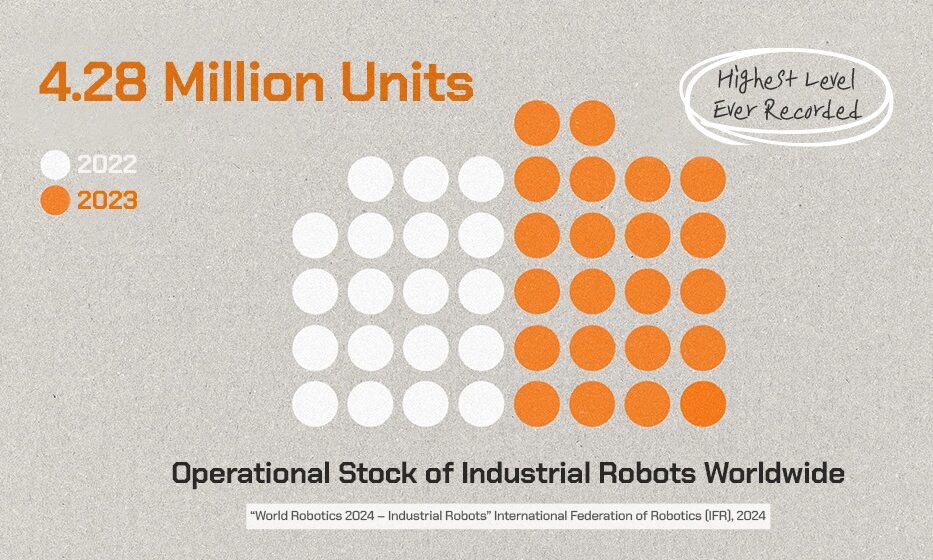 IFR data shows that the number of industrial robots reached a record-high in 2023
Robots have already become integral to our lives. According to the World Robotics: Industrial Robots 2024 report by the International Federation of Robotics (IFR), the global operational stock of industrial robots reached a record-high of 4.28 million in 2023. This represents a 23% increase from 2021 and an 11% rise from 2022.
Meanwhile, a report from The National Bureau of Economic Research suggests that a single robot can perform the work of approximately 3.3 people. This is equivalent to replacing around 14 million workers, a figure comparable to the entire economically active population of Seoul and its surrounding metropolitan area.
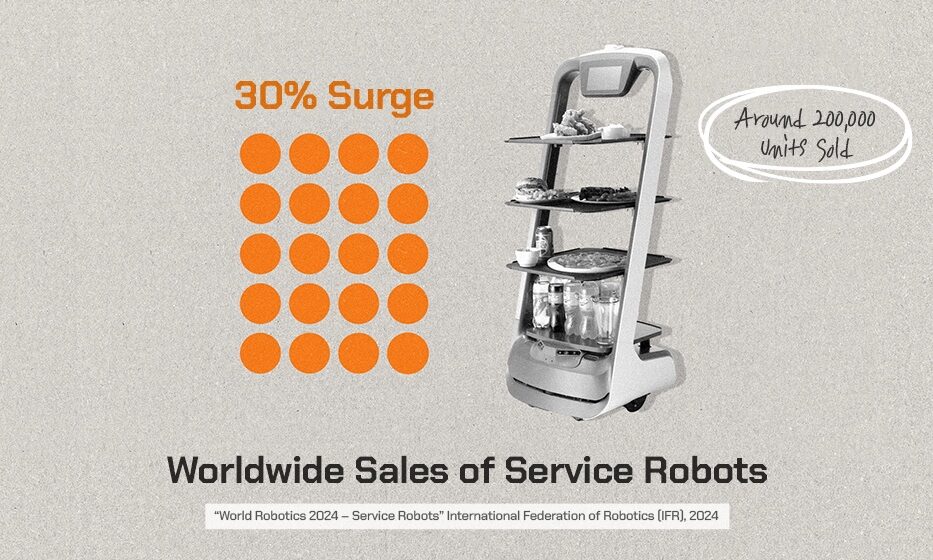
Service robots, including those used in food service and delivery, are also rapidly expanding. According to the IFR’s World Robotics: Service Robots 2024 report, 205,000 service robots were sold in 2023, a 30% increase from the previous year and the highest figure on record.
Robots are now deeply embedded in everyday life, extending far beyond industrial settings. Attention is now shifting to the next stage: humanoids that replicate human movement, expressions, language, and even emotions.

Professor Jeakweon Han of Hanyang University’s Department of Robotics describes humanoids as “multipurpose robots capable of replacing various forms of human labor.” He said: “With the rise of generative AI, their potential for broad application has grown even further.”
Although market outlooks vary by research institution, they all agree that the humanoid market is poised for rapid growth. MarketsandMarkets forecasts the market will reach USD 13.2 billion by 2029, while Straits Research projects the figure to rise to USD 23.7 billion by 2032. Goldman Sachs estimates the market could be worth USD 38 billion by 2035. However, Professor Han emphasized that more significant than the market forecasts is the change in manufacturing costs.
“Humanoid production costs have been declining by more than 40% each year, meaning commercialization is accelerating,” he said. “While Tesla is developing humanoids internally within its own closed ecosystem, NVIDIA is working with various partners to pursue cross-collaborative strategies. In terms of technological maturity, Tesla appears to have reached Level 3, where robots can perform a variety of tasks without human intervention.”
However, according to OECD AI Capability Indicators1, global robot technology on average remains at Level 2. Achieving truly human-like movement and decision-making requires advanced capabilities in environmental adaptation, precision, force, and speed. At Level 5, the most advanced level, robots can think and act like humans even in challenging environments, allowing them to perform complex tasks such as search and rescue. To reach that point, it is essential to make progress in every core component of robotics.
1OECD AI Capability Indicators: These indicators are designed to assess and compare AI advancements against human abilities. For assessing AI robotic intelligence, the five levels are: (Level 1) robots perform simple tasks within highly structured environments; (Level 2) robots execute predefined tasks in semi-structured environments; (Level 3) robots can execute multi-step tasks requiring some flexibility; (Level 4) robots execute multiple tasks with varying degrees of complexity; (Level 5) robots perform multiple complex tasks in unstructured settings.
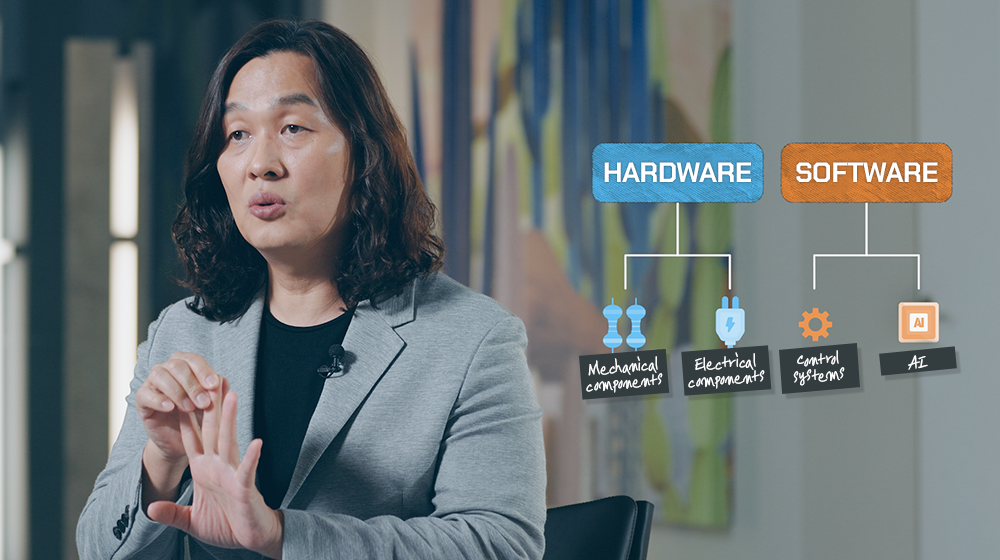
“Humanoids are a fusion of hardware and software — spanning mechanical and electronic components as well as control systems and AI,” Professor Han noted. “Every element must advance together in harmony, including actuators, robotic hands, sensors, batteries, and semiconductors. To progress toward ‘physical AI,’ AI capable of operating in the physical world, it is essential to make breakthroughs in low-power AI semiconductors and battery technology.” He also predicted that “industrial humanoids could first emerge in the U.S. as early as late 2025 or 2026.”
Neuromorphic Semiconductors: Inspired by the Human Brain
Advanced AI alone is not enough for humanoids to think and move like humans. This is where AI memory capable of efficiently processing vast amounts of data, along with neuromorphic computing which mimics the human brain, come into play.
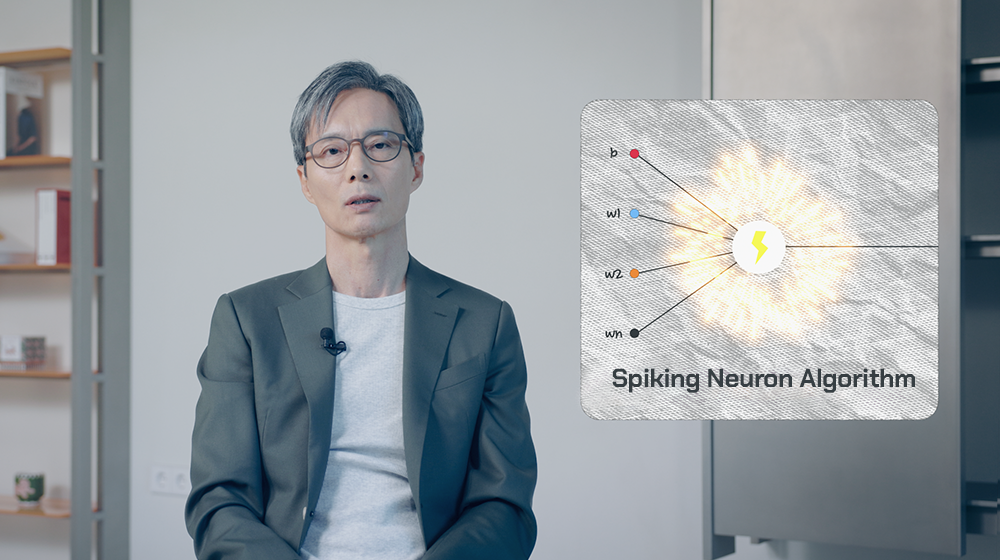
Cheolseong Hwang, Distinguished Professor at Seoul National University’s Department of Materials Science and Engineering, described neuromorphic computing as “an ultra-low-power analog computing system that mimics the brain.” He added that “a key example, going beyond artificial neurons, is the implementation of ‘spiking neurons2’, which function similarly to biological ones. While artificial neural networks require exponentially increasing computational load, humans reach probabilistic conclusions with far less energy,” he stated, concluding that “neuromorphic computing is essential to move in this direction.”
2Spiking Neural Networks (SNNs): Artificial neurons that mimic biological neurons by firing electrical spikes only at specific moments to transmit information.
As noted by Carver Mead, a professor at the California Institute of Technology (Caltech) who first introduced the concept of neuromorphic computing, conventional computing architectures cannot replicate the human brain. This underscores the need for innovation in semiconductor design. Professor Hwang also highlighted the emergence of semiconductors based on new approaches.
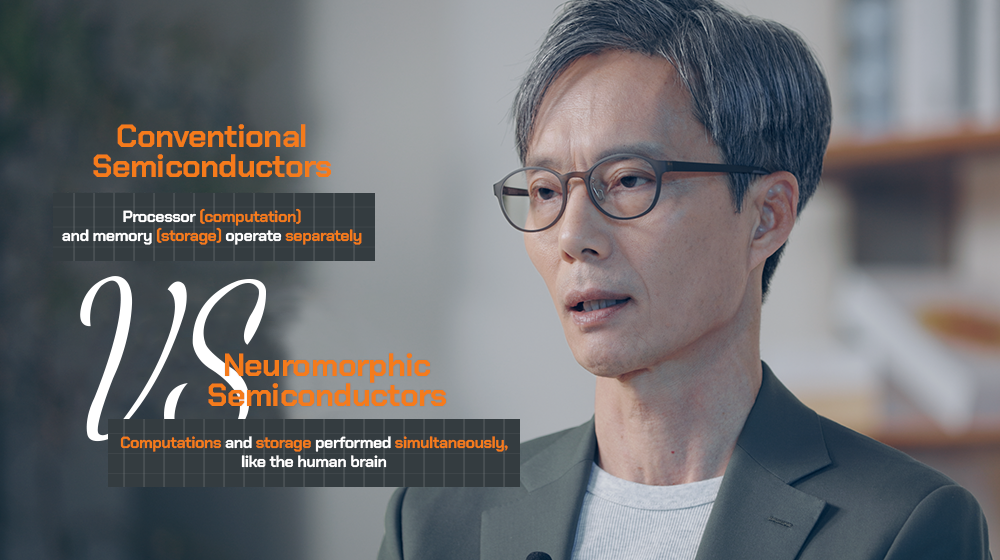
“Neuromorphic semiconductors handle computation and storage on a single chip,” said Distinguished Professor Hwang. “They operate differently from conventional chips, where the roles of processors and memory are separated. New semiconductor technologies, including neuromorphic semiconductors, are being actively researched in countries such as the U.S. SK hynix is also developing its ACiM3 technology, which is expected to play a key role in advancing neuromorphic semiconductors, and has already achieved notable progress.”
3Analog compute-in-memory (ACiM): A technology for next-generation AI semiconductors that removes barriers between computation and memory.
Notably, neuromorphic semiconductors are expected to become critical for the humanoid industry due to their power efficiency. “The most critical factor in operating humanoids is energy efficiency,” Distinguished Professor Hwang explained. “If AI computation consumes excessive power, it becomes difficult to secure sufficient energy for the robot’s physical movement. High-efficiency semiconductors such as neuromorphic ones can address these challenges.”
AI Memory Powering the Future of Humanoids
Ultimately, accelerating the rise of humanoids requires both AI memory and neuromorphic semiconductors. To meet this demand, SK hynix is focusing on developing next-generation AI memory products.
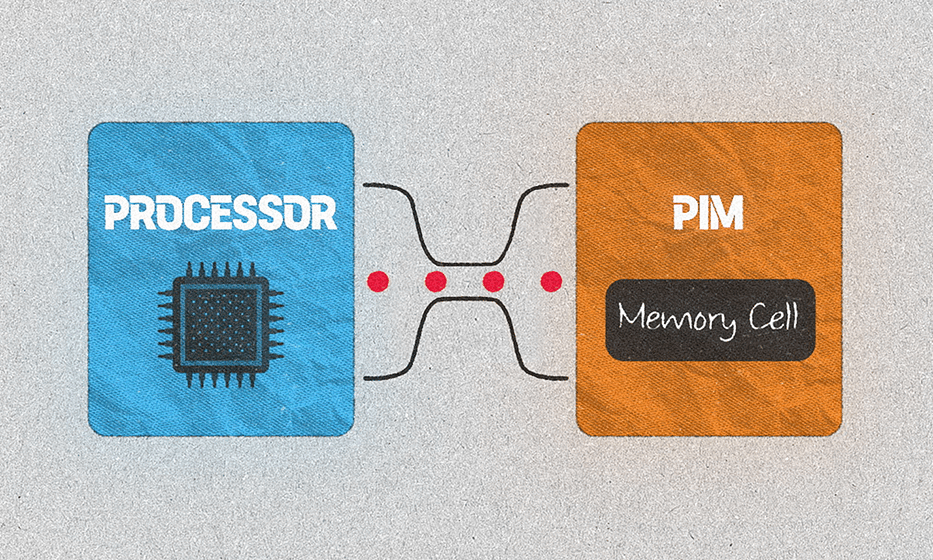 Processing-In-Memory (PIM) products deliver computation results directly from memory to the processor
First, Processing-In-Memory (PIM) is an intelligent memory technology that performs computation directly within the chip, reducing data bottlenecks and improving power efficiency. By shifting the center of computation from the processor to the memory itself, it represents both a foundational step and a symbolic milestone toward next-generation architectures.
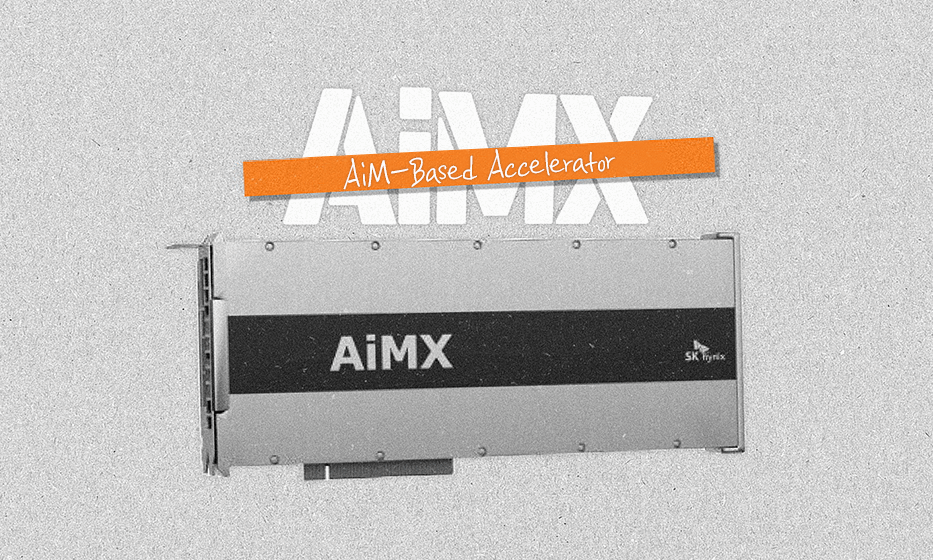
Representative PIM-based products include GDDR6-AiM4 and AiMX5. In particular, AiMX delivers high bandwidth and energy efficiency, supporting the large-scale computations required for generative AI. It also offers strong multi-batch6 processing capabilities to meet the growing demands of AI workloads. Going forward, PIM products are set to be expanded to on-device AI solutions, and SK hynix plans to apply them to the humanoid industry.
4Accelerator-in-Memory (AiM): A next-generation solution that integrates computational capabilities into memory.
5AiM-based Accelerator (AiMX): SK hynix’s accelerator card featuring GDDR6-AiM chips which is specialized for large language models (LLMs) — AI systems such as ChatGPT trained on massive text datasets.
6Multi-batch: A computer processing method in which the system groups together multiple tasks (batches) and processes them at once.
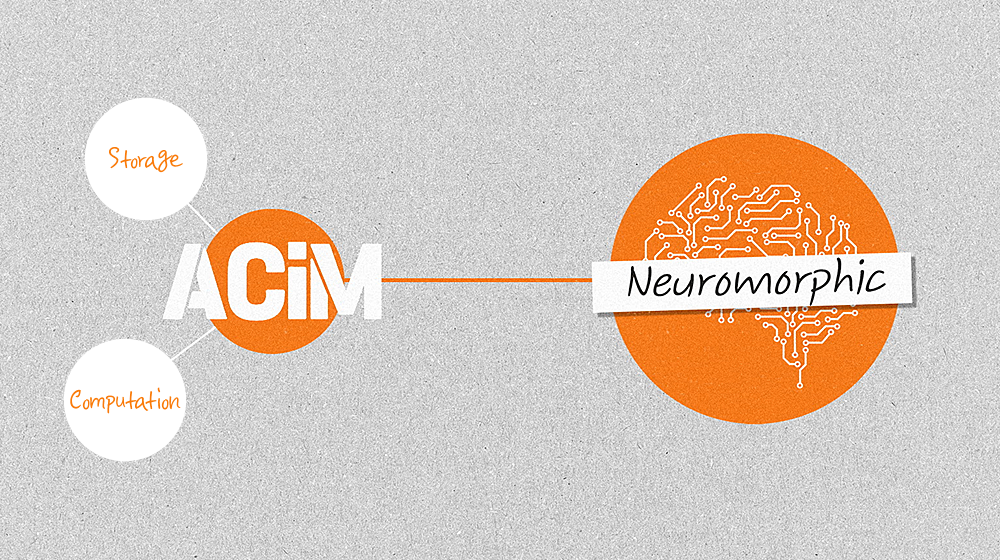 SK hynix’s in-development ACiM offers simultaneous computation and storage
Alongside PIM, SK hynix’s in-development ACiM is considered an important building block for neuromorphic semiconductor innovation. It performs both storage and computation simultaneously, supports MAC7 operations, and delivers faster AI computational performance than PIM. Capable of brain-like processing and ultra-low-power parallel computation, ACiM is set to play a key role in humanoid development.
7Multiply-Accumulate (MAC): A foundational neural network computation that multiplies inputs by weights and accumulates the results.
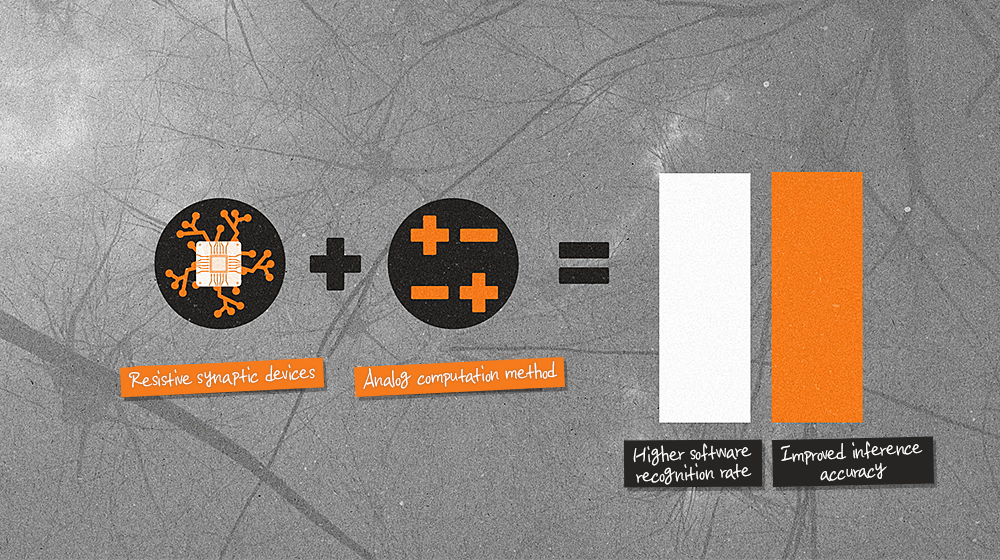
SK hynix recently elevated ACiM’s inference accuracy to near software-level performance through analog computation using resistive synaptic devices. Today, the company is accelerating its R&D efforts to achieve world-leading results in next-generation AI memory technologies, including ACiM.
Through these innovations, SK hynix’s next-generation memory portfolio is emerging as a key driver of the AI era and the future of humanoids.
Nearly a century after the robot Maria in the 1927 film Metropolis introduced the concept of humanoids to the masses, this once fictional concept is moving ever closer to reality.
Perhaps the question “Could we fall in love with a robot?” may no longer belong solely to fiction. And all these possibilities begin with a single semiconductor chip.