Competition in the semiconductor industry can no longer be defined by superiority in a single technology. As demands for performance, power efficiency, and reliability increase simultaneously, siloed approaches to device, process, and design are no longer sufficient to meet customer requirements.
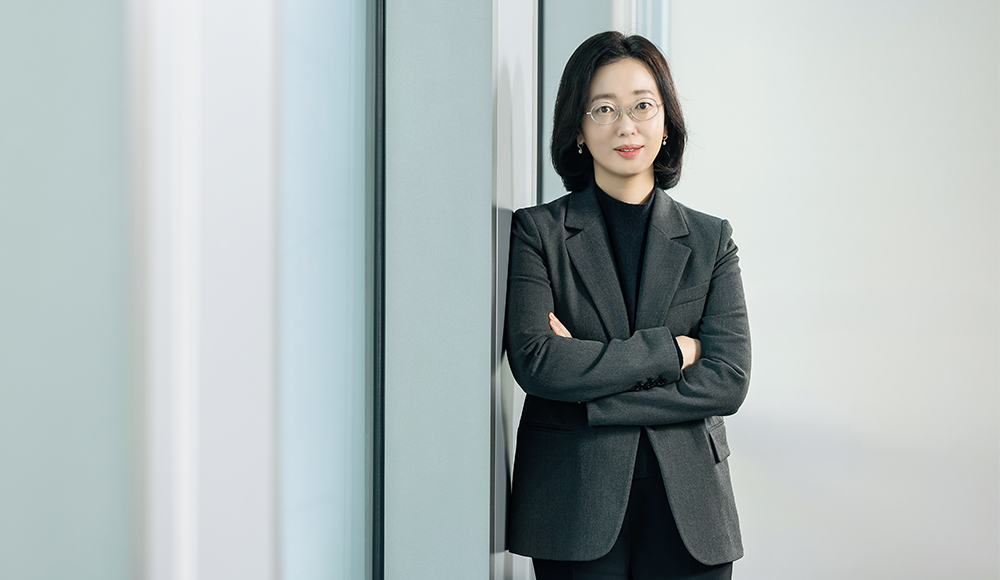
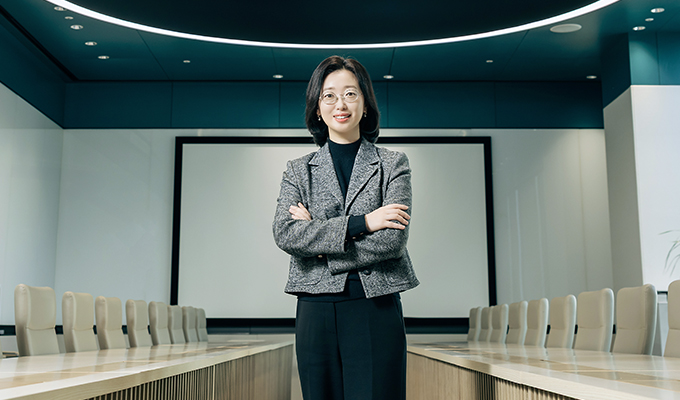
Amid these changes, SK hynix has strengthened the role of its Device Tech Solution (DTS) department under R&D, which integrates device, process, and design technologies, while appointing Vice President Yunik Son to lead the department. Named the youngest female executive among the company’s 2026 appointees, Son expressed her ambition to “lead the rapidly evolving AI era with flexible thinking.”
The Newsroom met with Vice President Son to discuss her thoughts on her new role, her perspective on the AI era, and the direction the DTS department should take in the midst of rapid changes in the semiconductor industry.
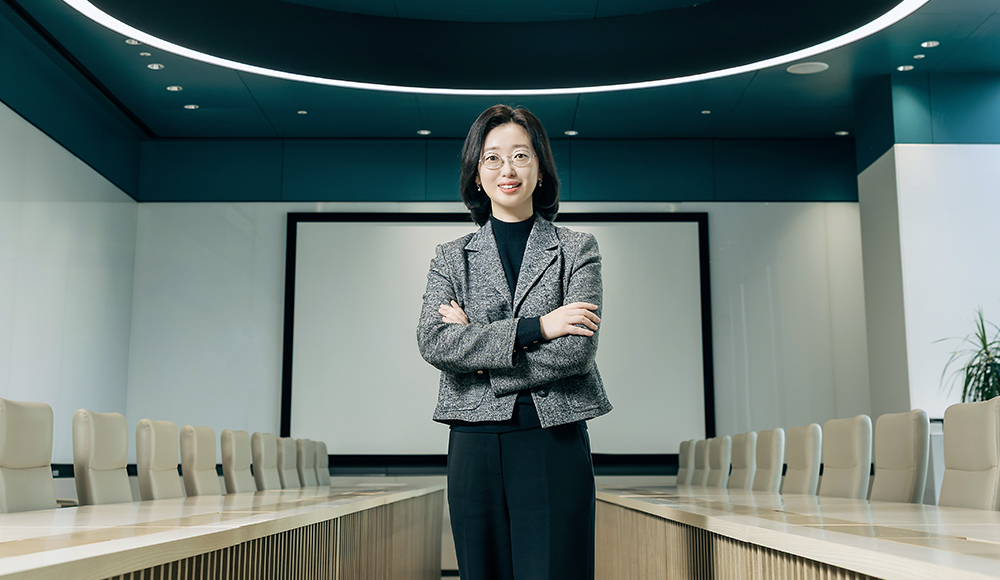
“As Technology Leader, Focus on Strengthening Core Competiveness and Preparing for the Next Generation”
Now in her 20th year with the company, Son is regarded as one of most accomplished engineers. She has led next-generation AI memory technology development at SK hynix, spearheading key memory products including HBM1 and LPDDR2 while consistently pushing technological boundaries. In 2025, she was awarded the Engineer of Korea Award in recognition of her achievements. [related article]
Asked about her appointment, Son expressed gratitude and spoke about the responsibility she feels in her new role.
1HBM (High Bandwidth Memory): A high-value, high-performance product that vertically stacks multiple DRAM chips to dramatically increase data processing speed compared with conventional DRAM. HBM has evolved through HBM, HBM2, HBM2E, HBM3, HBM3E, and HBM4.
2LPDDR (Low Power Double Data Rate): A DRAM standard used in mobile devices such as smartphones and tablets, designed to minimize power consumption through low-voltage operation. The standard has evolved through LPDDR1, LPDDR2, LPDDR3, LPDDR4, LPDDR4X, LPDDR5, and LPDDR5X.
“I can clearly feel how rapidly, almost dramatically, the memory industry is changing,” she said. “At this critical moment, I am fully aware of the responsibility entrusted to me. I do not see this appointment as merely a personal achievement but as the company’s expectation that we transform into a younger, more agile department capable to navigate the fast-changing AI era.”
Son highlighted the ‘technological development achievements’ that enhanced memory performance, reiterating that technological capability is the core of future competitiveness. She emphasized the importance of continuing innovation while preparing for next-generation markets, and pledged to further strengthen technological capabilities with agile mindset.
“By developing the core Peri3 transistor technology, the first- and second-generation HKMG platforms, we were able to drive performance improvements in the premium memory products” she said. “This goes beyond simple device enhancement, as it provides a technological foundation for delivering ultra-high speed, low power, and the high quality required in the AI era for memory. As a technology leader, I do not intend for these achievements to remain as short-term results. Instead, I will use them to strengthen the fundamental competitiveness of our products and actively leverage them in developing next-generation technologies.”
3Peri (Peripheral): The peripheral circuit area responsible for selecting and controlling memory cells that store data.
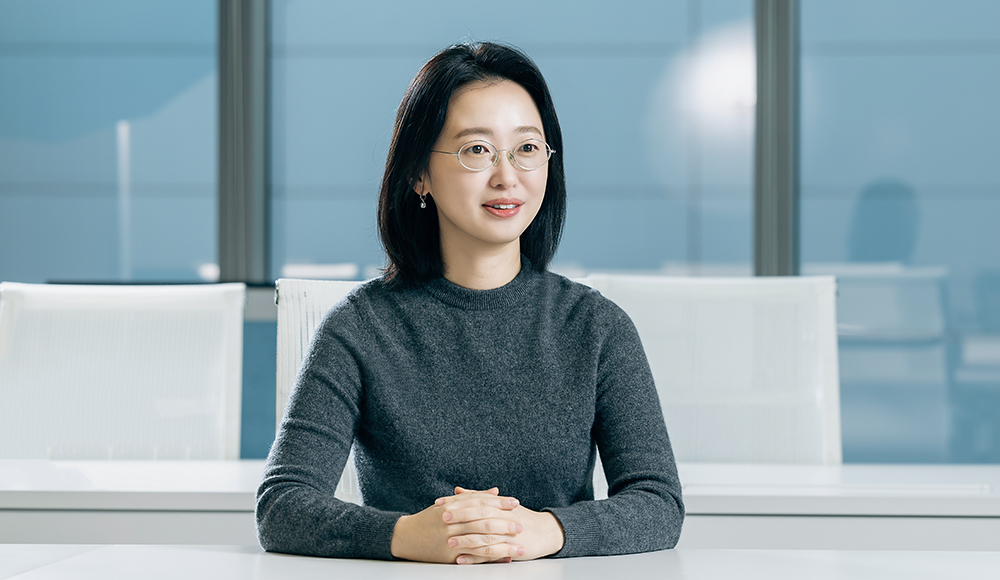
“A Hub Linking Design and Device·Process (Technology)… Strengthening AI Memory Competitiveness by Integrating Technologies”
As SK hynix designates 2026 as the first year of its leap toward becoming a “Full-Stack AI Memory Creator,” Son defined the role of DTS as a hub that connects technologies across the board. It ensures performance targets established at the design stage to be implemented accurately at the device·process (technology) stages, seamlessly leading up to the ultimate mass production phase.
Without such alignment, companies may face situations where, despite significant amount of R&D investment, they fail to bring products to market on time. This is why many semiconductor companies prioritize in integrated optimization.
“To become a Full-Stack AI Memory Creator, excellence in individual technologies alone is not enough,” she said. “Through DTCO4, DTS plays a role in organically connecting device, process and design, removing boundaries between them and converting those technologies into real product competitiveness. This year, we will further optimize our system to enhance product performance.”
4DTCO (Design Technology Co-Optimization): A development approach that optimizes product competitiveness — including performance, power, reliability, and yield — by comprehensively considering device, process, and design technologies. By aligning process and device characteristics from the design stage, DTCO enables the stable realization of complex requirements, such as those of AI memory.
Under this vision, Son set the strategic direction of DTS as transitioning into an execution-oriented technological structure for year 2026. She specifically emphasized strengthening high-speed competitiveness through the development of core Peri transistor technologies, alongside upgrading the Design Input system to enhance overall product excellence.
Son also outlined plans to establish a system to proactively manage credibility and quality issues on manufacturing lines at the wafer level — beginning in the early stages of technological development — so that risks in mass production can be addressed at the technology stage. To this end, Son aims to embed AI-based analytical capabilities from the initial stages of development, while reducing the temporal and technological gap between development and mass production to further improve product quality.
“As the AI semiconductor market becomes increasingly advanced, memory is becoming central to AI performance,” Son said. Ultra-high speed, high reliability and the ability to collaborate across architectures are becoming key competitive differentiators. The scale and pace of change in AI is unprecedented. For SK hynix, equipped with strong execution capabilities, this represents a significant opportunity tofurther strengthen our leadership in AI memory.”
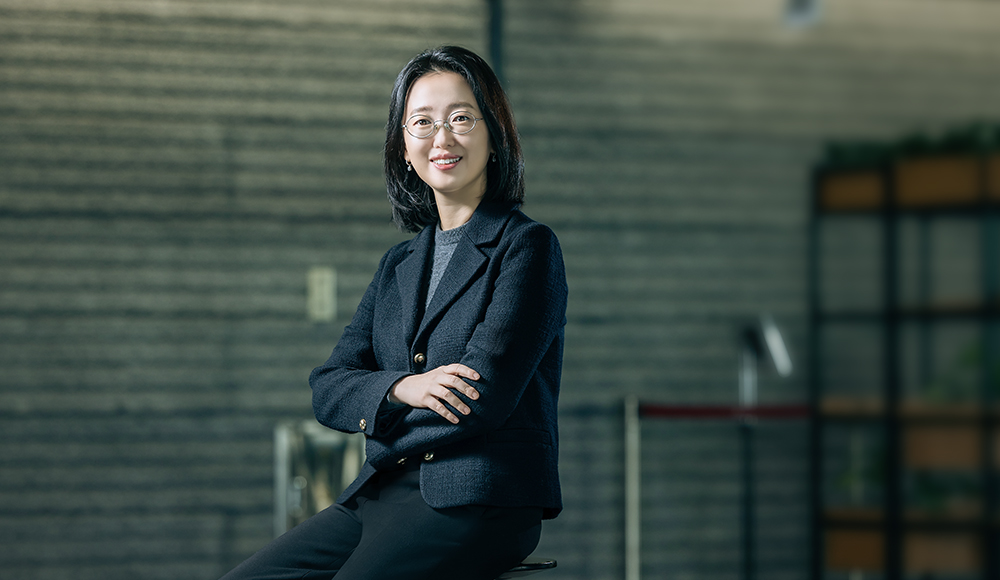
“Technology Ultimately Deepens Through People and Trust”
At the heart of Son’s philosophy in leadership is ‘people’. She emphasized that the mutual trust among group and individuals who faced challenges together was the main factor in overcoming the limits of semiconductor technology. With changes happening more rapidly and technical complexity increasing in the AI era, Son believes people remain the most reliable foundation that an organization can rely on.
“The strength of an organization ultimately comes from trust between individuals,” she said. “The stronger the foundation of mutual trust is, the more willing members are to take on new challenges without fear of failure, and in that process, individual capabilities can turn into departmental synergy. In this rapidly evolving AI era, I want to foster a culture built on honesty and authenticity and continue SK hynix’s SUPEX journey together.”
In closing, Son delivered a message to all SK hynix employees who will help shape the company’s future. Standing at a pivotal moment in its leap toward to become a Full-Stack AI Memory Creator, she said the commitment and growth from each and individuals will be more important than ever.
“2026 will be a crucial year as SK hynix begins a new leap forward,” she said. “If each member believes in their potential and remains fully committed, we can create another new chapter in our history. I will also continue to learn, challenge myself, and grow alongside our members, building the DTS department suited for the AI era.”