- SK hynix is transforming its corporate social responsibility (CSR) strategy through AI technology to improve the happiness of local communities
- AI-driven CSR strategy focused on nurturing creative and convergent talent, building an AI social safety net, and supporting platforms for social change
Over the past 70 years, SK Group has achieved remarkable growth through three industrial transformations and is now embarking on its “fourth quantum jump” based on AI infrastructure. Since its beginnings in textiles in 1953, the group has taken on successive challenges in petrochemicals in 1980, telecommunications in 1994, and semiconductors in 2012. SK Group is now positioning AI as the next growth engine for the group, reshaping the landscape of future industries.
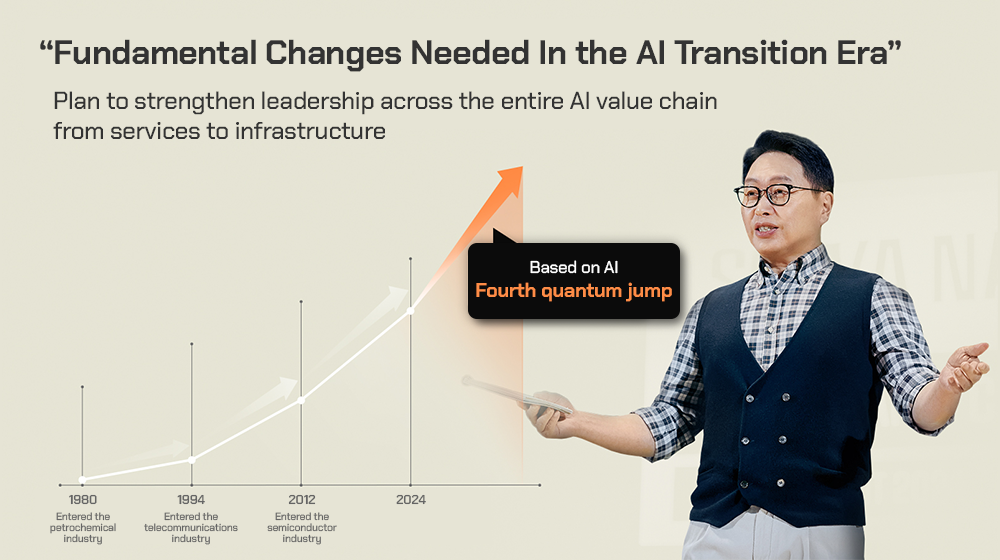
At the SK management strategy meeting held in June 2025, the Group announced plans to make large-scale investments in key national industries including AI and advanced semiconductors. The strategy includes promoting future growth in select industries such as the semiconductor value chain led by SK hynix, as well as data centers and energy solutions. The meeting also covered group-wide new growth strategies centered on AI and methods to enhance synergies among affiliates.
SK Group is leveraging AI as a key driver of enterprise-wide innovation. One such example is the Ulsan AI Data Center project, jointly promoted by major affiliates including SK hynix, SK Telecom, SK Gas and SK Innovation. By bringing together each company’s AI expertise in areas such as infrastructure, energy and semiconductors, the group is formulating new business models with the potential to scale across all business sectors.
Accordingly, SK hynix is also focusing on strengthening its fundamental competitiveness by accelerating the transition to AI. Over the next five years, the company plans to invest a total of KRW 103 trillion (USD 74.3 billion) to enhance its semiconductor standing. Approximately 80% of this amount, or KRW 82 trillion (USD 59.2 billion), is allocated to the AI memory-related businesses including High Bandwidth Memory (HBM).
These efforts are also extending to the creation of social value. SK hynix is shifting its corporate social responsibility (CSR) strategy toward AI-based social contribution, leveraging AI technologies to address societal challenges. This approach aims to combine technological innovation with social responsibility, redefining the company’s role while establishing a virtuous cycle between technology and social value.
Social Contribution Evolving With AI
Ahead of the Yongin Semiconductor Cluster era, SK hynix is expanding community engagement in areas near its existing and future facilities. As a leading AI company, it places community well-being at the core of its values and plans to carry out more proactive and intensive social contribution initiatives.
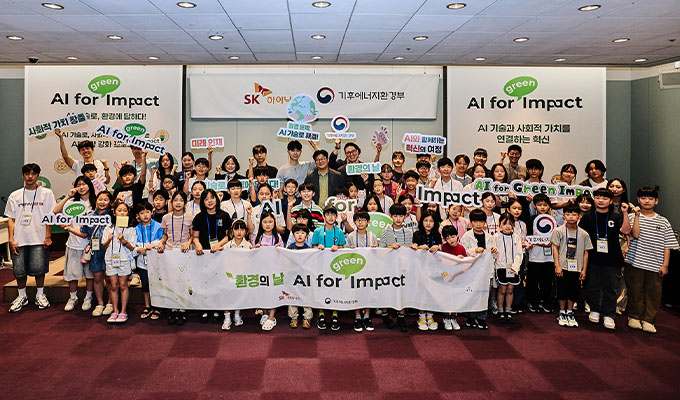
In particular, SK hynix has presented its social contribution vision “AI for Humanity, CSR for People” and plans to focus on three core areas: fostering talent to lead AI innovation; building AI-responsive social safety nets; and developing platforms for social change jointly created by AI, technology, and people.
SK hynix Vice President Jeongil Kim, head of Communication & External Affairs, stated it is now a crucial time for fundamental changes in social contribution as the company’s management strategy and technology shift toward AI. He emphasized that SK hynix will integrate AI into all of its social contribution initiatives going forward to establish a highly effective AI-based social contribution model.
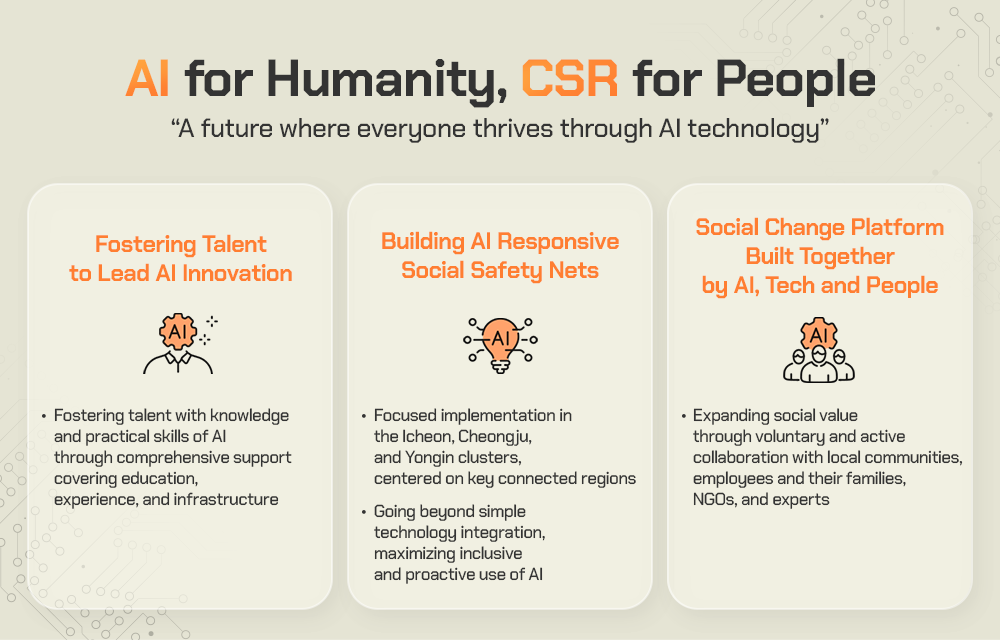
1. Fostering Talent to Lead AI Innovation
Having focused on addressing educational gaps in science and the arts, SK hynix will now implement an integrated education program for enhancing AI literacy1 and cultivating AI talent. The program is based on a comprehensive education model that organically links educational content, hands-on practice and experience, and learning spaces and equipment. It covers the entire process from foundational understanding of AI to practical application and advanced exercises.
1AI literacy: Foundational knowledge and practical skills to understand and apply AI.
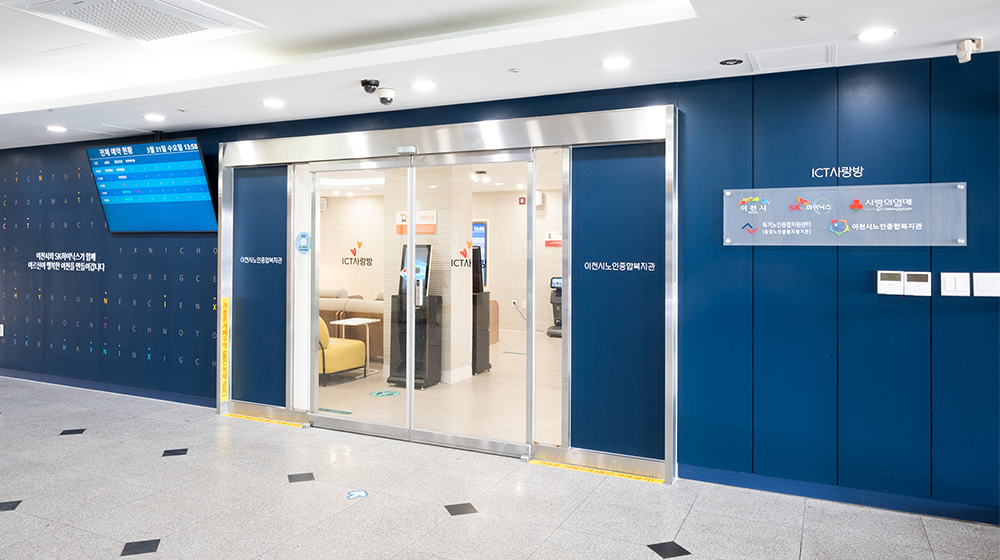
Through the Heinstein program, the company provides elementary, middle, and high school students with AI education focused on problem solving and opportunities for exploring a career in EdTech2. The program will also create capacity building courses for teachers and instructors. In terms of facilities, the company plans to open new AI Study Labs in Icheon, Anseong, and Yeoju in 2025, complementing the 94 ICT education centers it has established in local communities to date. Moreover, SK hynix will continue to expand hands-on learning opportunities in areas such as AI, big data, and 3D model manufacturing.
2Educational Technology (EdTech): The use of technological tools, systems, and theories to enhance teaching and learning processes.
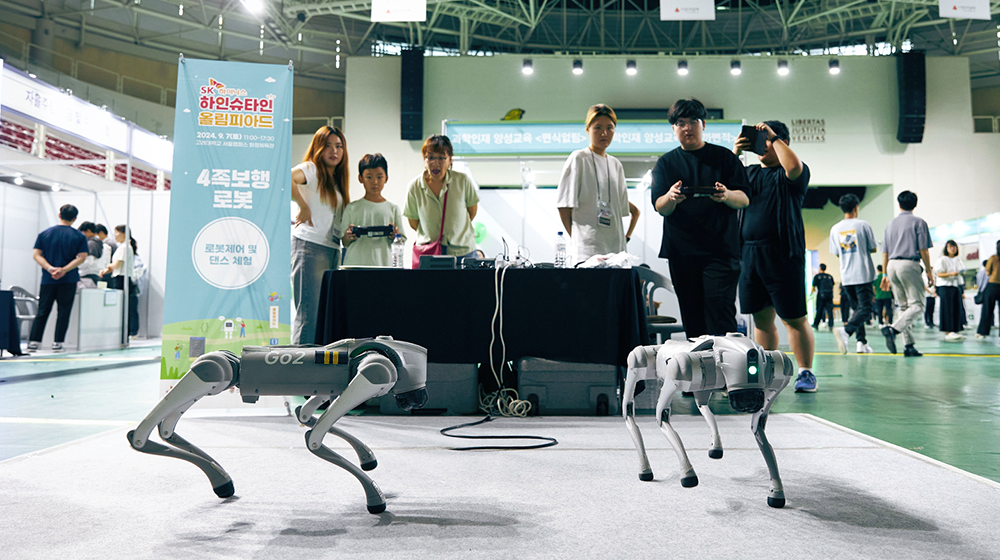
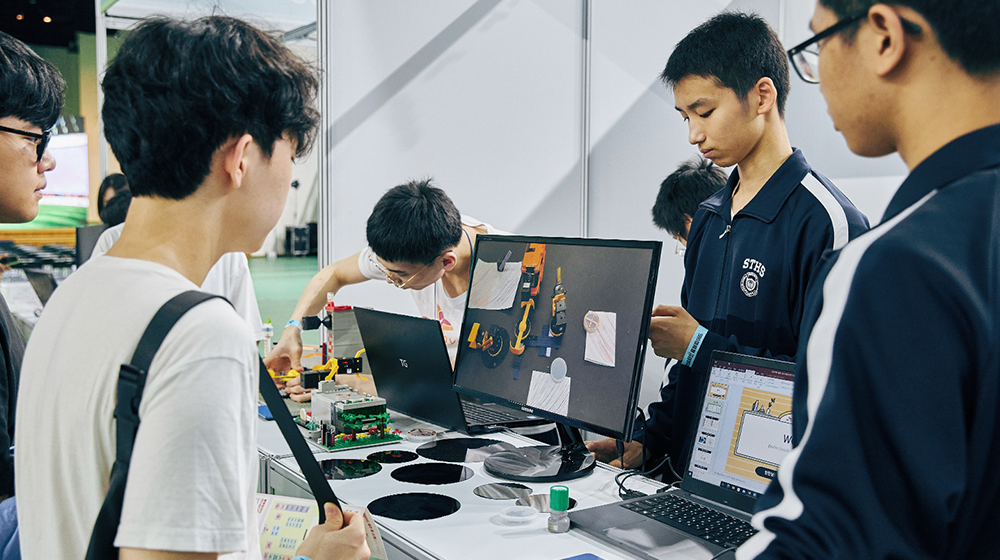
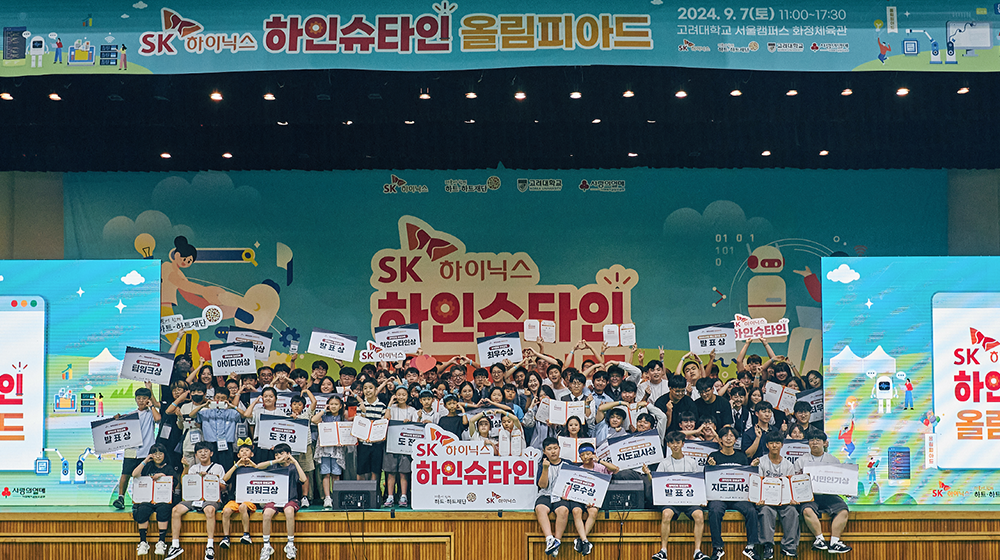 Participants of the Heinstein Olympiad held in September 2024. SK hynix’s Heinstein training program aims to foster young science talents’ AI understanding and application capabilities.


2. Building AI Responsive Social Safety Nets
SK hynix operates various social contribution programs aimed at supporting underserved communities. These include Happy Lunchbox, which debuted in 2012, Happy GPS, which kicked off in 2016, and Silver Friend, which began in 2018. Going forward, the company plans to integrate AI technology into these programs to evolve them into preventive, inclusive, and sophisticated social safety nets.
From September 2025, the revamped Happy Lunchbox program will introduce an AI nutritionist feature, enabling tailored meal consulting and data‑driven smart care. In addition, emotional support will be strengthened for vulnerable elderly individuals facing social isolation and depression due to digital information gaps. To this end, there also plans under consideration to operate a Visiting AI Memory Care bus to provide AI‑based cognitive care.
The company is also launching the AI Data Planet initiative, which includes training programs for AI annotators3. This program specifically targets immigrants to help them become more self‑reliant, while it also aims to boost the growth of the AI industry ecosystem.
3AI annotator: Personnel who select and process data for AI training.
In October 2025, the company will launch the Hi-Safety 2.0 initiative. Incorporating an AI‑based wildfire prevention system, the program is designed to proactively respond to disasters caused by climate change. AI technology will also be applied to stream quality management and ecosystem conservation activities to enhance environmental cleanup programs.
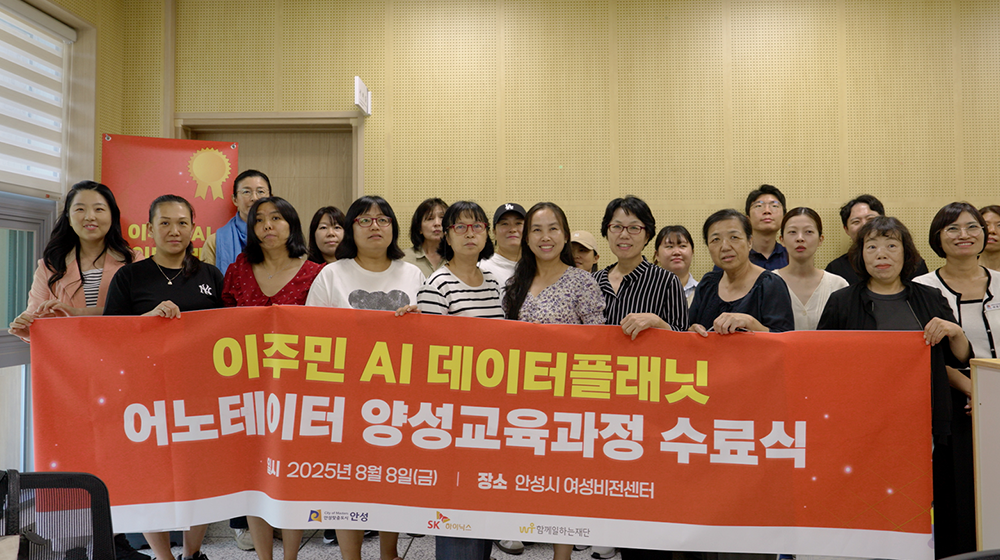 The graduation ceremony of the AI annotator training program, part of the newly launched AI Data Planet initiative in 2025.


3. Social Change Platform Built Together by AI/Tech and People
Through the AI-driven transformation of its social contribution initiatives, SK hynix aims to evolve into a social change platform that addresses societal challenges. A key part of this transformation will be collaboration with employees, local communities, NGOs, social enterprises, and other stakeholders.
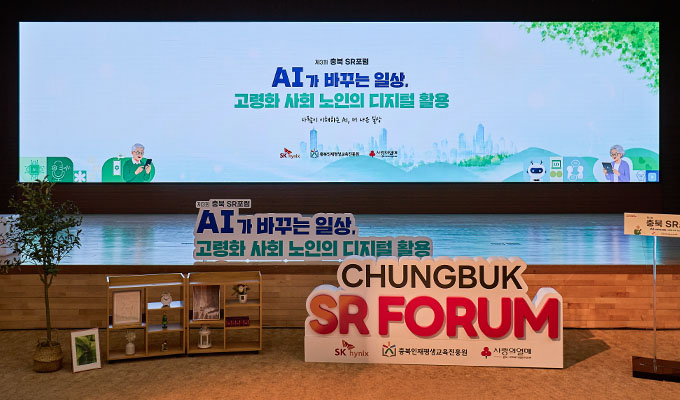
In particular, SK hynix plans to form an expert consortium and operate related research groups to analyze the social impact of key initiatives such as “AI Data Planet” and “Happy GPS” and discuss their development. Furthermore, the company will advance AI-based CSR and plans to hold the CSR x AI Forum in early 2026 to share best practices among companies and facilitate expert networking.
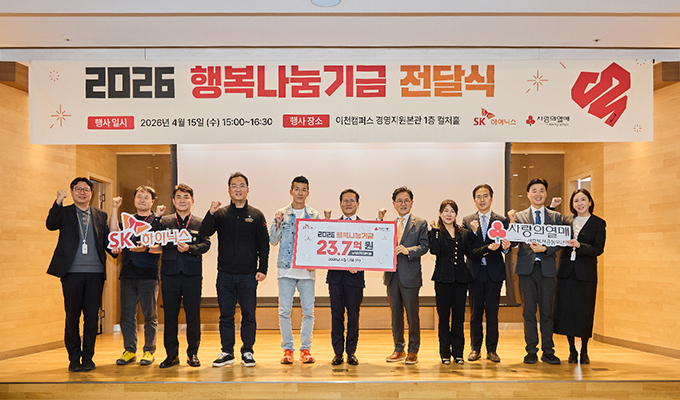
Meanwhile, SK hynix is also introducing changes to the way employees participate in social contribution activities. Beyond traditional regular donations, the company is improving internal systems to enable campaign-based donations that employees can join voluntarily. This initiative aims to provide a foundation for employees and their families to more flexibly support vulnerable groups in local communities.
Setting a New Standard for AI-driven Social Initiatives
SK hynix is redefining social contributions by integrating AI into its CSR strategy. With a focus on fostering AI talent, enhancing social safety nets, and creating collaborative platforms, the company is leveraging cutting-edge technology to address societal challenges. These efforts align with SK hynix’s focus on AI-driven innovation, solidifying its position as a leader in both technological and social impact. Looking ahead, the company will continue to develop forward-looking programs which enhance community well-being.