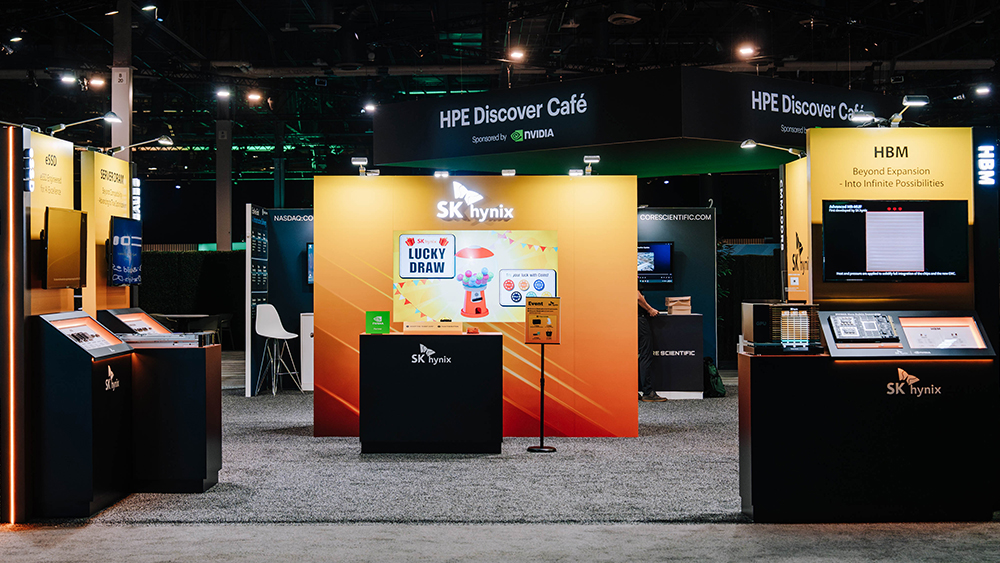
As competition and collaboration around AI infrastructure continue to intensify, HPED 2026 brought together industry leaders to explore the future of AI-driven IT infrastructure. HPE held HPE Discover Las Vegas 2026 (HPED 2026) from June 15 to 18 (local time) at The Venetian Convention and Expo Center in Las Vegas, Nevada.
HPE is a leading provider of hybrid cloud and data center solutions. It hosts HPED each June to share its technology roadmap and business strategy with partners and enterprise customers, and to explore avenues for collaboration. This year’s program was organized around three pillars — AI, cloud, and networking — with a focus on the sweeping changes and opportunities reshaping IT infrastructure in the AI era.
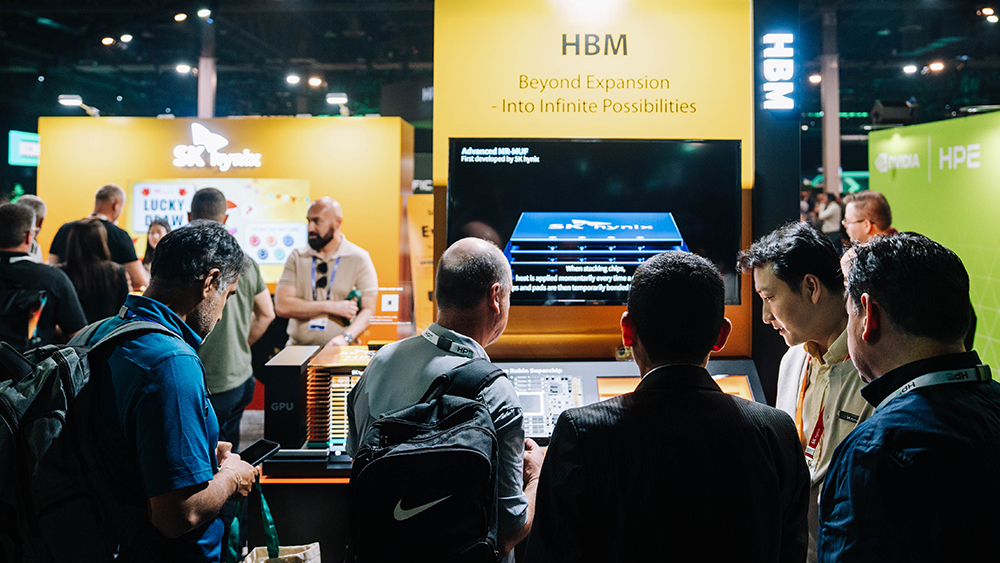
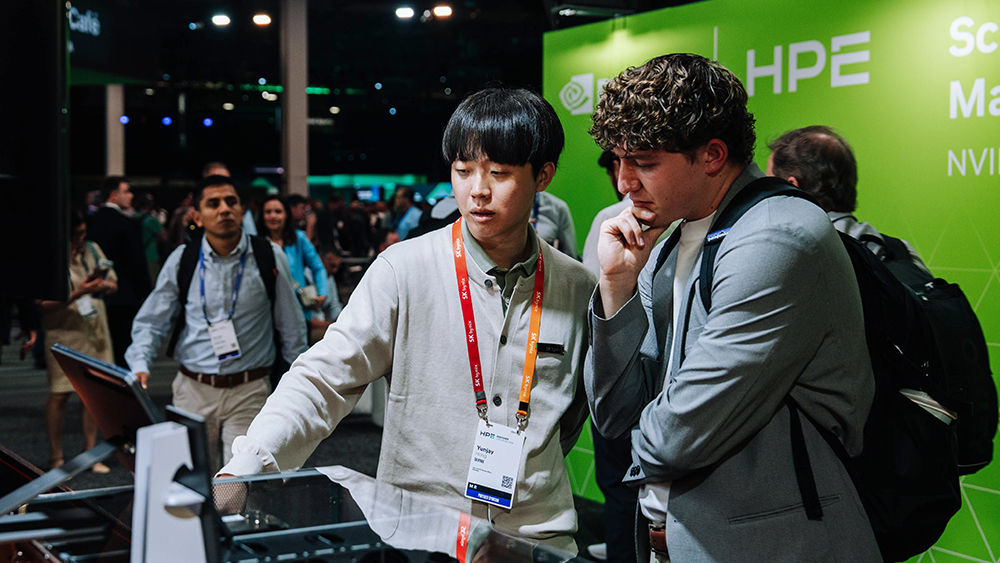
SK hynix used HPED 2026 as an opportunity to strengthen its strategic partnership with HPE while reaffirming its technology leadership in the AI server market. The company brought certified products already deployed in HPE servers to the forefront of its exhibition, offering a concrete demonstration of the partnership. Through a broad portfolio spanning HBM* to server DRAM, eSSD, and CMM (CXL* Memory Module)-DDR5, SK hynix reinforced its position as a full-stack AI memory creator across the entire AI infrastructure landscape.
* CXL (Compute Express Link): A next-generation interface that efficiently connects CPUs, GPUs, memory, and other components in high-performance computing systems to support large-capacity, ultra-fast computation.
HBM and CMM-DDR5: Spotlighted as the Core of AI Infrastructure Solutions
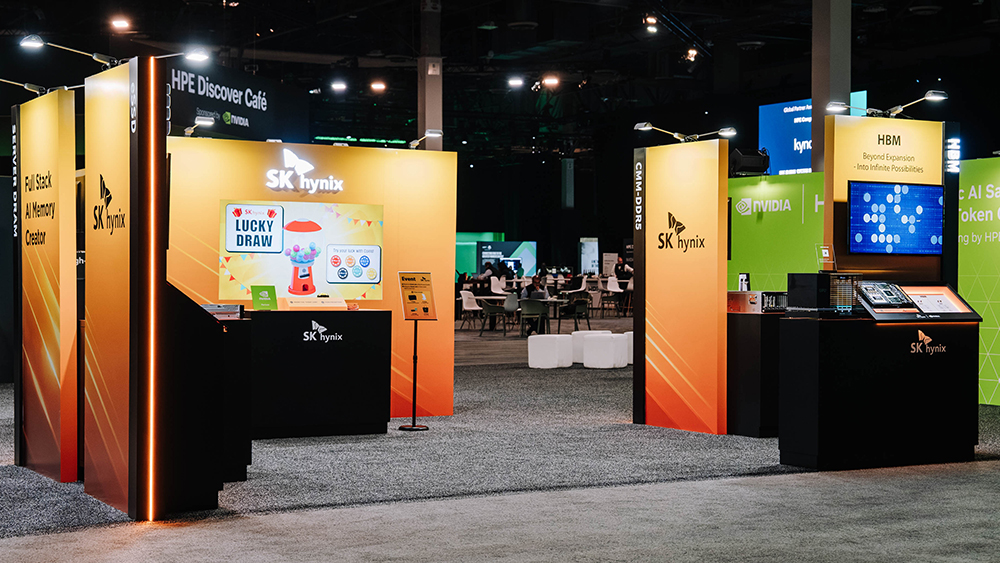
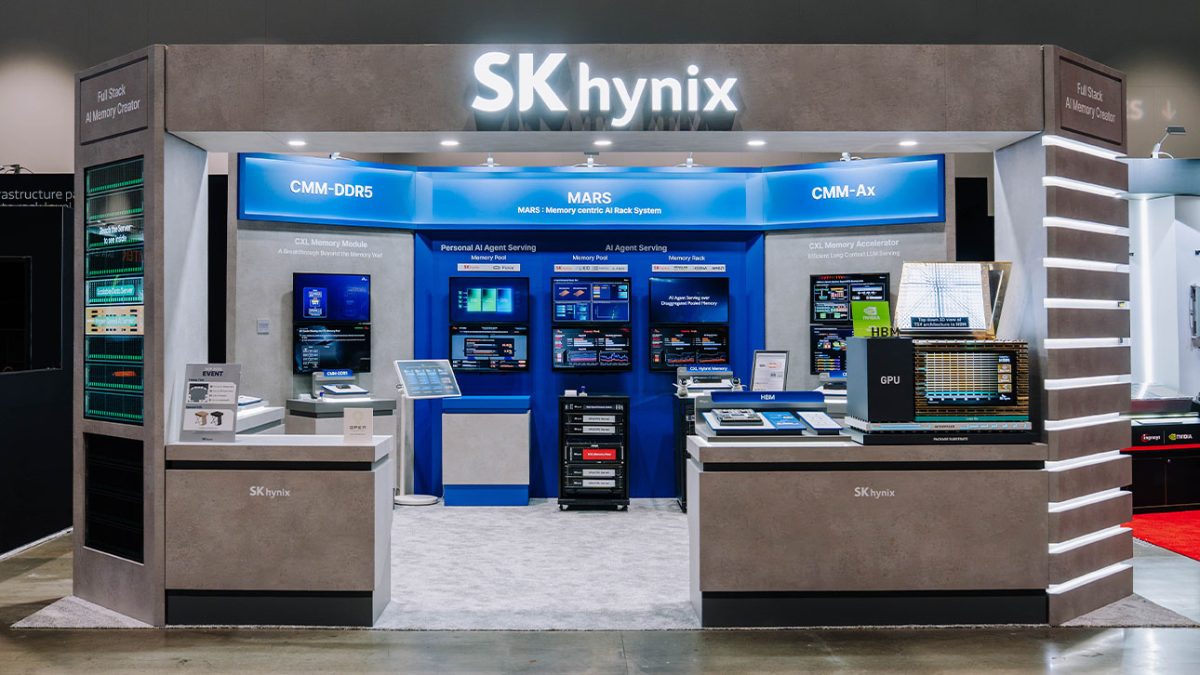
▲ The SK hynix exhibition booth, designed to translate the product’s technical characteristics into a spatial language
SK hynix designed its exhibition booth with a yellow motif inspired by the heat sink structure of its eSSD, immediately catching the eye of visitors. The design translated the product’s technical characteristics into a spatial language, effectively highlighting SK hynix’s superior specifications and engineering capabilities on the show floor. The product display area was organized into four zones: HBM, CMM-DDR5, eSSD, and server DRAM.
The HBM display zone, positioned at the right corner of the booth, was built around a model replicating the internal structure of NVIDIA’s superchip Vera Rubin, illustrating where HBM4 is integrated and how it supports next-generation AI computing. Surrounding the model, physical units of the 16-layer 48GB HBM4, 12-layer 36GB HBM4, and 12-layer 36GB HBM3E were arranged side by side, each accompanied by key specifications, offering visitors a clear picture of SK hynix’s HBM technology as it has evolved across generations.
The CMM-DDR5 display zone, positioned directly behind the HBM section, featured first-generation (128GB, CXL 2.0+ based) and second-generation (256GB, CXL 3.2 based) CMM-DDR5 products displayed side by side, demonstrating the leap in capacity and bandwidth achieved in just one generation. Notably, at HPED 2026, SK hynix highlighted the feasibility of practical hardware interoperability for next-generation AI infrastructure by co-showcasing SK hynix CMM-DDR5 installed inside Liqid’s CXL Pooled Memory Server.
Latest Product Portfolio Targeting the AI Infrastructure Market Also Draws Attention
On the left side of the booth, the eSSD and server DRAM display zones stood side by side. Visitors and industry professionals flocked to this area, where SK hynix’s broad product portfolio addressing the demands of AI workloads requiring high capacity and high performance was on full display.
The eSSD display zone on the left showcased a comprehensive lineup covering a wide range of form factors and interfaces, including the PS1010/1030 U.3, PE1010/1030 U.3, PS1010/1030 E3.S, PE1010/1030 E3.S, SE5110 SATA3, PE9010 M.2 2280, and PEB210 M.2 2280. Visitors took a close look at the products, comparing different form factors, capacities, and interfaces, showing keen interest in SK hynix’s technology capabilities that are driving the eSSD market.
The server DRAM display zone on the right featured a lineup of DDR5 RDIMM products in various capacities — 128GB, 96GB, and 64GB — led by the industry’s highest-capacity 256GB 3DS* RDIMM*, designed to meet the growing memory demands of AI workloads. Also on display were the 192GB SOCAMM2*, which improves power and space efficiency with a new form factor.
* RDIMM (Registered Dual In-line Memory Module): A server memory module that combines multiple DRAM chips.
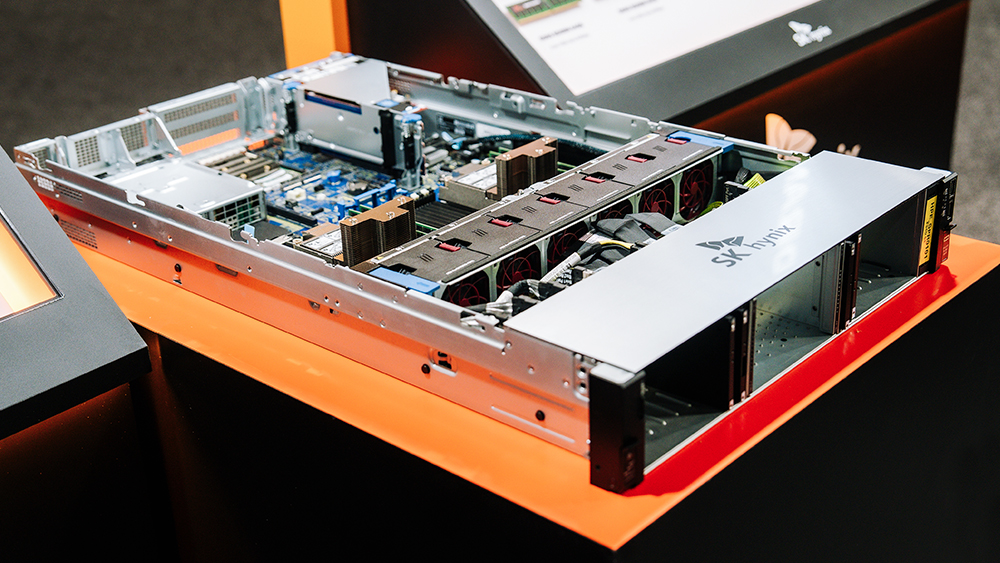
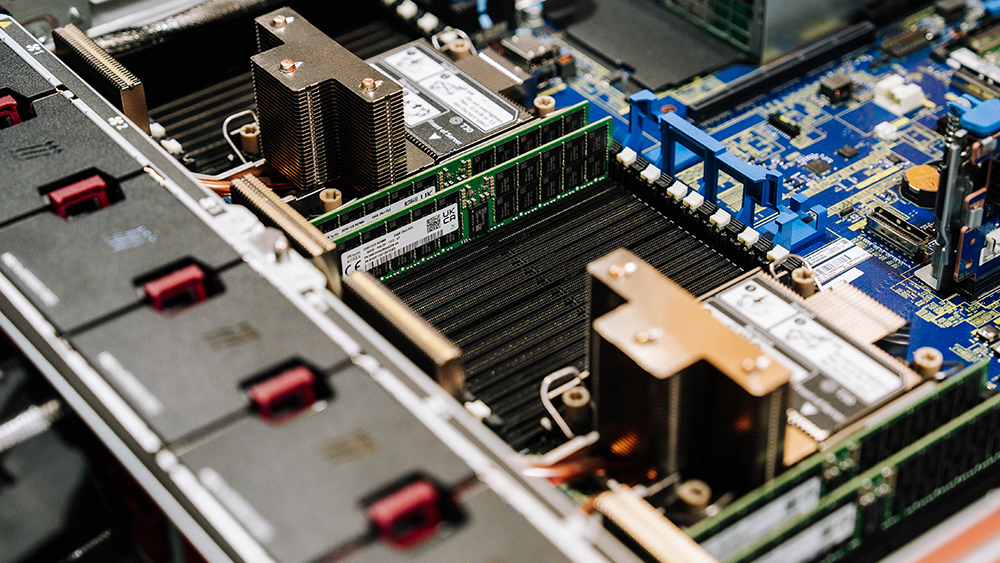
This zone also featured certified products deployed in HPE server systems, symbolically underscoring the close partnership between the two companies. SK hynix has completed certification and is now supplying HPE with the PS1010 E3.S — a data center eSSD based on 176-layer 4D NAND — and the 64GB DDR5 RDIMM server DRAM, which applies the world’s first 10-nanometer (nm)-class sixth-generation (1c)* process technology to improve processing speed and power efficiency.
“Breaking Limits with Full-Stack CXL” — Technical Vision Shared at the Presentation Session
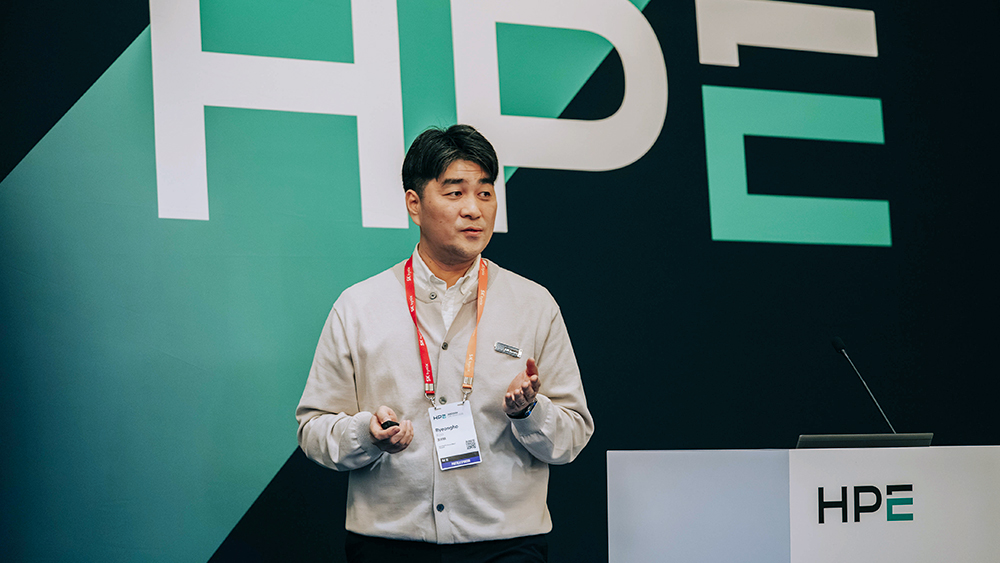
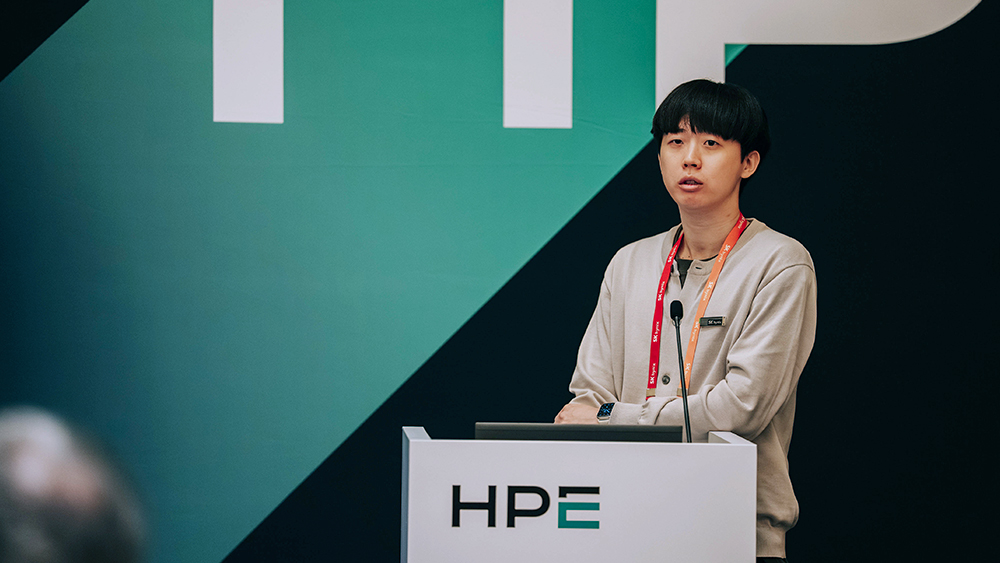
The energy of the exhibition floor carried over into the technical sessions held in the conference rooms. Technical Leader Byeonho Koo of DRAM Solution and Technical Leader Yunjay Hong of DRAM System Analysis delivered a presentation titled “Breaking Limits with Full-Stack CXL: From Architectural Scaling to Hardware-Software Co-Design” at a breakout session, sharing SK hynix’s technical vision.
The two speakers initiated their presentation by highlighting that as AI inference workloads advance, the surge in dynamic data has driven an exponential increase in memory capacity and bandwidth requirements, pushing legacy memory architectures beyond their limits. As a solution, they proposed an architecture leveraging the CXL Pooled Memory System and PNM (Processing-Near-Memory). Furthermore, they introduced the HMSDK (Heterogeneous Memory SDK) — a memory management tool designed to efficiently utilize heterogeneous memory — along with its practical applications.
Through HPED 2026, SK hynix focused on deepening our partnerships with global players including HPE, and on broadly communicating the technology capabilities it can offer across the AI infrastructure landscape. Going forward, as a full-stack AI memory creator, SK hynix will continue to expand its role in AI infrastructure alongside its partners.